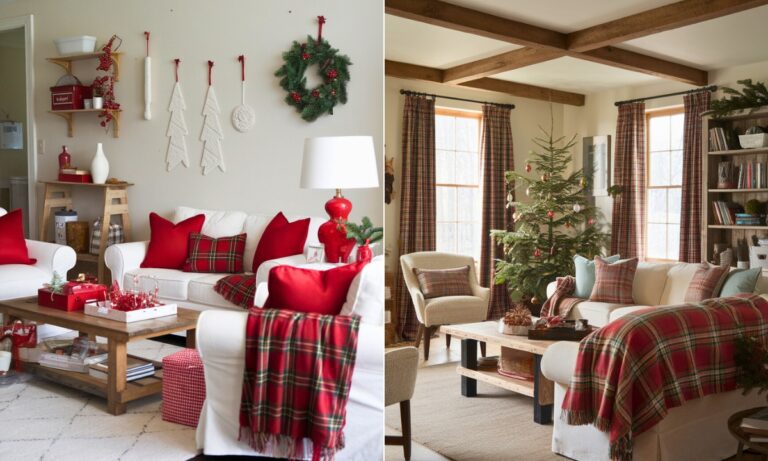
27 Lovely Country Living Room Ideas That Feel Collected, Cozy, and Actually Livable
The first “country” living room I ever put together looked like a craft store had thrown up on a sofa. Roosters on the throw pillows, a wreath on every wall, a sign that said Gather over a TV.
My sister walked in, looked around for a second, and said, “It’s cute, but where do I put my coffee?” She was right. It was decorated, but it wasn’t comfortable.
That’s the thing I had to unlearn. The best country living room ideas aren’t about buying everything with the word “farmhouse” on it.
They’re about texture, worn-in wood, soft fabrics, and a room that looks like it grew slowly over the years rather than arriving in one shopping cart.
Below are 27 ideas I’d happily steal for my own space, from big structural changes like beams and stone fireplaces to ten-dollar thrift store fixes.
I’ve added rough costs where it helps, a couple of mistakes I’ve made (or watched friends make), and notes for small country living rooms where square footage is tight.
Skim the headers, grab what fits your room, and ignore the rest. Nobody needs all 27.
1. Painted Shiplap or Tongue-and-Groove Walls
Flat, blank drywall is the fastest way to make a country room feel like a new-build rental. Planked walls add shadow lines and texture that make even a basic sofa look intentional, which is why DIY shiplap accent walls have stayed popular for so long.
You don’t have to do the whole room. One wall behind the sofa or around the fireplace is plenty. Real shiplap boards run roughly $1.50 to $3 per square foot, while thin tongue-and-groove paneling from a big-box store is cheaper and honestly easier for a first-timer. Paint it a soft warm white, a pale sage, or a muted putty instead of stark white.
The trade-off: planking shows every outlet and light switch cutout. Measure twice, and buy a few extra boards for mistakes. I wasted a whole afternoon on a crooked first row because I trusted the ceiling to be level. It wasn’t.
2. Exposed or Faux Ceiling Beams
Beams do more for a country living room than almost any accessory. They pull your eye up, add warmth, and make a standard 8-foot ceiling feel designed. If your house has real beams hiding under drywall, a contractor can sometimes expose them, but that’s a bigger job.
For everyone else, hollow faux beams made from real wood or lightweight polyurethane cost about $60 to $200 each depending on length. Stain them a medium walnut or leave them closer to raw oak. Skip the very dark espresso color unless your ceiling is tall, because it can make a low room feel like a cave.
Pro tip: Space faux beams about 4 feet apart and run them across the shorter dimension of the room. It makes the space look wider and keeps the beams from feeling like railroad ties.
3. A Stone Fireplace With a Chunky Wood Mantel
A stone fireplace is the classic anchor of a country room, and it earns the reputation. Fieldstone, river rock, and stacked ledgerstone all work. The key is a heavy mantel, ideally a rough-hewn beam that looks like it’s been there since the house was built.
If you’re not ready to rebuild a fireplace, stone veneer panels can be applied over existing brick or drywall for a fraction of the cost of the real thing. Budget about $8 to $15 per square foot for decent veneer, plus a weekend. Real stone is better looking up close, but veneer looks convincing from the couch, and that’s where you actually sit.
4. Limewashed or Painted Brick Fireplace
I’ll be honest: I used to think painting brick was a crime. Then I watched my neighbor Dana limewash the dated orange brick in her 1970s ranch, and the whole room went from “dentist’s waiting room” to “English farmhouse” in one weekend.
Limewash gives a soft, chalky, slightly uneven finish that looks aged instead of painted. Use a wide brush, work in sections, and keep a damp rag handy to wipe back any area that goes too opaque. A gallon runs around $50 to $80. Regular paint is a simpler option, but it can look flat and plasticky on brick.
The catch: once you paint brick, there’s no going back. Test a small patch on the back or side of the firebox first.
5. A Slipcovered Sofa You Can Throw in the Wash
Country living rooms are meant to be lived in, and nothing says “please don’t sit here” like a stiff, perfect sofa. A slipcovered sofa in cream, oatmeal, or washed linen looks relaxed on day one and gets better with wrinkles.
Here’s what nobody tells you about white slipcovers: they’re only practical if the fabric is a heavy cotton or a performance blend that can be machine-washed. Cheap polyester slipcovers pill and slide off the cushions constantly. If you have pets or kids, go for a warm oatmeal or light gray-beige instead of bright white. Expect to spend $900 to $2,000 for a decent slipcovered sofa, and consider buying a second set of covers so you always have a clean one ready.
6. A Worn Leather Club Chair
One leather chair in a room full of soft fabric instantly makes the space feel layered and grown-up. Cognac or saddle brown leather is the sweet spot for country style, and a few scratches only help.
Buy it used if you can. Estate sales and Facebook Marketplace regularly turn up real leather club chairs for $150 to $400 that would cost four times that new. Check the seams and the cushion springs, and wipe the leather with a conditioner before you bring it home. It’s the single best-value piece in this whole list.
7. Layered Rugs: Jute Base, Vintage Rug on Top
Layering is the easiest way to get that collected look. A large jute or sisal rug grounds the room, and a smaller faded vintage or Persian-style rug on top adds color and pattern. It also hides a lot of sins, such as coffee drips, a scratched floor, or a rug that turned out smaller than you expected.
Not every rug material works the same way in a country living room, so here’s how the common options compare:
| Rug Type | Typical Cost (8×10) | Best For | Watch Out For |
|---|---|---|---|
| Jute | $120 to $350 | Base layer, natural look | Sheds fibers early on, rough underfoot |
| Sisal | $200 to $500 | High-traffic rooms | Stains easily, hard to clean |
| Wool (flatweave or hooked) | $300 to $900 | Soft, warm feel | Pricey, sheds a bit at first |
| Vintage or Persian-style | $150 to $1,500+ | Top layer, color and pattern | Quality varies wildly, check the backing |
| Washable polyester look-alike | $100 to $300 | Families, pets | Can look flat and slide without a pad |
Whatever you choose, buy a rug pad. A rolled corner on a layered rug is how people trip, and I speak from experience.
8. Gingham, Ticking Stripe, and Check Patterns
Simple woven patterns are the backbone of country fabric. Gingham, buffalo check, ticking stripe, and small windowpane checks all read as classic without feeling themed. Use them in small doses: a pair of pillows, a chair cushion, a table runner.
The rule I follow is one large-scale pattern, one small-scale pattern, and one solid. That keeps the room from feeling busy. Gingham in a muted tone like sage, navy, or dusty rose also feels more current than bright red and white, which can tip into kitchen-towel territory.
9. An Antique Trunk as a Coffee Table
A battered steamer trunk or old wooden chest is one of my favorite country living room ideas because it solves two problems at once. It’s a coffee table and it’s hidden storage for throw blankets, board games, and the remote-control pile.
Look for one with a flat or slightly domed lid, and test that the lid is sturdy enough to hold a tray and a couple of mugs. If the trunk smells musty, leave it in the sun for a day and wipe the interior with a vinegar-water mix. Secondhand shops and flea markets usually price these at $80 to $300.
10. A Chunky Reclaimed Wood Coffee Table
If you’d prefer something solid and simple, a thick plank coffee table made from reclaimed barn wood or old pine gives the room a sturdy, handmade feel. Rounded corners are worth looking for, especially if you have small kids who run laps around the living room.
True reclaimed wood tables can run $400 to $1,200. A good budget shortcut is a plain unfinished pine table from a local woodworker, stained with a walnut or weathered gray finish. A friend of mine, Priya, did exactly that for under $200, and guests assumed it was an antique.
Pro tip: Whatever wood table you choose, seal it with a matte water-based polyurethane. Glossy finishes make new wood look like a showroom, and open-grain wood with no sealer will stain from a single wet mug.
11. Open Shelving Styled With Crockery and Baskets
Open shelves flanking the fireplace or along a wall give a country living room a “lived here for years” look. The trick is styling them like a real person would, with a mix of books, stoneware, wooden bowls, and baskets, instead of a perfectly symmetrical set of matching jars.
Leave some empty space. Stuffed shelves look chaotic, and empty-ish shelves look curated. Group items in odd numbers, stack a few books horizontally, and put a trailing plant or dried branch at one end. Heavy-duty wooden brackets or built-in shelf boards will handle weight better than thin floating shelves. Don’t skimp on the wall anchors.
12. Woven Baskets for Blankets and Toys
Baskets are the unsung heroes of cozy cottage living room design. A big one next to the sofa holds throw blankets, a smaller one near the TV hides cords and remotes, and a lidded one corrals kids’ toys so the room doesn’t look like a daycare by 6 p.m.
Choose sturdy seagrass, willow, or rope baskets over thin plastic wicker, which cracks within a season. Expect to pay $25 to $70 for a good large basket. If you’re on a budget, thrift stores almost always have a few, and a quick rinse in the shower freshens them up.
13. A Muted Sage, Moss, or Olive Green Palette
Green is the color most people wish they’d tried sooner. Soft sage on the walls, mossy velvet pillows, and an olive linen curtain all echo the outdoors in a way that feels natural in country spaces. It also pairs beautifully with warm wood and creamy whites.
Test paint samples on at least two walls and look at them in morning and evening light. Green can swing gray or yellow depending on your windows. In a north-facing room, pick something with a bit of warmth in it so the space doesn’t turn gloomy.
14. Warm Cream and Oatmeal Neutrals Layered With Texture
If green isn’t for you, an all-neutral palette works just as well in a country living room, as long as you layer different textures: nubby wool, smooth linen, rough wood, soft cotton. Without texture, neutrals go flat very fast.
Skip the cold gray tones. Warm creams, soft taupe, and oatmeal feel inviting, while cool grays push the room toward “modern farmhouse” in the bland sense. If you’re nervous about being too beige, add a single contrasting piece like a black iron lantern or a deep rust pillow.
15. A Built-In Window Seat
A window seat is the cheapest way to add seating, storage, and a favorite spot to your living room all at once. Build it with a simple plywood box frame, hinged lids for storage, and a thick cushion with a washable cover.
A DIY version can cost $150 to $400 in lumber, hardware, and foam, depending on size. Don’t skimp on the cushion thickness. Three to four inches of high-density foam is the difference between a spot you read in for hours and a bench you sit on once. I learned that with a two-inch cushion that felt like a gym mat.
16. Linen Curtains Hung High and Wide
Curtains are where small details make a big difference. Hang the rod 4 to 6 inches above the window frame and extend it 8 to 12 inches past each side. This makes windows look larger and lets more light through when the curtains are open.
Natural linen or linen-blend panels in white, flax, or a soft stripe are classic for country style. If your budget is tight, plain cotton drop-cloth fabric from the hardware store, hemmed or clip-hung, is a legendary shortcut. Just wash it twice before hanging, because it shrinks.
17. Wrought Iron, Lantern, and Ceramic Lighting
Lighting is where a lot of country living rooms quietly fall apart. A flat ceiling flush mount kills the mood, no matter how nice the furniture is. Swap it for a wrought iron chandelier, a lantern-style pendant, or a simple wooden bead fixture.
Then add layers: a ceramic table lamp with a linen shade, a floor lamp by the reading chair, and warm 2700K bulbs everywhere. Cool white bulbs make wood look sallow. If you only change one thing about your lighting, change the bulbs.
Pro tip: Put your lamps on a dimmer or a smart plug. A living room that glows softly at 8 p.m. feels completely different from one lit by a single overhead light, and it costs under $15 per lamp to automate.
18. Wool Throws and Plaid Blankets
A good throw blanket is the cheapest way to make a room feel cozy. Wool plaid, chunky knit, or a faded Hudson’s Bay-style stripe draped over the arm of a chair says “stay awhile” without trying too hard.
Keep the pile to two or three at most. A ladder stacked with eight blankets looks like a retail display, and nobody actually wants to dig through it. Real wool blankets cost $60 to $150, but they last for decades. The acrylic ones pill after a few washes.
19. Dried Flowers, Grasses, and Branches
Fresh flowers are lovely, but they die. Dried hydrangea, pampas grass, lavender, wheat, and eucalyptus stay looking good for months and suit country rooms perfectly. Put a big bunch in a stoneware crock or an old milk pitcher on the mantel or console table.
If you have a garden, you can dry your own by hanging stems upside down in a dark, dry spot for two to three weeks. Pampas grass sheds, though, so give it a light coat of hairspray outdoors before you bring it in, or you’ll be vacuuming fluff until spring.
20. A Vintage Botanical Print Gallery Wall
Old botanical prints, bird illustrations, and landscape sketches in mismatched frames are a quiet, classic way to fill a wall. They feel collected rather than purchased as a set.
Public-domain botanical art is easy to find and print at home or at a local print shop for a few dollars each. Mix wood, black, and aged gold frames, and lay everything out on the floor first. I trace each frame on kraft paper and tape the paper templates to the wall so I can rearrange before hammering a single nail.
21. A Wood-Burning Stove or Insert
If you have a chimney, a cast-iron wood stove or insert is the ultimate country living room upgrade. It heats the room better than an open fireplace, and it looks fantastic with a stone or brick surround.
It’s also a serious project. Installation, a code-compliant hearth, and a chimney liner can run several thousand dollars, and you’ll need to check local rules and have it inspected. If that’s too much, a good electric stove with realistic flame effects gives you a similar look for a few hundred dollars, minus the real heat and the smell of wood smoke.
22. A Sliding Barn Door to Separate Spaces
A sliding barn door works best in a living room that opens into a hallway, a pantry, or a home office. It saves the floor space a swinging door would need, and it adds character at the same time.
The hardware matters more than the door. Cheap rails wobble and rattle, and a rough door with a soft close mechanism feels much better to use daily. Expect $250 to $600 for a decent kit and door. And remember that barn doors don’t seal sound or smell well, so don’t use one for a bedroom that needs real privacy.
23. A Thrifted, Mismatched Furniture Mix
The most authentic country living rooms look like they were furnished over years. Resist the matching furniture set. Combine a new sofa with an old pine cupboard, a secondhand side table, and a flea-market chair you re-covered in linen.
Stick to a loose rule so it still feels cohesive: keep the wood tones in the same warm family, and repeat one color or metal finish across the room. Weekend estate sales, church rummage sales, and online auction sites are your best sources. Bring a tape measure, because “it’ll fit” has ended badly for me more than once.
24. A Cozy Reading Nook With a Bookshelf Wall
If you have even a four-foot stretch of wall, you can fit a floor-to-ceiling bookshelf and a single armchair for a mini library. Paint the shelves a deep color like forest green or charcoal for drama, or keep them wood-toned for a warmer, softer look.
Add a small side table, a swing-arm lamp, and a footstool. For a small country living room, this idea works especially well because it uses vertical space and gives you a purpose for a corner that usually collects clutter.
25. Soft Floral or Chintz Upholstery
Floral fabric has had a quiet comeback. A single chair in a faded rose or small-scale botanical print brings a softness that stripes and checks can’t. It’s the piece guests ask about.
Use it for an accent chair or an ottoman, not for the whole sofa. If you find a vintage chair with great bones and a tired print, reupholstering costs about $300 to $700 depending on size and fabric. It’s not cheap, but it’s often cheaper than buying a new quality accent chair.
26. Wide-Plank Wood Floors
Floors set the tone for everything above them. Wide planks in a natural oak, pine, or lightly stained finish look more rustic than narrow strips, and a few scuffs only add character. If your floors are dated honey-orange oak, refinishing them in a matte natural stain can transform the room.
If replacing floors isn’t in your budget, a luxury vinyl plank with a realistic wood grain is a smart budget fix. Look for planks at least 7 inches wide and a matte finish, because shiny vinyl is the quickest way to give away what it is.
27. A Collected Mantel Vignette
The mantel is the one spot where everyone’s eye lands first, so it deserves a bit of thought. Lean a large mirror or oversized framed print against the wall, then layer smaller objects in front: a candlestick, a stack of books, a small bowl, a sprig of greenery.
Vary the height and avoid perfect symmetry. If I had to pick one trick, it’s this: add something old. A vintage brass candlestick or an inherited bowl from a thrift store will do more than any new decor piece ever could.
What a Country Living Room Makeover Costs
Since a lot of you ask about a budget living room makeover, here’s a rough breakdown of what different approaches tend to cost. These are ballpark figures for an average-sized room and they vary a lot by region and by how much you DIY.
| Budget Tier | Approximate Cost | What You Can Realistically Do |
|---|---|---|
| Under $500 | $150 to $500 | Paint, swap lighting bulbs and a lamp, add throws and baskets, thrift a trunk or chair, hang a gallery wall |
| $500 to $2,000 | $500 to $2,000 | All of the above plus a DIY shiplap wall, faux beams, new curtains, a jute-and-vintage rug layer |
| $2,000 to $6,000 | $2,000 to $6,000 | A slipcovered sofa, stone veneer fireplace, built-in shelves or window seat, refinished floors |
| $6,000+ | $6,000 and up | Wood stove install, real stone, custom millwork, new flooring throughout |
How to Start If You’re Overwhelmed
If I were starting over in a blank living room, I’d do three things in this order. First, fix the lighting, because it’s cheap and instantly changes how everything looks. Second, get the rug and sofa right, since those two pieces take up most of the visual space. Third, add the old stuff slowly: a trunk, a chair, a few frames, a cupboard. Don’t rush that last step. The best rooms I’ve seen weren’t finished in a weekend.
And whatever you do, leave a spot for your coffee.
Frequently Asked Questions About Country Living Rooms
What is the difference between country, farmhouse, and cottage style?
They overlap a lot. Country is the broad umbrella: warm wood, natural fabrics, and a lived-in feel. Farmhouse leans more practical and clean-lined, often with white walls and black accents. Cottage is softer and more floral, with lots of vintage pieces and pastel tones.
How do I make a small country living room feel bigger?
Use light, warm wall colors, hang curtains high and wide, pick a sofa with slim arms, and go for one large rug instead of several small ones. A mirror opposite a window helps too. Stick to a few meaningful pieces rather than filling every corner.
Can I do country style in a modern or newer home?
Absolutely. Texture and natural materials do most of the work. Add a planked accent wall, swap builder-grade lighting, and bring in a few old or handmade pieces. You don’t need a historic home to get the look.
What colors work best for a country living room?
Warm whites, creams, sage and moss greens, soft blues, muted clay, and natural wood tones are the safest bets. Choose one main color and one accent, then let texture add the rest of the interest.
Is country decor outdated?
The overly themed version, with roosters, heart cutouts, and matching sets, is dated. The version built on natural materials, vintage finds, and comfortable furniture isn’t. It reads as timeless because it isn’t chasing a trend.
How can I get the country look on a tight budget?
Thrift aggressively, paint what you can, and spend your money on the pieces you touch every day, like the sofa and lighting. Secondhand wood furniture, drop-cloth curtains, and DIY paneling are all affordable ways to build a convincing room.
What flooring is best for a country living room?
Wide-plank hardwood in oak or pine is the classic choice. If you’re watching your budget, matte luxury vinyl plank with a realistic grain is the best stand-in. Cover whichever you choose with a layered rug for warmth.

Hi, I’m Ashley Miller, a wife, a busy mom, and someone who loves to share all the things that make life a little more fun and beautiful.
From easy DIY projects, delicious recipes, and chic hairstyles to nail ideas and home decor tips, I share everything I’ve learned and love.
My goal is to inspire other women to explore their creativity and make their homes even more special.