29 Front Flower Bed Ideas That Actually Survive a Real Yard (Not Just a Photoshoot)
I killed three flower beds before I figured out what I was doing wrong.
Not “they looked a little sad” — I mean full-on, dirt-and-mulch, HOA-letter-in-the-mailbox dead.
Turns out most flower bed inspiration online is shot three weeks after planting, before the deer show up, before the Texas sun in July, before you realize that gorgeous curved bed edge takes two hours with an edger you don’t own.
So this isn’t a “here are 29 pretty pictures” post. It’s what actually held up in front yards — mine, my neighbor’s, and a handful I pulled from readers who emailed me after my hair color posts asking, weirdly, about landscaping (I guess once you trust someone’s opinion on balayage you trust their opinion on hostas too).
I’m grouping these by what kind of front yard you’re actually working with, because “front flower bed ideas” means something completely different if you’ve got a shaded porch versus a full-sun strip along the driveway.
Skip to the section that matches your yard, or read the whole thing if you’re still figuring out your layout.
Low-Maintenance Front Flower Bed Ideas (For People Who Travel, Forget, or Just Don’t Want a Second Job)
1. Black-eyed Susans along a sunny foundation. These are the plant equivalent of a friend who’s always up for plans and never flakes. Full sun, average soil, and they’ll reseed themselves so your bed actually gets fuller every year instead of thinning out. My one warning: they get leggy by late August, so plant something shorter in front, not behind.
2. Russian sage as a backbone plant. I didn’t water mine for three weeks during a work trip and came back to a plant that looked better than when I left. Silvery, airy, and deer mostly leave it alone — which matters more than people admit when you’re researching this stuff.
3. Creeping phlox for a slope or edge. If your bed has any kind of incline (even a gentle one near the driveway), creeping phlox turns into a solid carpet of color in spring and then just sits there being a well-behaved groundcover the rest of the year. It also chokes out most weeds once established, which saves you an actual chore.
4. Coneflowers mixed into a mulched bed. Echinacea is the plant I recommend to anyone who says “I want color but I don’t want to think about it.” Drought tolerant, pollinator-friendly, and the seed heads look intentional even after the petals drop — you don’t have to deadhead for it to still look like a design choice.
5. A gravel-mulched bed with ornamental grasses. This is the one I’d do if I were starting over. Gravel instead of bark mulch means no annual mulch refresh, and grasses like Karl Foerster feather reed grass move in the wind in a way that makes the whole bed feel alive even in winter when nothing’s blooming.
| Low-Maintenance Plant | Sun Needs | Water Once Established | Best For |
|---|---|---|---|
| Black-eyed Susan | Full sun | Low | Foundation beds, cottage look |
| Russian sage | Full sun | Very low | Drought-prone yards |
| Creeping phlox | Full sun to part shade | Low | Slopes, edges |
| Coneflower | Full sun | Low | Pollinator gardens |
| Feather reed grass | Full sun to part shade | Low | Winter interest |
Pro tip: The actual secret to low-maintenance isn’t the plant list — it’s spacing. People plant too close together “for fullness” and then spend every weekend thinning and fighting powdery mildew from poor airflow. Give full-grown-size spacing from day one and let the bed look a little sparse for one season. It fills in.
Front Flower Bed Ideas for Curb Appeal (The Ones That Actually Move Buyers’ Eyes)
6. Mass planting in odd numbers. This is the single biggest upgrade from “fine” to “wow” and it costs nothing extra — plant in groups of three, five, or seven of the same thing instead of one of everything. My neighbor redid her entire front bed with nine hydrangeas in a single mass instead of a mixed border and it looks like a magazine spread.
7. A layered height structure: tall, medium, short, spilling. Tallest plants against the house, medium in the middle, low border plants at the edge, and something that spills over the bed edge (like sweet potato vine or trailing lobelia) onto the lawn or walkway. This is the structure every professionally designed front bed uses, and it’s genuinely just a formula you can copy.
8. Matching color to your front door. Sounds almost too simple, but a flower bed that echoes your door color (even loosely — a red door with deep burgundy coleus, a black door with white hydrangeas) reads as intentional rather than random to anyone walking or driving by.
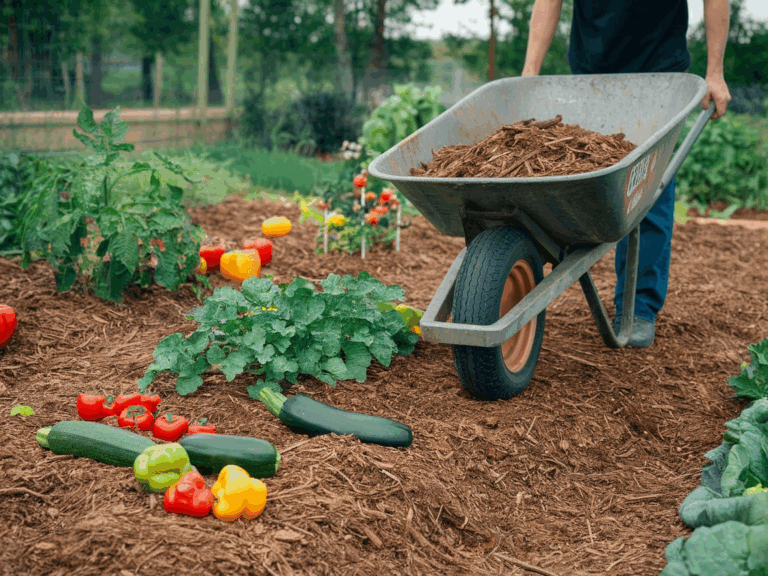
9. A defined, crisp bed edge. I’ll be real with you: a messy edge undoes an otherwise good plant selection faster than anything else. A steel or stone edging strip, or even just a clean trenched line redone twice a season, makes a budget bed look expensive.
10. Boxwood or dwarf shrub “bones” with seasonal annuals filled in. This is how a lot of higher-end landscaping stays interesting year-round — evergreen structure that holds shape in winter, with annual color swapped in spring and fall so it never looks static.
Shade-Loving Front Flower Bed Ideas (Porches, North-Facing Yards, Big Trees)
11. Hostas as the main event, not an afterthought. If you’ve got a shaded front bed, hostas aren’t boring — they’re doing the structural job that sun-loving beds use shrubs for. Mix a few leaf sizes and variegation patterns so it doesn’t read as one giant green blob.
12. Astilbe for actual shade bloom color. Most “shade flowers” lists are secretly just foliage plants in disguise. Astilbe is one of the few that gives you real feathery blooms in deep shade — pinks, reds, and whites that hold color for weeks.
13. Ferns tucked against a north-facing foundation. Ferns read as lush and established almost immediately, even when they’re new. If your front bed gets morning shade and afternoon dappled light, this is an easy win with almost no maintenance beyond keeping soil moist.
14. Heuchera (coral bells) for color without sun. This was my “wait, I didn’t know that existed” plant. Heuchera comes in purples, limes, oranges, and deep reds — all foliage, so you get color in a shady bed without needing flowers to carry it.
15. A white-and-green moon garden under a porch. White flowers (impatiens, white astilbe, variegated hostas) show up at dusk in a way colored flowers just don’t. If your porch light is the main lighting your front bed gets in the evening, this is worth trying.
Front Flower Bed Ideas for Tight Budgets
16. Perennial division swaps. My friend Denise filled an entire front bed for basically the cost of mulch by trading divided hostas and daylilies with three neighbors. Perennials multiply — ask around before you buy new.
17. Seed-start annuals instead of buying flats. Zinnias, cosmos, and marigolds grow from seed fast and cheap, and direct-sowing them straight into the bed in spring skips the whole “babying seedlings indoors” step.
18. One statement plant, repeated, instead of a mixed border. Buying one variety of something in bulk is almost always cheaper per-plant than a mixed border, and it looks more deliberate anyway — see the mass planting point above.
19. Free edging from salvaged brick or stone. If you’re not set on a polished edging product, reclaimed brick (Facebook Marketplace, construction site leftovers, old patio pavers) does the same visual job for close to nothing.
20. Daylilies as the backbone. Daylilies are nearly indestructible, multiply on their own within a couple of years, and a single clump splits into three or four plants by year two — so your “budget” purchase actually pays itself forward.
Pollinator and Wildlife-Friendly Front Flower Bed Ideas
21. A native wildflower strip along the walkway. Native plants (check your state extension office’s list — it varies a lot by region) need less water and fertilizer because they’re already adapted to your soil, and they bring in actual local pollinators instead of just looking like they should.
22. Milkweed for monarchs. If you want a genuine conservation angle to your front bed, milkweed is the one plant that specifically supports monarch butterfly larvae — no other plant does that job. It can look a little weedy to some neighbors, so I tuck it toward the back or middle of the bed rather than the front edge.
23. Salvia for hummingbirds. Tubular red and purple salvia blooms are basically a hummingbird magnet. I started noticing hummingbirds at my kitchen window within the first summer of planting it, which was a bigger deal to me than I expected.
24. Lavender along a sunny border. Bees love it, deer avoid it, and it smells incredible brushing past it on your way to the front door — a genuine three-for-one.
Seasonal and Four-Season Front Flower Bed Ideas
25. Spring bulbs layered under summer perennials. Plant tulip and daffodil bulbs in fall, tucked between perennials that’ll come up later and hide the dying bulb foliage. You get spring color, then the bed transitions seamlessly into summer without a bare gap.
26. Mums and ornamental kale for a fall front bed. This is the easiest seasonal swap there is — pull spent summer annuals in September, drop in mums and kale, done. It’s also the single most “trending on Pinterest” move in fall front-porch content, and it earns that reputation because it genuinely works.
27. Winterberry or red-twig dogwood for winter color. Most front beds go completely flat and brown in winter. A single winterberry shrub holds bright red berries well into the cold months, and red-twig dogwood’s bark is actually the color the name promises — it’s one of the only things giving your front yard color in January.
28. Evergreen anchor plants so the bed never looks “empty.” Even one or two boxwood, dwarf spruce, or holly shrubs keep the bed from reading as bare dirt and mulch once everything else dies back for the season.
29. A rotating “hero plant” each season in one focal spot. Instead of redoing the whole bed, pick one visible spot — right by the front steps, say — and swap just that one plant seasonally: a spring hydrangea, summer dahlia, fall mum, winter evergreen planter. It keeps the whole bed feeling current without the cost or effort of a full seasonal overhaul.
What I’d Actually Do If I Were Starting Over
Honestly, if I were redoing my front bed from scratch today, I’d skip the mixed-border impulse entirely and go with evergreen bones (a few boxwood, spaced for their mature size), a mass planting of one perennial for color, and crisp edging before a single plant goes in the ground. Edging first, structure second, color last — that order would’ve saved me an entire summer of replanting.
FAQ
How do I keep deer out of my front flower bed?
Lean on deer-resistant plants like Russian sage, lavender, and salvia rather than fencing, which usually looks bad on a front-facing bed. No plant is 100% deer-proof when they’re hungry enough, but strongly scented or fuzzy-leaved plants get skipped most often.
What’s the cheapest way to fill a large front bed fast?
Fast-spreading perennials like daylilies and black-eyed Susans, bought small and given a season or two to fill in, beat buying mature plants for a big bed almost every time on cost.
Do I need to redo mulch every year?
Bark mulch breaks down and needs topping off annually for color and weed suppression. Gravel or stone mulch avoids that yearly cost and labor but holds heat differently, so it’s not the right call for every plant palette — great for drought-tolerant beds, not ideal around moisture-loving shade plants.
What front flower bed ideas work for a north-facing house?
Hostas, astilbe, ferns, and heuchera are the shade-tolerant options that actually bloom or add color instead of just surviving — see the shade section above.

Hi, I’m Ashley Miller, a wife, a busy mom, and someone who loves to share all the things that make life a little more fun and beautiful.
From easy DIY projects, delicious recipes, and chic hairstyles to nail ideas and home decor tips, I share everything I’ve learned and love.
My goal is to inspire other women to explore their creativity and make their homes even more special.