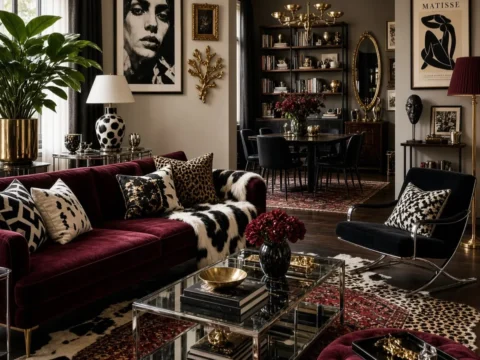
The quickest way to make a living room feel cosy usually isn’t buying a new sofa.
It’s fixing the little things that make the room feel a bit cold: one harsh ceiling light, a bare floor, curtains that stop halfway down the window, or a layout that leaves everyone sitting too far apart.
I’d start there before spending money on another decorative object.
When I think about cosy living room ideas, I’m not picturing a room stuffed with cushions or a space that only looks good in a staged photo.
I’m thinking about a room where you can put your feet up, read without squinting, and have people over without worrying that they’ll disturb a perfectly arranged display.
Warmth comes from texture, lighting, scale, and the way the furniture works together.
Below are 34 ways to get that feeling, whether you’re decorating a small apartment living room, refreshing a family space, or working with a rental where painting and major renovations aren’t realistic.
I’ve included lower-cost swaps as well as bigger changes, so you can choose what makes sense for your room and budget.
1. Layer three sources of lighting
A single bright ceiling fixture can make even a beautifully furnished room feel like a waiting area. I’d combine ambient light from the ceiling with a floor lamp and a table lamp, then use only the lights you need in the evening. The different heights create softer pools of light and make the room feel more settled.
A practical detail to keep in mind: If you’re buying bulbs, check the colour temperature rather than choosing by brightness alone; warm white around 2700K is a comfortable starting point for most living rooms.
2. Choose a warm, grounded colour palette
Colour affects the mood before you notice any individual piece of furniture. Cream, oatmeal, warm taupe, muted olive, clay, and soft brown work well together because they have enough warmth to feel inviting without making the room look dark. I’d pick one main neutral, one supporting colour, and a smaller accent rather than introducing six unrelated shades.
A practical detail to keep in mind: Test paint or fabric samples at different times of day. A beige that looks lovely at noon can turn pink or grey under evening bulbs.
3. Add a generously sized area rug
A rug helps a living room feel like one connected space instead of a sofa, chair, and coffee table floating separately. In most seating areas, I’d choose a rug large enough for at least the front legs of the sofa and chairs to sit on it. That little bit of overlap makes the arrangement look intentional.
A practical detail to keep in mind: Measure the seating area before shopping. A rug that is too small is one of the easiest ways to make a room feel visually unsettled.
4. Mix soft, touchable textures
Cosiness is often more about texture than pattern. Pair a smooth sofa with a chunky knit throw, linen curtains, a nubby cushion, or a woven basket. I like keeping the colours related and letting the materials do the work, especially if you prefer a calm, uncluttered look.
PRO TIP Use a mix of matte and slightly textured finishes. Too many shiny surfaces can make a warm palette feel colder.
5. Hang curtains higher and wider
Curtains can make a room feel taller and softer, but panels hung directly at the window frame often look skimpy. If the wall allows, place the rod several inches above the frame and extend it beyond both sides so the fabric stacks beside the glass when open. Longer panels also give the room a more finished look.
A practical detail to keep in mind: Measure from the rod to the floor, not from the window frame. Decide whether you want a slight break, a clean floor skim, or a puddled hem before ordering.
6. Bring in natural wood
Wood adds visual warmth that can balance pale walls, white upholstery, and modern finishes. A coffee table, side table, picture frame, or small stool in oak, walnut, or another warm-toned timber can make a room feel less flat. You don’t need a matching furniture set; a little variation usually looks more collected.
A practical detail to keep in mind: Repeat the same wood tone at least twice so the finish feels deliberate, but don’t worry about every piece matching exactly.
7. Create a cosy reading corner
An unused corner can become the most inviting spot in the room with a comfortable chair, a small lamp, and somewhere to set down a mug or book. I’d position the chair at a slight angle rather than pushing it tightly into the corner. A floor lamp with a shade or adjustable arm makes the spot useful after dark.
A practical detail to keep in mind: Check the chair’s depth before buying. A beautiful accent chair is no good if it’s too upright to sit in for more than ten minutes.
8. Use cushions in different sizes
A sofa looks more welcoming when the cushions have a little variation. Try combining larger square cushions with one smaller lumbar cushion, using two or three related colours and a mix of fabrics. I’d avoid filling every inch of the sofa; leave enough room for someone to sit comfortably.
PRO TIP For a standard sofa, start with a small group and add only if the cushions don’t crowd the seats. Removable covers are worth prioritising in a busy home.
9. Keep a throw within easy reach
A folded throw over the sofa arm adds softness and is genuinely useful when the temperature drops. Choose a fabric that suits how you live: cotton or a washable blend for everyday use, wool for warmth, or fleece if easy care matters most. A throw should look casually placed, not arranged so carefully that nobody wants to touch it.
A practical detail to keep in mind: Pick a throw that is large enough to cover your legs. Decorative mini throws can look nice but rarely do the job.
10. Style the coffee table with breathing room
A coffee table can make the seating area feel finished, but covering it with objects makes the room harder to use. I’d group a tray, a book or two, and one low vase or candle, leaving open space for drinks and remotes. Vary the heights slightly without building a tall display that blocks conversation.
A practical detail to keep in mind: If you have children or pets, choose a stable tray and avoid delicate glass objects near the edge.
11. Add plants for a lived-in feel
Greenery brings colour and an organic shape into a room that might otherwise be full of straight furniture lines. A larger floor plant can fill an empty corner, while a small plant on a shelf adds a softer detail at eye level. If natural light is limited, choose a plant suited to that condition rather than buying one just because it looks good in a photo.
A practical detail to keep in mind: Check the light and watering needs first. A healthy, well-placed plant looks cosier than several struggling ones.
12. Make the fireplace or mantel a focal point
If you have a fireplace, use it as a natural anchor for the room. A mirror, artwork, or a restrained arrangement of objects above the mantel can draw the eye without making the whole wall feel busy. In a home without a working fireplace, a low console or bookcase can create a similar visual centre.
PRO TIP Keep decor away from heat sources and follow the fireplace manufacturer’s clearance guidance. Never place candles or flammable greenery where they could catch.
13. Try a warm neutral sofa
A sofa in oatmeal, camel, warm grey, or soft beige can make it easier to change the room’s accent colours over time. I’d focus just as much on the upholstery texture and seat depth as the shade. A practical, removable cover may be more valuable than a pale fabric that needs constant protecting.
A practical detail to keep in mind: Order fabric swatches if possible and look at them beside your flooring and curtains. Undertones become much easier to spot when materials sit together.
14. Arrange seating for conversation
A cosy room should make it easy to talk, not just face a television. Angle an armchair toward the sofa, bring occasional seating closer, and make sure people have somewhere to put a drink. Even a small room can feel sociable when the seats are arranged around a shared centre.
A practical detail to keep in mind: Leave a comfortable route through the room. Don’t sacrifice everyday movement just to make a symmetrical furniture plan.
15. Use warm-toned wall art
Large blank walls can make a room feel unfinished, while artwork gives the eye somewhere to land. Choose pieces with colours already present in the room—rust, olive, sand, charcoal, or muted blue—and vary the frame finishes if you want a collected look. A single larger piece can feel calmer than a cluster of tiny prints.
A practical detail to keep in mind: Before hanging, cut paper templates to the artwork sizes and tape them to the wall. You can adjust the arrangement without making extra holes.
16. Add a bookcase that looks lived in
Books bring colour, texture, and a personal feel to a living room. Mix upright books with a few horizontal stacks, then leave some open space for a small object or plant. I prefer shelves that look used rather than perfectly colour-blocked, because the room should feel like someone actually lives there.
PRO TIP If the shelves look cluttered, remove a few items instead of buying more baskets. Negative space is part of the styling.
17. Choose a round coffee table for tight layouts
In a narrow living room, sharp corners can interrupt the walking route around the sofa. A round or oval coffee table can make circulation easier and soften a room full of rectangular furniture. Check the height against the sofa seat so it feels comfortable to reach.
A practical detail to keep in mind: Leave enough clearance to walk around it and pull out a seat. A smaller table that works is better than a large one that dominates.
18. Bring in a footstool or upholstered ottoman
A footstool makes a sofa more comfortable, and an upholstered ottoman can double as extra seating or a soft alternative to a hard coffee table. For a small apartment, I’d look for one with hidden storage or a lightweight design that can move when guests arrive.
A practical detail to keep in mind: If you plan to use it as a table, add a firm tray on top and check that the surface stays stable.
19. Use baskets to hide everyday clutter
Remotes, chargers, toys, and spare blankets can make a room feel messy even when everything else is in place. A few baskets near the sofa or media unit give those items a home without adding more closed cabinetry. Natural woven textures also add warmth.
A practical detail to keep in mind: Choose baskets based on what they need to hold. A shallow basket is easier for remotes; a tall one works better for throws.
20. Layer the windows with privacy and softness
If your room feels exposed at night, a simple window treatment can make it more comfortable. Sheer curtains soften daylight, while lined curtains add privacy and can help reduce drafts. In a rental, tension rods or existing tracks may let you update the look without drilling.
PRO TIP Check whether the fabric is washable and whether it blocks too much daylight for the room’s orientation.
21. Paint one wall a deeper shade
A deeper accent wall can make a seating area feel intimate, especially behind a sofa or around a fireplace. Think muted forest green, tobacco brown, deep taupe, or a softened charcoal rather than a high-contrast colour that competes with everything else. I’d use it to give a focal point more presence, not simply because one wall is empty.
A practical detail to keep in mind: Sample the colour on a large board and move it around the room. A small paint chip rarely shows how a deep colour behaves across a whole wall.
22. Bring in vintage or second-hand pieces
A room can feel overly showroom-like when every item is new and perfectly coordinated. A second-hand side table, vintage lamp, or older framed print adds a bit of character and often costs less than buying everything new. Look for solid construction and shapes you genuinely like rather than chasing a specific trend.
A practical detail to keep in mind: Check furniture for wobble, odours, water damage, and signs of pests before bringing it home. Reupholstery can be worthwhile, but price it before you buy.
23. Make the TV blend into the room
A television can dominate a living room if it is the only dark rectangle on a large wall. A low media console, artwork nearby, and a few carefully placed objects can help balance the screen visually. If you’re choosing a new console, closed storage is useful for hiding cables and devices.
A practical detail to keep in mind: Keep ventilation space around electronics and avoid placing decor where it blocks ports, sensors, or airflow.
24. Use layered window-side seating
A bench or compact chair near a window can turn an overlooked area into a place to read, look outside, or enjoy morning light. Add a cushion in a durable fabric and a small side table if there’s room. In a narrow room, choose a shallow seat so it doesn’t block the path.
PRO TIP Measure the window sill and radiator position first. Don’t cover a heat source or obstruct a window that needs to open.
25. Add a subtle scent, not an overpowering one
Scent is part of how a room feels, but it should be gentle enough that guests don’t notice it before they notice the room. Fresh air, clean textiles, and a mild candle or diffuser can create a welcoming atmosphere. I’d keep fragrance optional, especially if anyone at home is sensitive to it.
A practical detail to keep in mind: Never leave a burning candle unattended, and keep diffusers and oils away from children and pets. A clean room usually needs less fragrance than you think.
26. Swap cool metal accents for warmer finishes
If your living room feels a little stark, look at the small finishes: lamp bases, cabinet handles, frames, and table legs. Brass, bronze, aged gold, and warm black can sit comfortably with wood and neutral fabrics. You don’t have to replace everything; changing one or two details may be enough.
A practical detail to keep in mind: Repeat a finish in at least two places, but avoid buying a full matching set just to coordinate.
27. Choose soft, low-contrast patterns
Patterns can make a neutral living room feel more layered without making it busy. Try a quiet stripe, a small check, a faded floral, or a tone-on-tone geometric on cushions or a rug. I’d keep the scale varied: one larger pattern, one smaller pattern, and plenty of plain fabric.
A practical detail to keep in mind: View patterns from across the room as well as up close. A print that looks subtle in your hand may read much bolder at sofa scale.
28. Create a gallery wall with a consistent thread
A gallery wall feels cosy when the pieces have something in common, even if the frames don’t match. That thread might be a shared palette, landscape subject, family photographs, or a mix of illustration and typography. Lay the arrangement on the floor first and keep the gaps fairly consistent.
PRO TIP Use proper wall fixings for the wall type and the weight of each frame. For rentals, removable picture strips have weight limits and need the correct surface.
29. Make a small living room feel cosy, not cramped
Small rooms need softness, but oversized furniture and too many accessories can make them difficult to use. I’d choose one main sofa, a slim side table, a rug that defines the seating zone, and storage that uses vertical space. A leggy chair or table can also let more floor show, which helps the room feel lighter.
A practical detail to keep in mind: Measure doorways, stair turns, and lift access before ordering furniture. A sofa that cannot get into the apartment is an expensive mistake.
30. Use a storage coffee table
A lift-top or shelf-style coffee table can hide blankets, games, and chargers while keeping them close at hand. This is especially useful when your living room has no separate storage closet. Choose a design that opens smoothly and doesn’t feel too heavy for the space.
A practical detail to keep in mind: Check the mechanism and internal dimensions. Product photos rarely show whether the storage will fit the things you actually own.
31. Add a floor lamp behind the sofa
A floor lamp behind or beside the sofa gives you useful reading light without taking up much table space. An arched lamp can reach over a seating area, while a slim upright lamp works better in a tight corner. I’d choose a shade that directs light downward or diffuses it rather than exposing a bare bulb.
A practical detail to keep in mind: Make sure the base won’t become a trip hazard in the main walkway, and route the cord safely along the wall.
32. Style open shelves with a mix of objects
Open shelving can look warm and personal, but it gets visually noisy when every shelf is full. Mix books with a few framed photos, ceramics, and one or two baskets, then leave gaps between groups. Repeating a couple of colours across the shelves helps everything feel connected.
PRO TIP Stand back and look at the shelves from the doorway. That’s the view you’ll see most often, and it reveals clutter faster than styling up close.
33. Bring in soft flooring underfoot
If you have hard floors, a rug beside the sofa or a larger area rug can make the room feel more comfortable immediately. In a high-traffic home, a low-pile or washable rug is often easier to live with than a delicate high-pile option. A rug pad helps prevent slipping and can make a thinner rug feel more substantial.
A practical detail to keep in mind: Check the rug’s care label and the floor manufacturer’s guidance before using a pad, especially on delicate timber or vinyl.
34. Make the room seasonal with small swaps
You don’t need a full seasonal makeover to make a living room feel fresh. In cooler months, bring out a heavier throw and deeper cushion covers; in warmer months, switch to lighter cotton or linen and clear a little visual clutter. Keeping the large pieces neutral makes these changes easier.
PRO TIP Store off-season textiles clean and completely dry. A labelled fabric bag or under-sofa box keeps the swap simple.
35. Add personal pieces that mean something
A room feels more welcoming when it reflects the people who use it. That might be travel photos, a handmade bowl, a framed print from a local artist, or a favourite object you’ve kept for years. I’d rather see a few meaningful things than a shelf full of generic decor bought just to fill space.
A practical detail to keep in mind: Give sentimental pieces room to stand out. Grouping everything together can make meaningful objects disappear into visual clutter.
36. Use mirrors to bounce light around
A mirror opposite or beside a window can help distribute daylight and make a room feel more open. Choose a frame that suits the room—wood for a softer look, antique-style metal for character, or a simple slim frame for a modern space. A larger mirror can also act like wall art.
A practical detail to keep in mind: Check what the mirror reflects before hanging it. You want it to catch light or an attractive view, not a pile of laundry.
37. Keep a clear landing spot for daily items
A cosy living room is easier to enjoy when everyday items have a predictable home. A small bowl for keys, a lidded box for chargers, or a narrow console near the entrance can stop clutter spreading across the coffee table. The best organisation is the kind you can maintain without thinking about it.
A practical detail to keep in mind: Don’t create a storage system that takes more effort than putting things away. Keep frequently used items within easy reach.
Which cosy living room upgrades are worth the money?
If you’re working with a limited budget, I wouldn’t spend evenly across the room. Start with the changes that affect comfort every day—lighting, a properly sized rug, and window treatments—then add decorative pieces once the basics are working. Prices vary by country, retailer, size, and material, so use the table as a relative guide rather than a fixed quote.
| Upgrade | Relative cost | Biggest benefit | Best for |
| Warm LED bulbs | Low | Softer evening light | Almost every room |
| Cushion covers and throw | Low–medium | Adds texture without new furniture | Quick refreshes and rentals |
| Baskets and small organisers | Low–medium | Hides everyday clutter | Busy family rooms and small apartments |
| Area rug | Medium | Connects the seating area and softens floors | Rooms with hard flooring |
| Curtains and curtain rod | Medium | Adds softness, privacy, and height | Bare or exposed windows |
| Floor or table lamp | Medium | Creates useful layered lighting | Rooms with one ceiling light |
| Sofa or accent chair | High | Changes comfort and furniture layout | A room with genuinely uncomfortable seating |
Cosy living room ideas for different styles
Modern cosy living room
For a modern cosy living room, I’d keep the shapes simple and let the materials add warmth: a clean-lined sofa, a textured rug, natural wood, soft curtains, and warm lighting. Limit the colour palette so the room feels calm, then add one or two sculptural pieces rather than lots of small accessories.
Rustic cosy living room
Rustic style works best when it feels natural rather than themed. Mix wood, woven materials, linen, wool, and aged finishes, but balance rough textures with something soft and comfortable. If you don’t have exposed beams or a fireplace, a reclaimed-wood table or vintage frame can bring in some of that character.
Minimalist cosy living room
Minimalism doesn’t have to mean an empty or echoey room. Keep fewer pieces, but choose them carefully: a comfortable sofa, a generous rug, one warm lamp, and a couple of tactile accessories. I’d focus on quality of texture and good proportions instead of adding more decor.
Cosy small apartment living room
In a small apartment, every piece needs to earn its floor space. Look for nesting tables, storage ottomans, wall-mounted shelves, and furniture with visible legs. Use curtains, lighting, and a rug to create a finished feeling without adding bulky furniture or blocking the natural walking route.
Frequently asked questions
How can I make my living room look cosy on a low budget?
Start with warm bulbs, rearrange the seating so it feels connected, and use textiles you already own. A second-hand lamp, a washable throw, or cushion covers can make a bigger difference than several small decorative purchases.
What colours make a living room feel cosy?
Warm whites, cream, beige, taupe, muted green, terracotta, rust, and soft brown are reliable choices. You can also use deeper shades such as forest green or charcoal as accents, especially when the room has enough natural or layered light.
How do I make a small living room feel cosy without clutter?
Choose a clear focal point, use a correctly sized rug, add layered lighting, and keep storage close to where clutter happens. A few substantial textures usually work better than lots of tiny accessories.
What lighting is best for a cosy living room?
Use several warm light sources at different heights, such as a ceiling fixture, floor lamp, and table lamp. Warm-white bulbs around 2700K are a useful starting point, but check the bulb packaging and how the light looks in your room.
Should a living room rug go under the sofa?
Ideally, the rug should reach under at least the front legs of the sofa and nearby chairs. This visually connects the seating group and generally looks more balanced than a small rug placed in the middle.
How many cushions should I put on my sofa?
There isn’t one perfect number. Start with two or three on a smaller sofa and add more only if there is still comfortable seating space. Mix sizes and textures, but don’t let cushions take over the seats.
How can I make a rental living room cosier without painting?
Use curtains, removable wall decor, floor lamps, rugs, cushion covers, baskets, and freestanding shelves. These changes add warmth and personality without permanent alterations; check your lease before using adhesive products or installing hardware.
What is the easiest way to make a living room feel warmer in winter?
Layer a warm throw over the sofa, add a rug or rug pad over cold flooring, close lined curtains in the evening, and use lamps instead of relying only on overhead lighting. Address drafts safely rather than covering heaters or vents.
A final note before you start
If I were starting from scratch, I’d resist the urge to shop for all 34 ideas at once. I’d switch the lighting first, measure for a rug, and work out whether the seating arrangement actually makes sense for the way the room is used. Once those basics feel right, the softer details—throws, plants, art, and personal objects—are much easier to choose. A cosy living room should feel good on an ordinary Tuesday, not just look finished in a photograph.
SEO notes (remove before publishing)
Primary keyword: cosy living room ideas
Secondary keywords to weave into image alt text and relevant internal links: small living room ideas, warm living room decor, living room lighting ideas, apartment living room ideas, budget-friendly living room decor.
Suggested image alt text examples: “cosy living room with warm layered lighting and neutral textiles”; “small apartment living room with a round coffee table and area rug”; “warm neutral living room with natural wood furniture and soft curtains”.
Editorial note: Add original photos, product details you have personally verified, and internal links to relevant room decor or small-space guides before publishing. Avoid adding first-person claims about testing a product unless you have actually used it.

Hi, I’m Ashley Miller, a wife, a busy mom, and someone who loves to share all the things that make life a little more fun and beautiful.
From easy DIY projects, delicious recipes, and chic hairstyles to nail ideas and home decor tips, I share everything I’ve learned and love.
My goal is to inspire other women to explore their creativity and make their homes even more special.