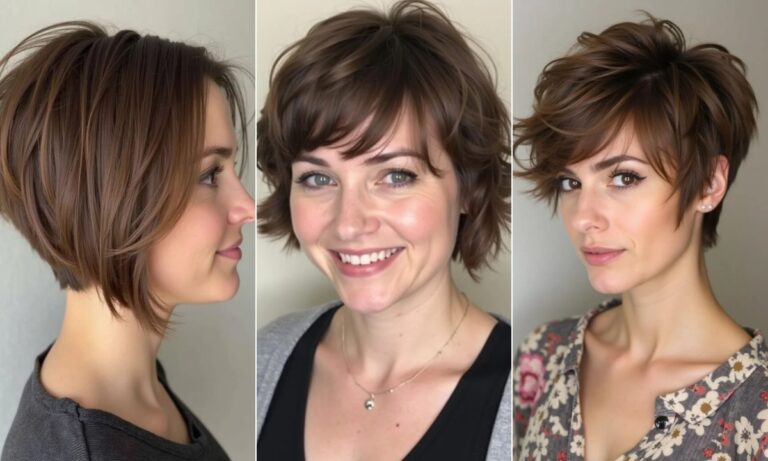
27 Haircuts for Thin, Fine Hair That Actually Add Volume (Not Just Promise To)
I have the kind of fine hair that goes limp by 2pm no matter how much dry shampoo I throw at my roots, and for years I kept walking into salons asking for “something with more volume” and walking out with the exact same flat, one-length cut, just a few inches shorter.
It wasn’t until my stylist actually explained why certain cuts work on fine hair and others just make it look thinner that anything changed.
My friend Rosa has the same hair type and has been through almost every cut on this list at some point — she’s the one who finally convinced me that blunt, heavy layers are basically the enemy of fine hair, no matter how good they look on someone with thick hair in the chair next to you.
So this isn’t a generic “cute haircuts” roundup. Every option here is specifically chosen because of how it interacts with fine, thin hair — what creates the illusion of density, what styling it actually needs, and what to tell your stylist so you don’t end up with another flat bob.
1. The Textured Lob (Long Bob)
Hitting right around the collarbone with soft, face-framing layers cut into the ends rather than blunt all the way across. The slight texture at the bottom tricks the eye into seeing more density than a one-length cut of the same length ever will.
Pro tip: Ask for the layers to start low, around the cheekbone — layers that start too high near the crown can actually make fine hair look thinner up top.
2. The Blunt Bob (Yes, Really)
Counterintuitive, but a precise, blunt-cut bob at chin or jaw length is one of the best things you can do for fine hair — the uniform weight along the bottom edge creates the illusion of thickness that choppy layers actually undo. Jess swears by this one and gets compliments on how “thick” her hair looks, which still makes her laugh every time.
3. Shoulder-Length Shag With Curtain Bangs
Soft, feathered layers throughout paired with curtain bangs that frame the face. The movement from the shag layers adds visual texture without removing so much weight that the ends look wispy and thin.
4. The Pixie Cut
Short hair genuinely reads thicker than long hair on fine strands, simply because there’s less length for gravity to pull flat. A well-cut pixie with slight texture on top is one of the lowest-maintenance, highest-impact options on this entire list if you’re willing to go short.
5. Chin-Length Bob With Micro-Layers
Very fine, subtle layers (not chunky ones) cut just at the ends add movement without sacrificing the density a blunt line provides. This is the compromise cut for anyone who wants some texture but isn’t ready to go fully blunt.
6. The French Bob
Short, chin-grazing, with a slight inward curl at the ends. The shorter length and inward bend both work in favor of fine hair — it’s genuinely one of the most forgiving cuts for thin strands on this list, and it photographs well at every styling level from “did nothing” to “fully styled.”
7. Long Layers With a Deep Side Part
If you’re keeping length, long layers (not short, choppy ones) paired with a deep side part instead of a center part immediately adds the appearance of root volume, since a deep part naturally lifts hair away from the scalp on one side.
8. The Textured Pixie Bob
A longer pixie that grows into bob territory at the nape, with textured, piecey layers on top. It’s a great transitional cut if you’re growing out a pixie but aren’t ready to commit to fully long hair again.
9. Blunt Ends With Interior Layers Only
Ask your stylist specifically for layers cut only on the interior of the hair, leaving the perimeter blunt. This gives you movement without any of the wispy, thin-looking ends that exterior layering creates on fine hair.
10. The Modern Shag
Heavily layered but cut with precision rather than the choppy, razored shags of the 2000s — this version uses controlled layers to add texture at the crown specifically, which is where fine hair needs the most help.
11. Jaw-Length Bob With a Blunt Fringe
A full, blunt fringe paired with a blunt bob creates graphic, intentional lines that read as styled rather than just “not thick.” Diane has worn a version of this for years and it’s consistently the cut she gets recognized for.
12. The Wolf Cut, Toned Down
A softer, less aggressive take on the wolf cut trend — shorter layers around the crown blending into longer length below, without the super choppy ends the original trend had. The crown layering is the part that actually helps fine hair; keep that, skip the extreme texturizing shears.
13. Collarbone-Length Cut With Face-Framing Layers Only
Keep the back and crown completely blunt and reserve layering just for pieces around the face. This gives you the softening, face-framing effect without thinning out the overall density of the cut.
14. The Buzz Cut or Super Short Crop
Not for everyone, but worth including — an extremely short cut removes the “flat and thin” problem entirely because there’s no length to go limp. It requires real confidence and a stylist who’s good with clippers, but the maintenance is minimal.
15. Mid-Length Cut With a Root Perm
Pairing a blunt mid-length cut with a root-only perm (just at the scalp, not the full length) is a styling-adjacent cut decision that’s become popular specifically for fine hair — it creates lasting lift that regular blow-drying can’t replicate day after day.
16. The Asymmetrical Bob
Slightly longer in the front, shorter in the back. The angled line creates visual interest and movement without needing actual layering throughout, which keeps the overall density intact.
17. Ear-Length Pixie With Longer Fringe
A very short pixie on the sides and back with a longer, sweepable fringe on top gives you styling versatility — you can texturize the top for volume while the short sides stay low-maintenance.
18. Long Hair With a Blunt, Low-Layer Cut
If you’re committed to keeping length past the shoulders, the key is minimizing layers almost entirely and keeping any layering very low, near the ends. Long, heavily layered hair is one of the worst combinations for fine strands — it’s the cut Rosa regrets most from her twenties.
19. The Curly Bob (If You Have Natural Texture)
If your fine hair also has natural curl or wave, a bob cut specifically for curly density (not the same technique used for straight hair) makes the most of whatever texture you have, since curls naturally create more visual volume than straight fine strands.
20. Textured Crop With Side-Swept Bangs
A short, textured crop with longer, side-swept bangs blended into the top layers. It’s a lower-commitment alternative to a full pixie if you want short hair but aren’t ready for something that dramatic.
21. The One-Length Lob With a Slight Point Cut
Instead of traditional layering, ask your stylist for “point cutting” — a technique where the scissors are angled into the ends to soften the blunt line very slightly without removing the weight that creates fullness.
22. Short Shag With Heavy Fringe
A short, layered shag paired with a full, heavy fringe draws attention to the face and creates movement at the crown, which is consistently the area fine hair needs the most help with visually.
23. Chin-Length Bob With an Undercut Nape
A subtle undercut at the nape (hidden under the top layer) removes bulk from underneath without touching the visible top layer’s density — an option for anyone whose hair gets weighed down specifically at the back of the neck.
24. The Growing-Out Pixie Shape
A specific cutting technique for pixies in the awkward growing-out phase, shaping the sides and back to stay neat while the top is left longer to eventually blend into a bob. Worth a dedicated salon visit rather than just “letting it grow” — the difference in how it looks day to day is significant.
25. Long Layers Starting Below the Chin
If you want long layers but worry about thinning, ask for the first layer to start no higher than chin level. Starting layers any higher removes weight from the crown and mid-lengths, which is exactly where fine hair can least afford to lose density.
26. The Micro Fringe With a Blunt Bob
A very short, baby-bang-style fringe paired with an otherwise blunt bob. It’s a bold combination, but the short fringe adds textural contrast against the blunt length without touching the overall density of the cut.
27. The Classic Blowout Bob
A simple, blunt bob specifically cut and styled to be blown out with a round brush for maximum root lift. It’s less about the cut itself and more about choosing a shape that responds well to volumizing styling — this is the cut Diane gets before every big event because it photographs reliably thick every time.
Quick Comparison: Cut Length vs. Volume Payoff
| Length | Best Pick | Volume Payoff |
|---|---|---|
| Very short | Pixie cut (#4) | Highest — least length for gravity to fight |
| Chin to jaw | Blunt bob (#2) | High — uniform weight reads as thick |
| Collarbone / lob | Textured lob (#1) | Medium — low-starting layers help |
| Long | Low-layer blunt cut (#18) | Lowest — requires the most careful cutting to avoid thinning |
What I’d Actually Tell My Stylist Now
If I could go back and redo every bad haircut appointment of my twenties, I’d walk in and say exactly one sentence: “keep it blunt, and only layer the interior.” That single instruction would have saved me from at least four regrettable cuts that left my ends looking like wisps instead of hair.
FAQs
Do layers help or hurt fine, thin hair?
It depends entirely on where they’re placed. Layers cut too high near the crown or all the way through the ends tend to thin fine hair out further. Interior layers, or layers that start low (around the chin or jaw), tend to add movement without sacrificing density.
Is short hair really better for fine, thin hair?
Generally, yes — shorter cuts have less length for gravity to weigh down, which makes them read as thicker than the same hair grown long. That said, a well-cut blunt bob or lob can get you most of the same benefit if you’re not ready to go short.
What should I ask for at the salon if I have fine hair?
Be specific: ask for a blunt perimeter with layering only on the interior, or point-cutting instead of traditional layering. Vague requests like “add some volume” often get interpreted as heavier layering, which can work against fine hair.
Do bangs help thin hair look thicker?
Yes, especially a full, blunt fringe — it adds a graphic, dense line across the face that draws attention away from overall thinness elsewhere. Wispy, thin bangs tend to have the opposite effect.
How often should fine hair be trimmed to maintain a volumizing cut?
Every 6–8 weeks for shorter, precision cuts like a blunt bob or pixie, since the shape relies on a clean line that grows out faster than a longer, more layered style would.

Hi, I’m Ashley Miller, a wife, a busy mom, and someone who loves to share all the things that make life a little more fun and beautiful.
From easy DIY projects, delicious recipes, and chic hairstyles to nail ideas and home decor tips, I share everything I’ve learned and love.
My goal is to inspire other women to explore their creativity and make their homes even more special.