32 Midcentury Modern Living Room Ideas That Don’t Look Like a Showroom Set
I used to think midcentury modern meant one specific thing — a walnut credenza, a starburst clock, and one of those iconic egg-shaped chairs everyone’s seen a hundred times on Pinterest.
Then I helped my friend Nora redo her living room and realized the style is actually a lot more flexible than that single “catalog” version suggests.
It’s really about warm wood tones, clean lines, and organic shapes, and once you understand that core, there’s a lot of room to make it feel like your space instead of a museum exhibit.
These 32 ideas go beyond the obvious starter pieces — they cover color, lighting, layout, and how to mix midcentury with other styles so the room doesn’t feel like a period piece.
Whether you’re starting from scratch or working one or two pieces at a time into a room you already have, there’s something here for both approaches.
Nora’s the one who actually sourced most of her living room secondhand rather than buying reproductions, so her notes on what’s worth hunting for versus what’s fine to buy new are mixed in throughout.
Foundational Furniture Pieces
1. A Tapered-Leg Sofa in a Low Profile
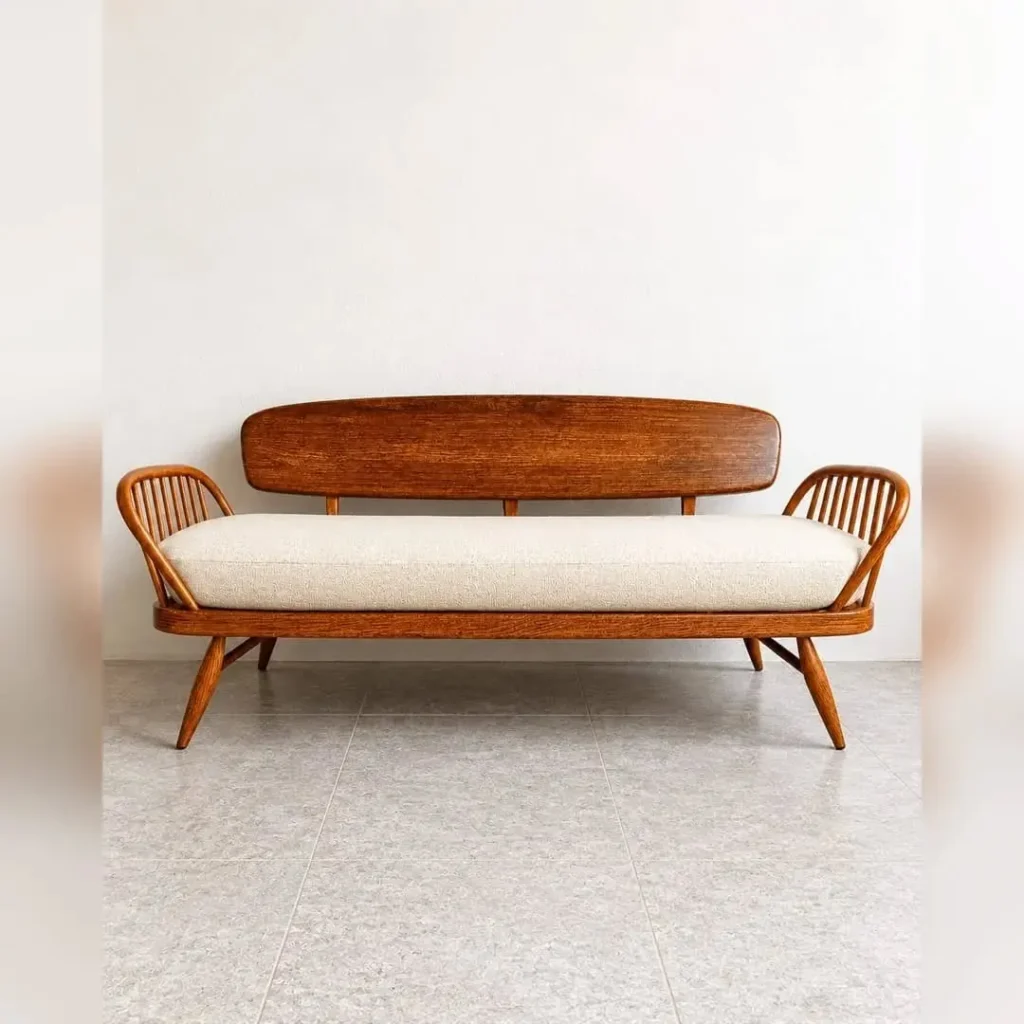
The low, tapered wooden legs are what instantly signal “midcentury” before anyone even registers the fabric or color — look for this silhouette first, since it does more visual work than almost any other single piece in the room.
2. A Walnut Credenza as a TV Console
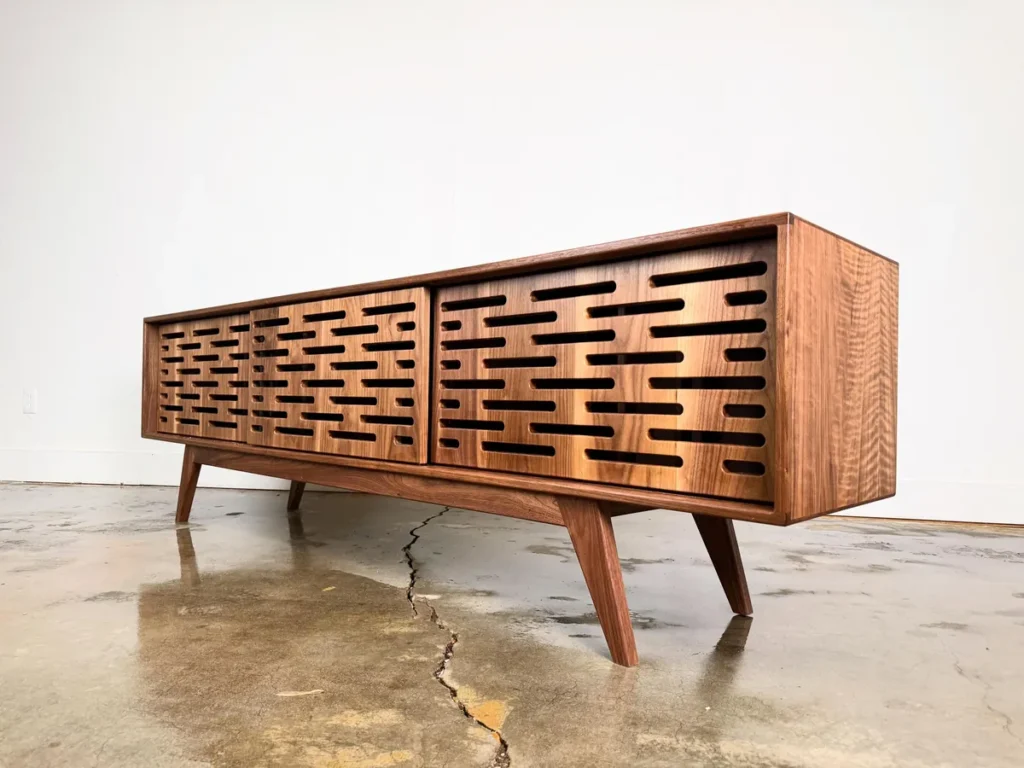
A long, low walnut credenza with sliding or tambour doors hides modern media equipment while anchoring the whole room in warm wood tone — genuinely one of the most useful pieces in this entire style.
3. A Pair of Accent Chairs Instead of a Second Sofa
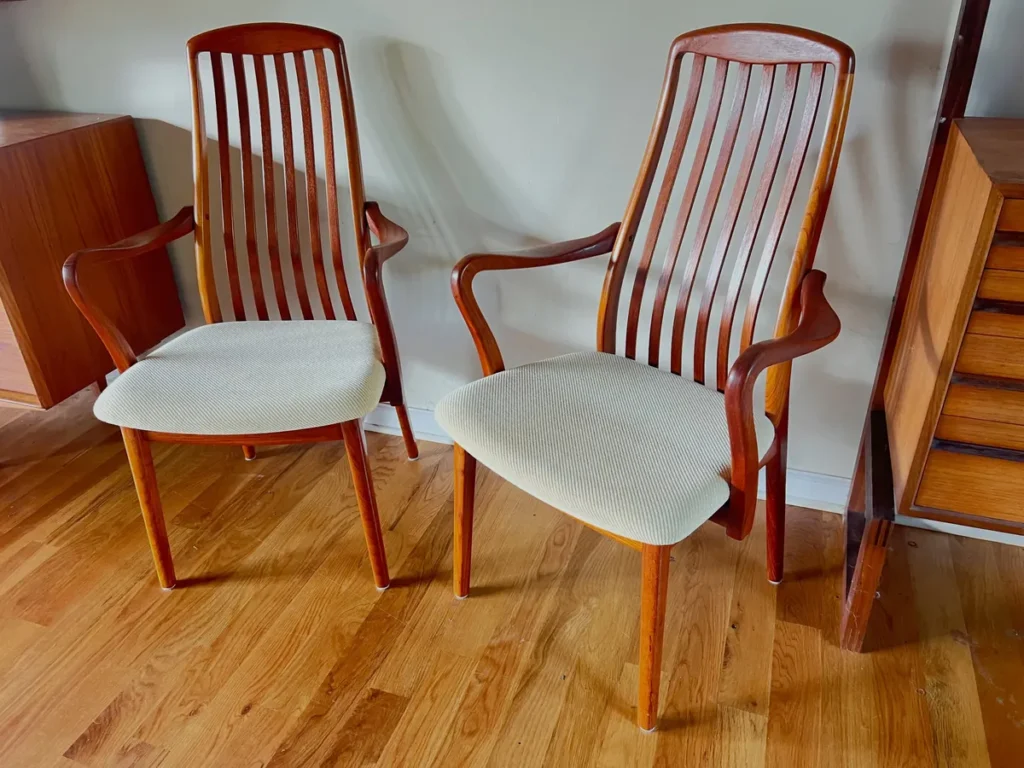
Two matching or complementary accent chairs with exposed wood legs, rather than a second large sofa, keeps the room feeling lighter and more open — a classic midcentury layout choice over heavier upholstered pieces.
4. A Sculptural Coffee Table with an Organic Shape
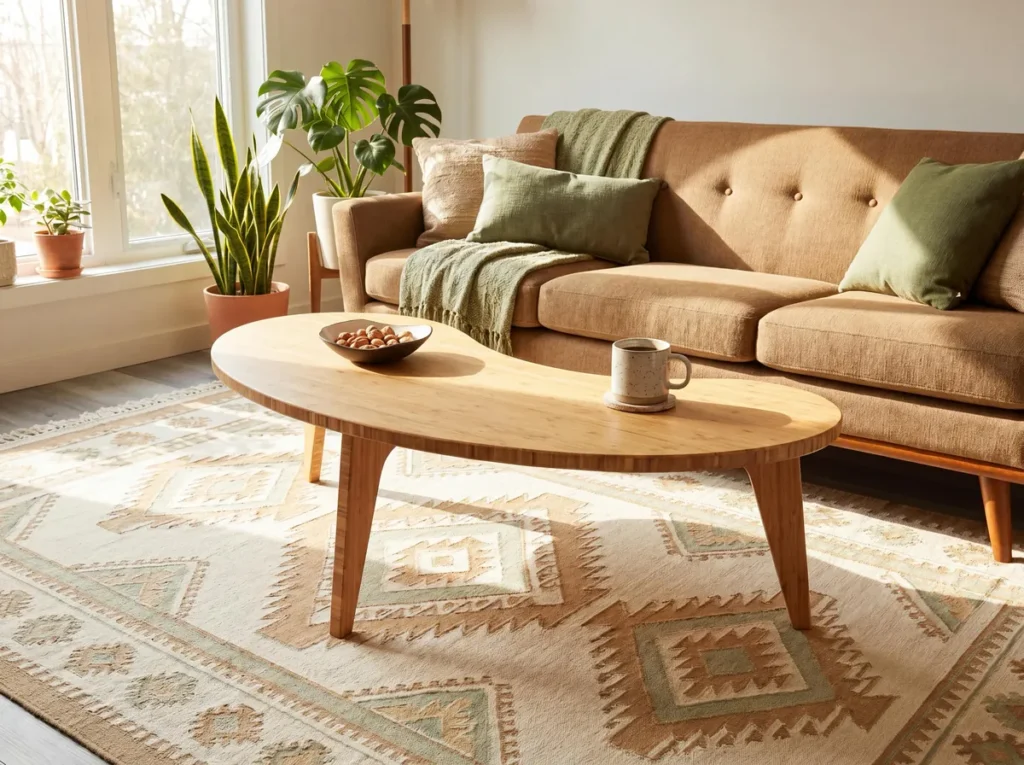
Skip the standard rectangular coffee table for something with a kidney, boomerang, or free-form shape — it’s one of the easiest single swaps to shift a room’s whole feel toward midcentury without changing anything else.
5. Nesting Side Tables in Graduated Sizes
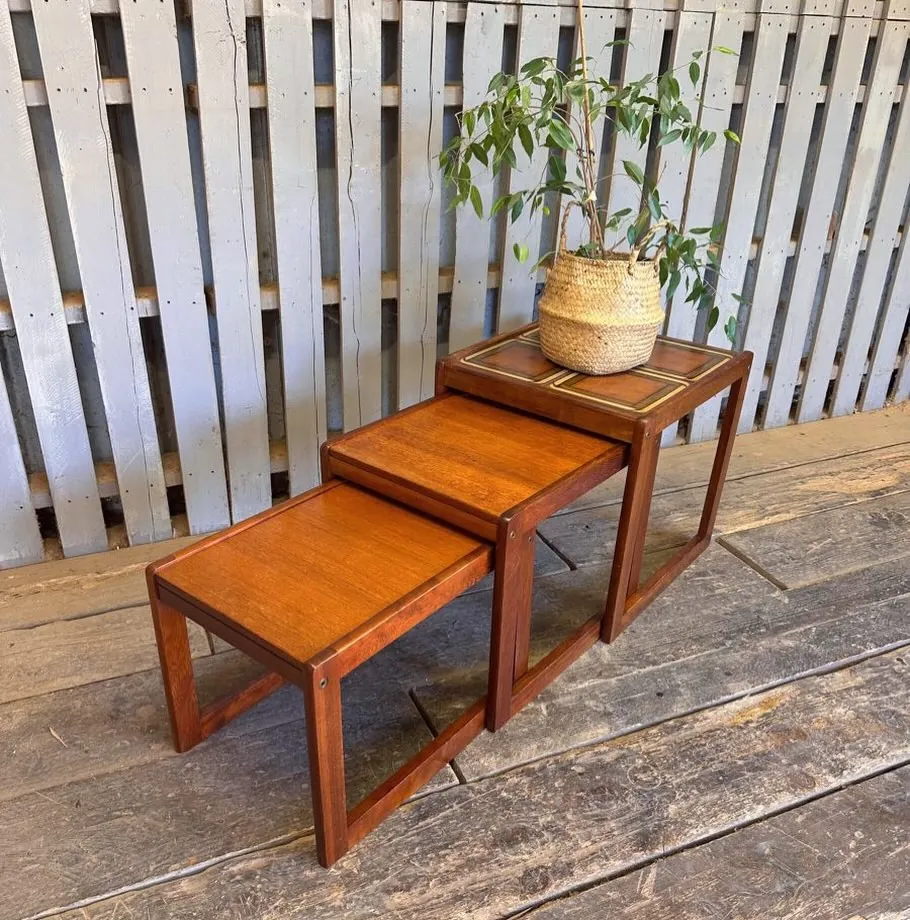
A set of two or three nesting tables, tucked together when not in use and pulled apart for extra surface space, is a genuinely practical midcentury staple rather than just a style choice.
Color Palettes
6. Burnt Orange as the Statement Color
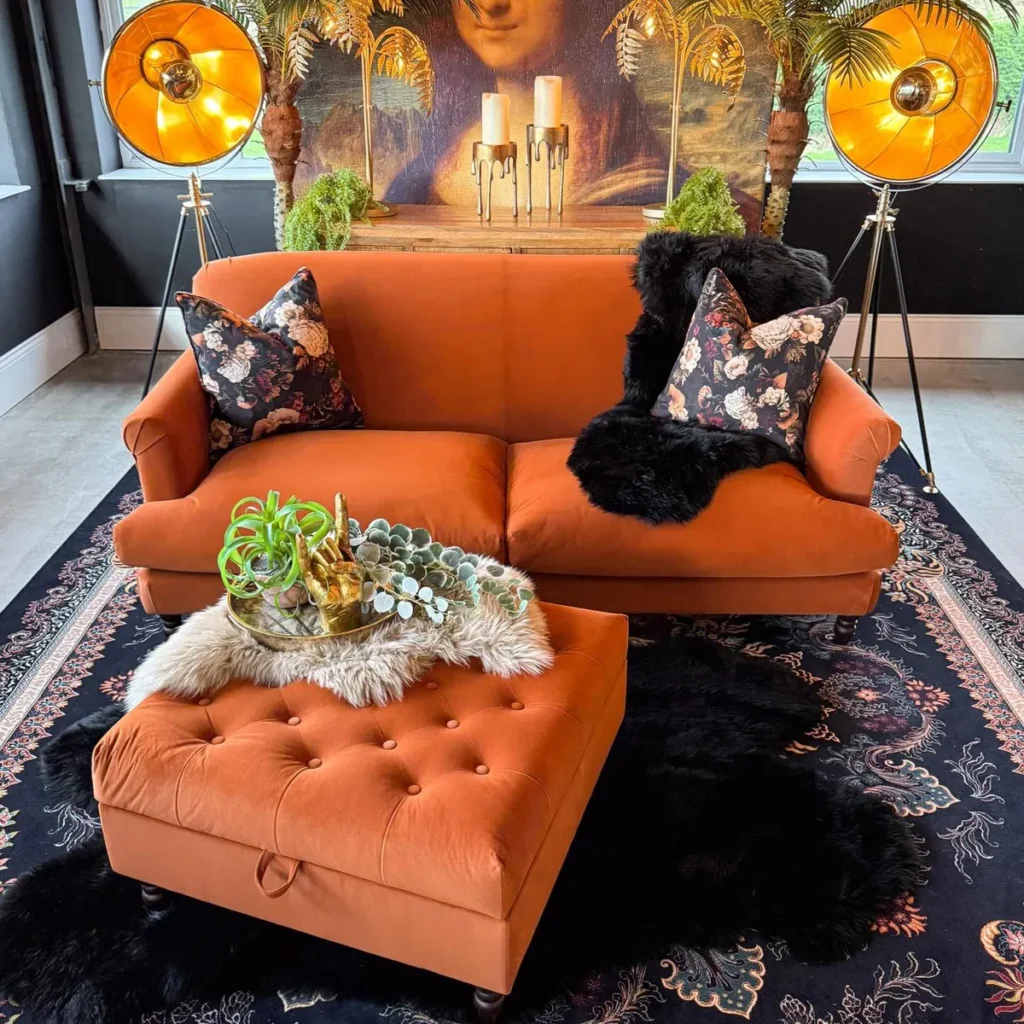
Burnt orange shows up constantly in original midcentury design, and a single statement piece — a sofa, an accent chair — in this tone instantly reads as era-appropriate without committing the whole room to it.
7. Mustard Yellow Accents Against Neutral Walls
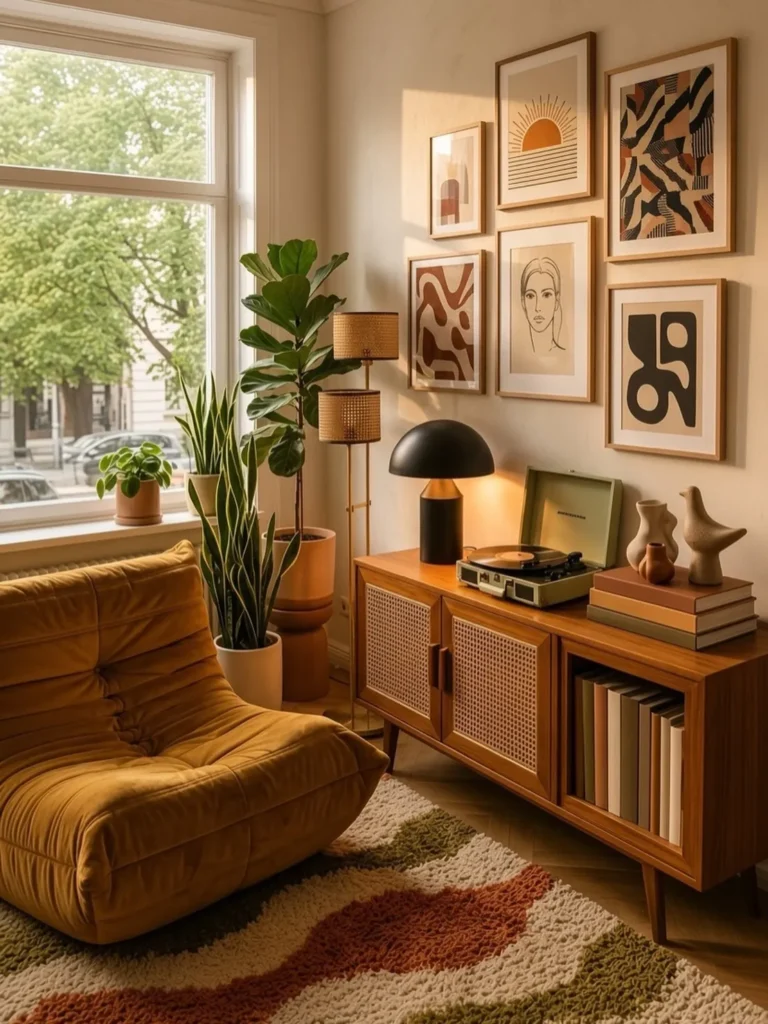
Mustard is another signature midcentury tone, best used in smaller doses — a throw pillow, a single chair — against otherwise neutral cream or white walls so it doesn’t overwhelm the space.
8. Olive Green Upholstery
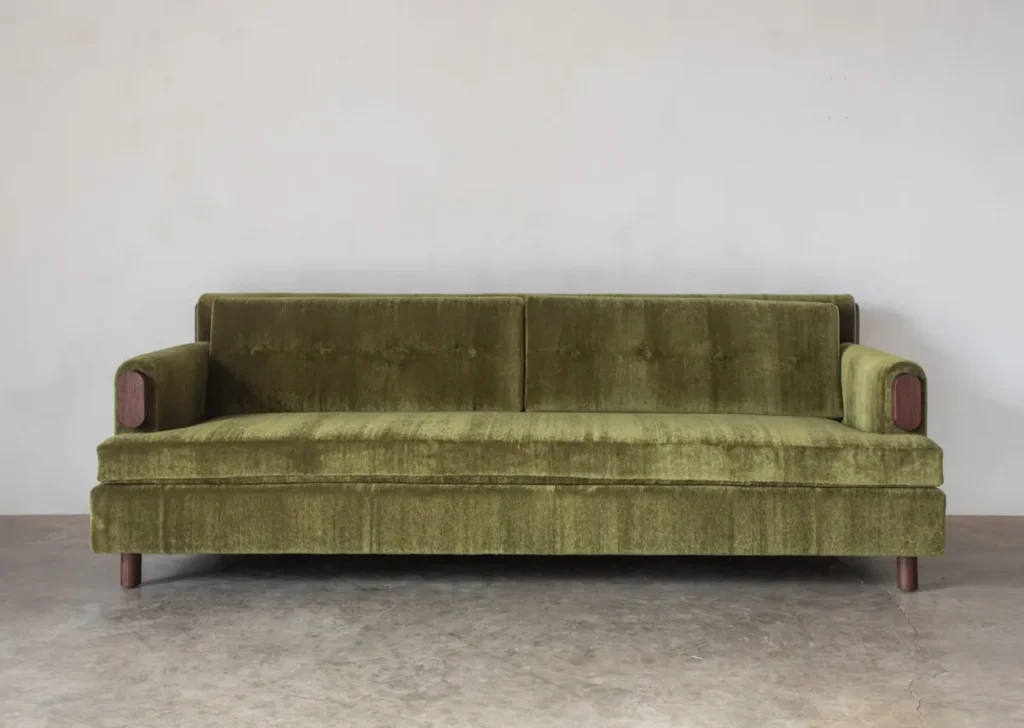
A deep olive green sofa or chair gives a more subdued, grounded palette than the brighter orange and mustard tones, and it pairs especially well with walnut wood furniture.
9. Warm Cream Walls as a Neutral Base
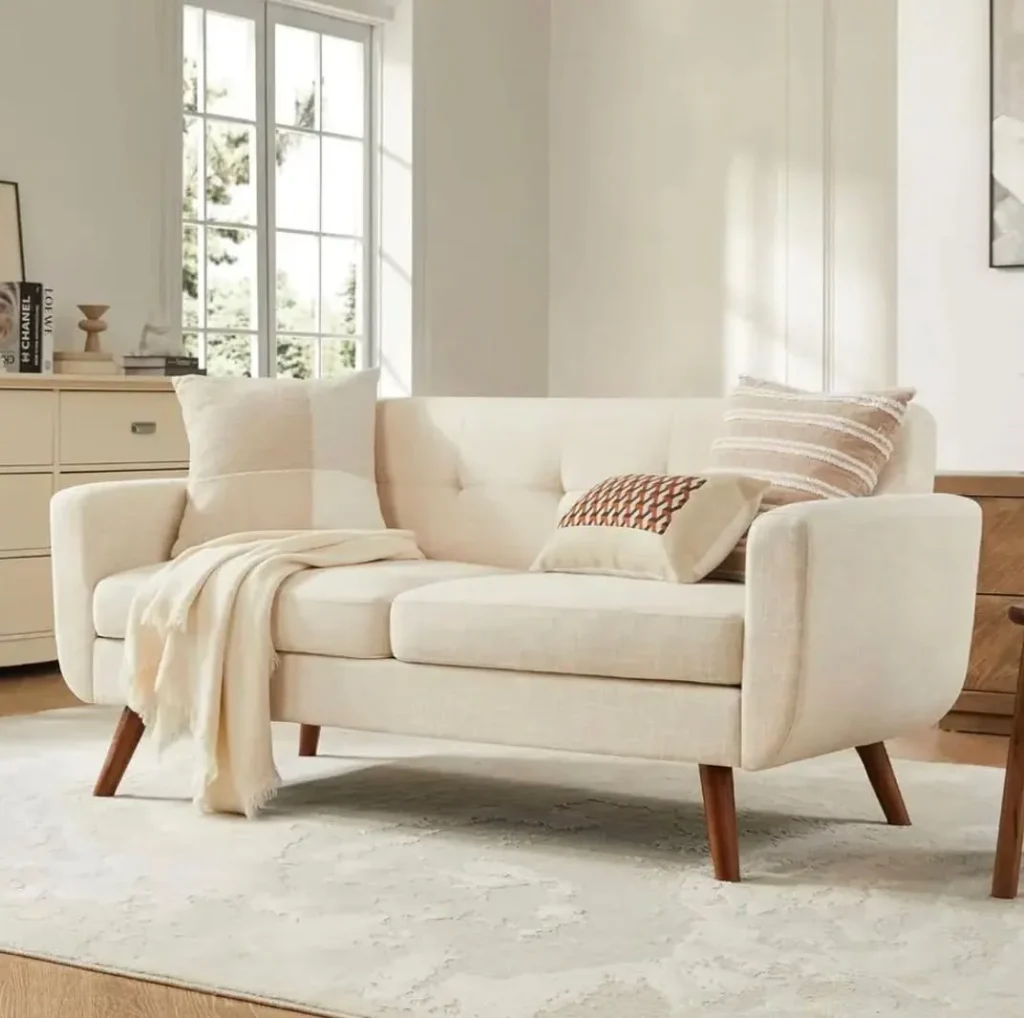
A warm, slightly yellow-toned cream rather than a stark white keeps walls from feeling cold against all the wood tones in the furniture — this undertone match matters more than people expect.
10. Teal as a Cooler Counterpoint
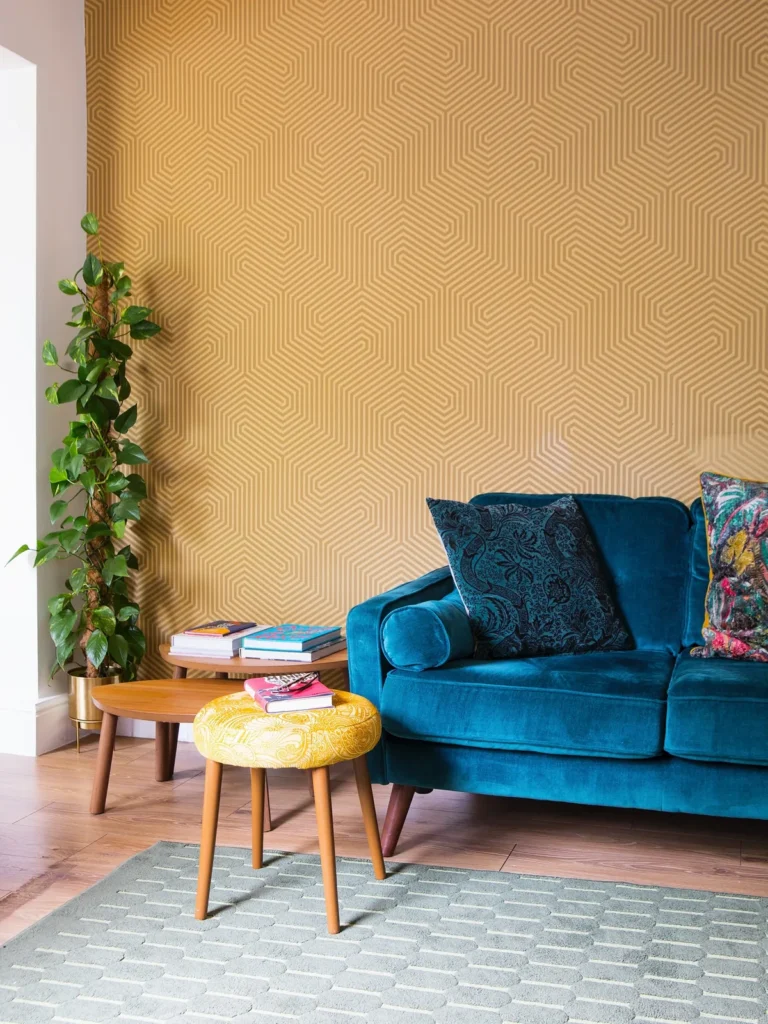
Teal is a less common but genuinely era-accurate choice, and it works as a good cooler counterbalance if the rest of your palette leans heavily warm with orange and mustard tones.
Lighting
11. A Sputnik-Style Chandelier
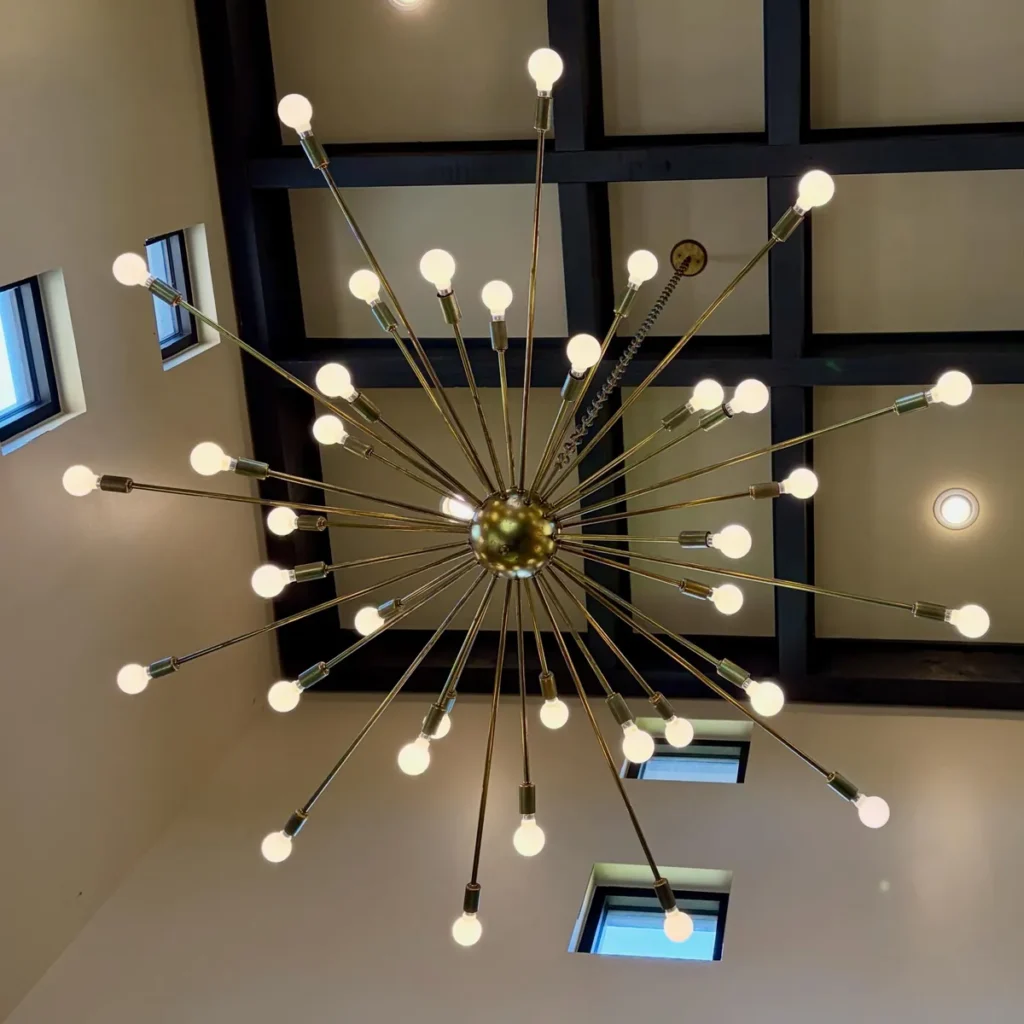
The atomic-era starburst light fixture is one of the most recognizable midcentury lighting choices, and a single statement piece overhead can carry a lot of the style’s character on its own.
12. An Arc Floor Lamp Over the Seating Area
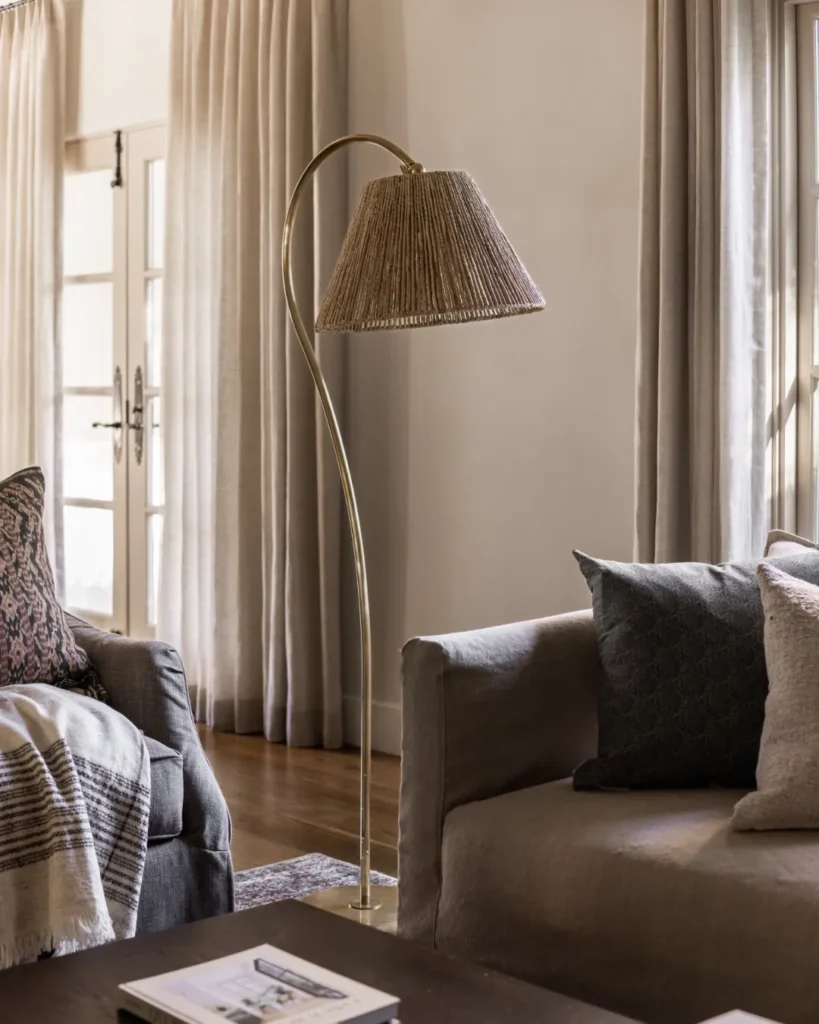
An arc lamp with a wide curved arm, positioned to sweep light over a sofa or chair, is both a functional reading light and a sculptural piece in its own right — one of the more iconic midcentury silhouettes.
13. Globe Pendant Lights in a Cluster
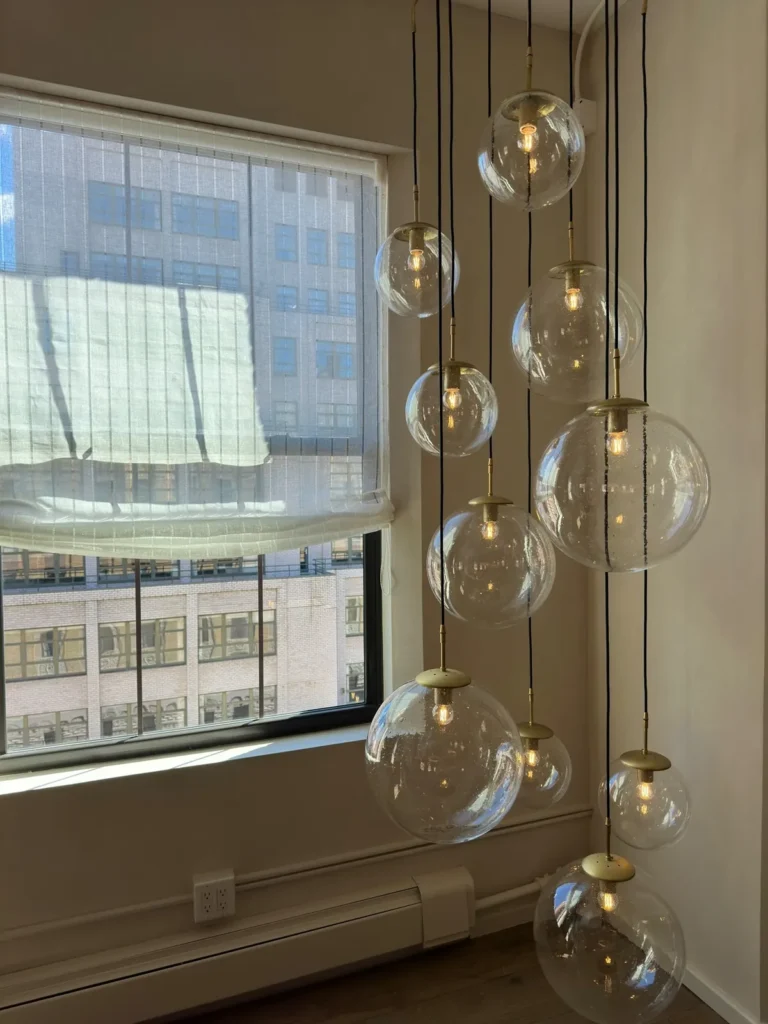
A cluster of simple glass or opaque globe pendants, hung at varying heights, gives a softer, more ambient lighting moment than a single large fixture.
14. A Tripod Floor Lamp with a Wood Base
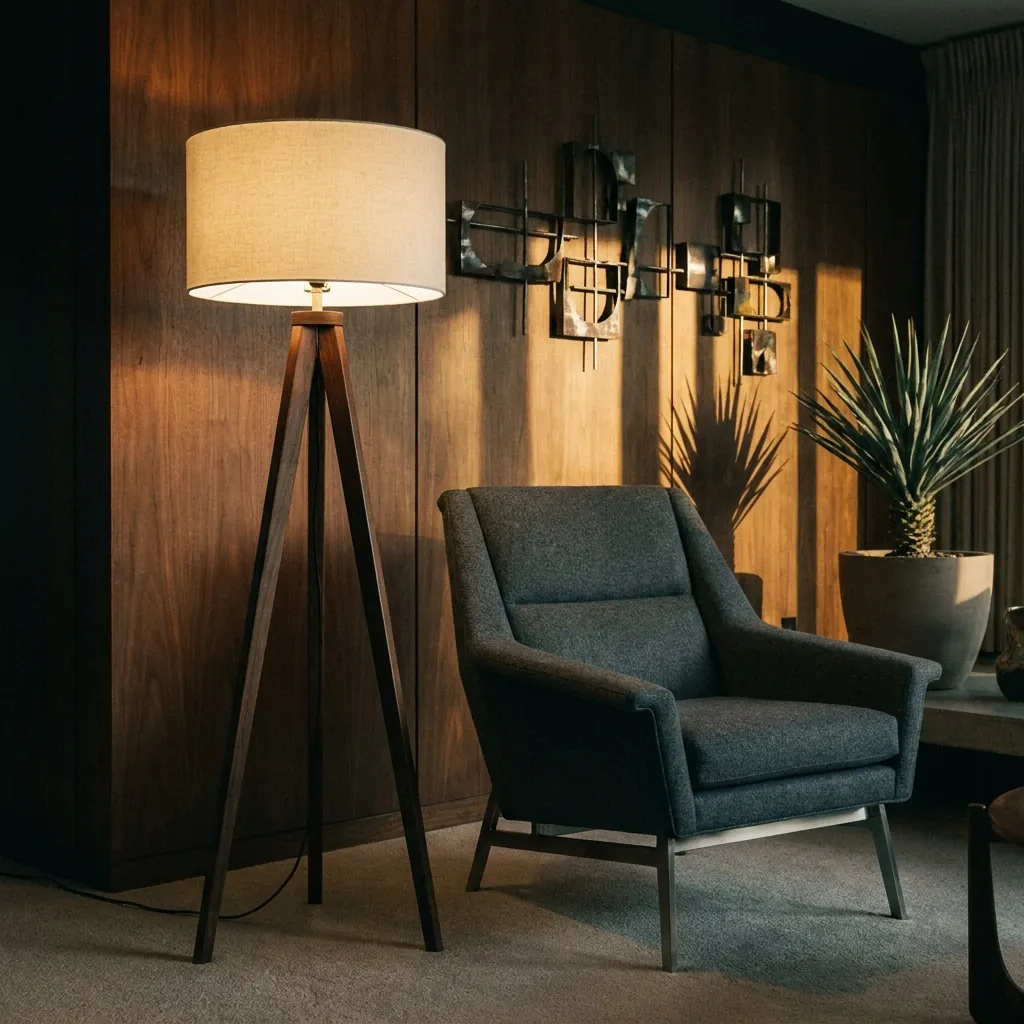
A tapered wood tripod base under a simple drum or cone shade is one of the easiest, most affordable midcentury lighting pieces to find, and it reinforces the wood-tone palette already present elsewhere in the room.
Shapes & Patterns
15. A Geometric Rug with Repeating Shapes
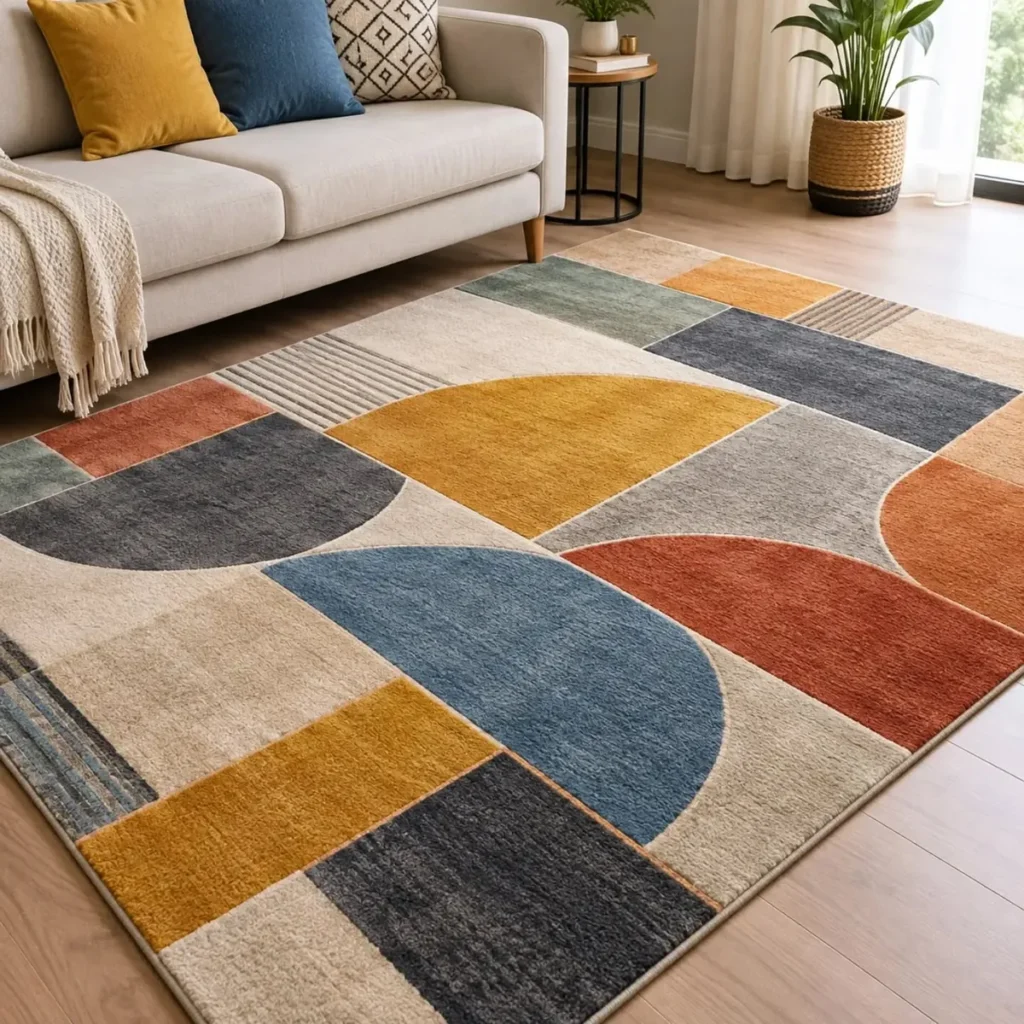
Look for a rug with a clean, repeating geometric pattern — diamonds, circles, or angular shapes — rather than an organic or floral print, which anchors the floor in the same clean-lines language as the furniture.
16. Starburst Wall Art or Mirrors
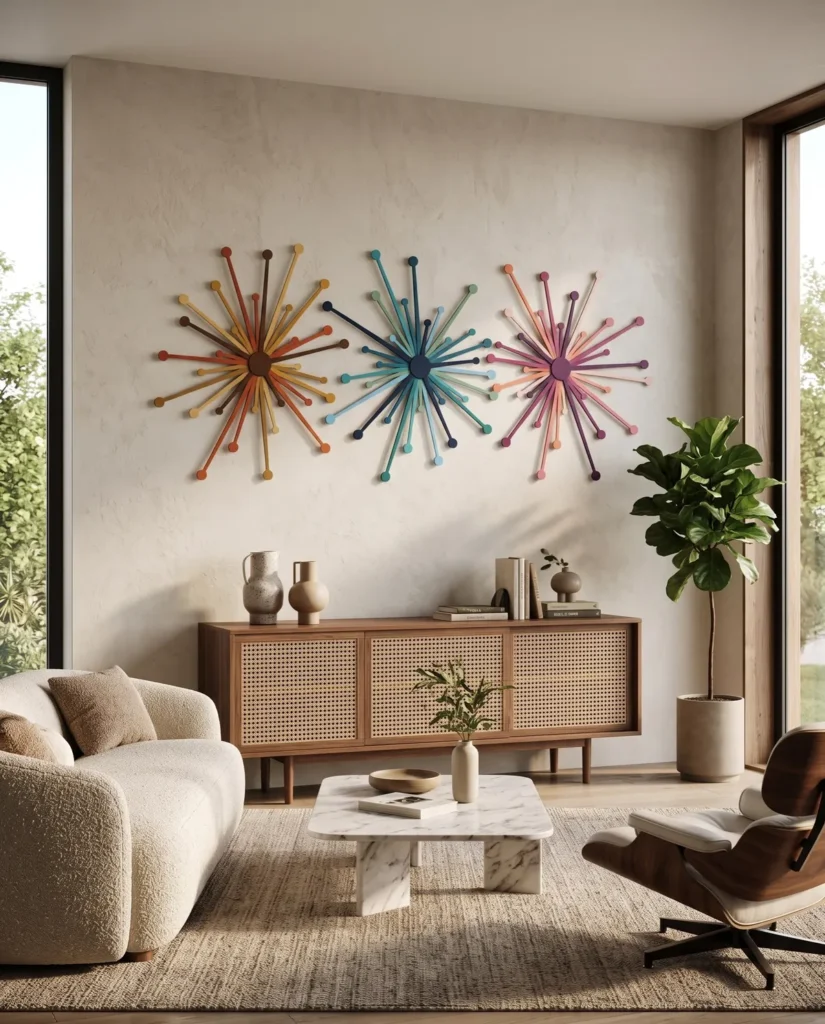
A starburst-shaped mirror or wall sculpture is a smaller, lower-commitment way to bring in the atomic-era motif without a large furniture purchase.
17. Boomerang or Kidney Shapes Repeated Throughout
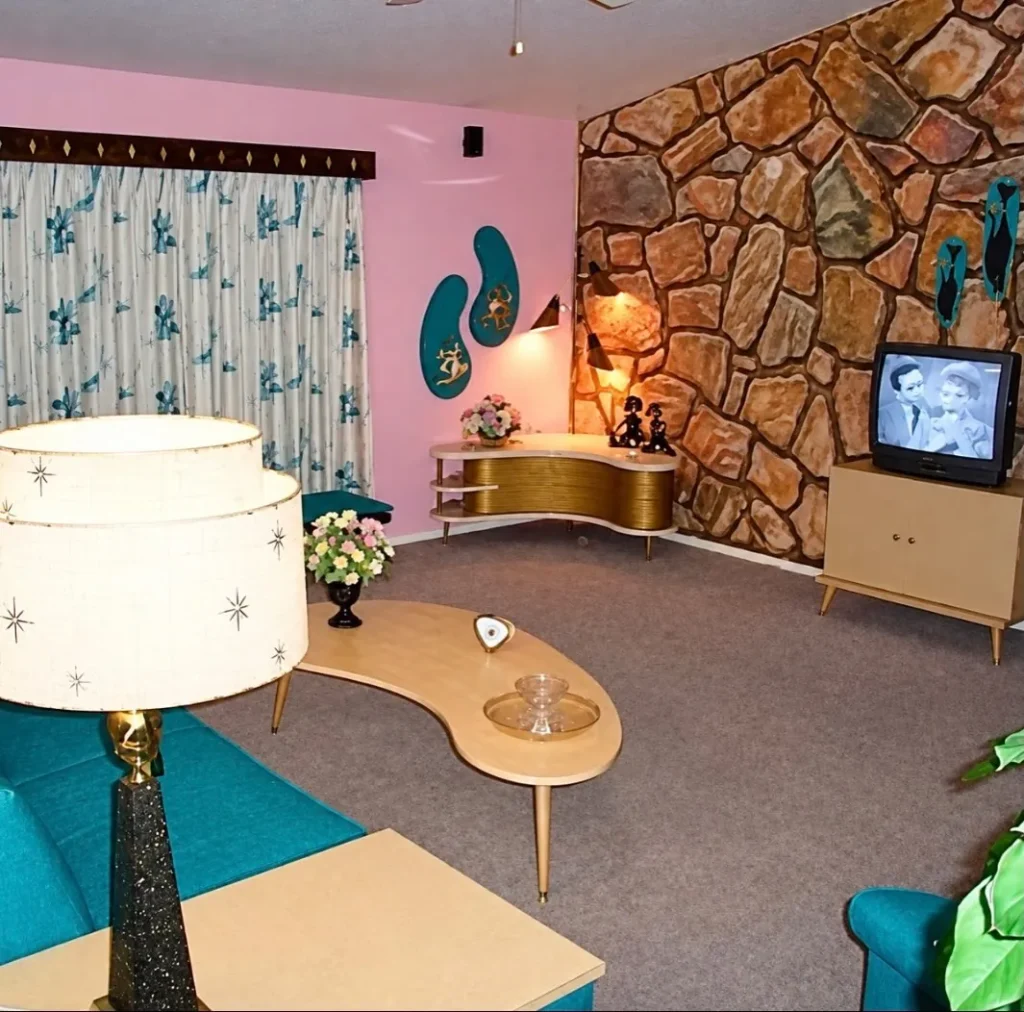
Repeating the same organic curved shape across a coffee table, a mirror, and a piece of art ties the room together visually without needing matching colors or materials.
18. Abstract Art with Bold, Simple Forms
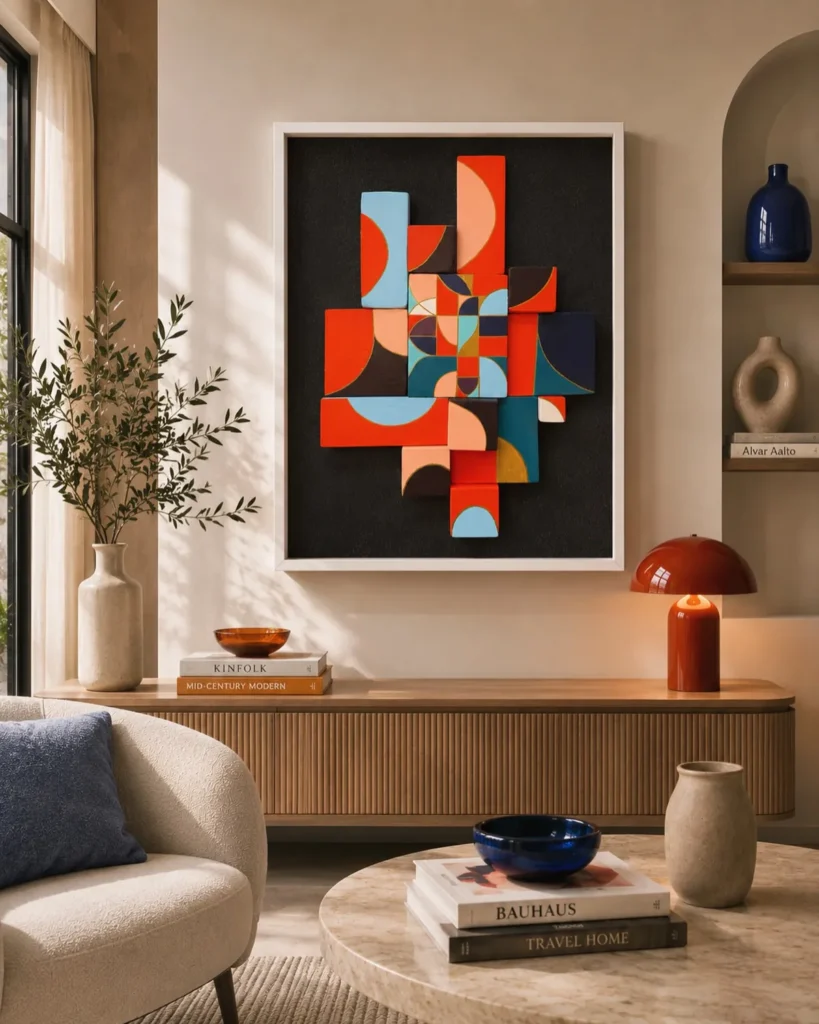
Midcentury-era art tends toward bold, simplified abstract shapes rather than busy detail — look for prints or originals that echo this restraint rather than anything overly intricate or photorealistic.
Materials & Textures
19. Exposed Walnut Wood Throughout
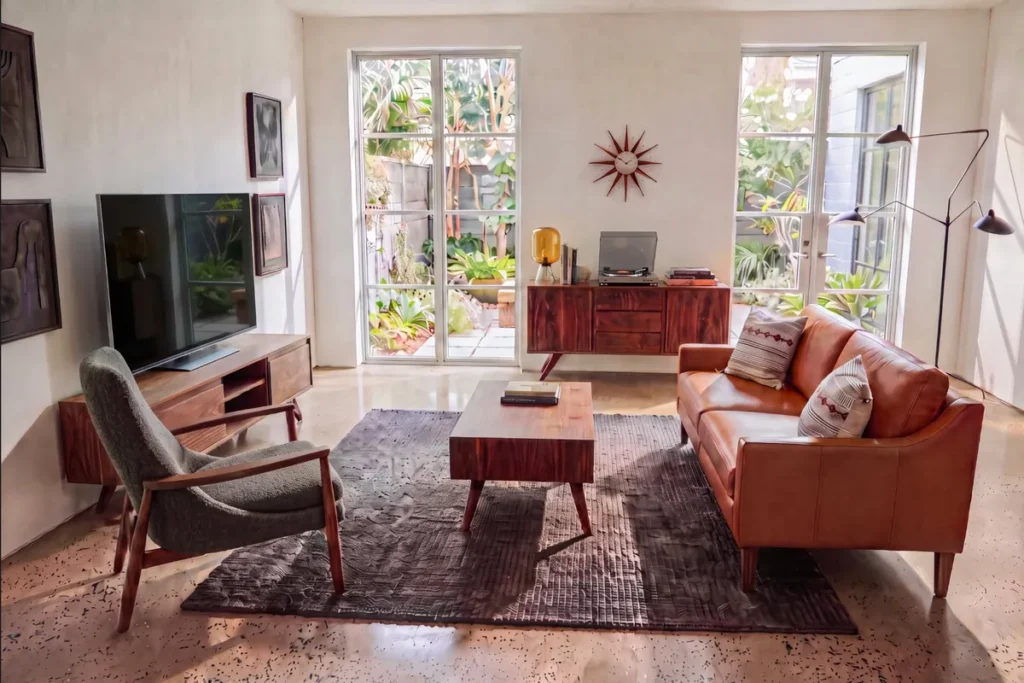
Walnut is the signature wood tone of the era — prioritizing it across your major furniture pieces (even if they’re from different sources) keeps the room cohesive without needing matching sets.
20. Boucle or Textured Woven Upholstery
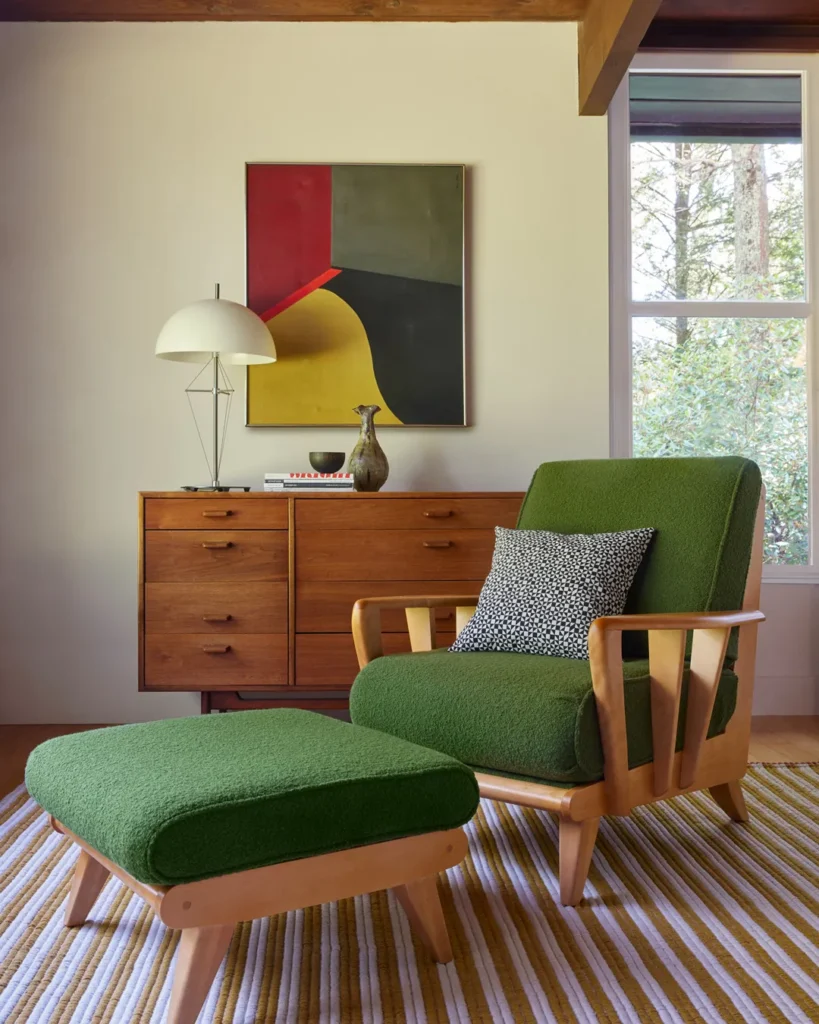
A nubby, textured boucle fabric on a chair or sofa adds tactile interest that a flat solid fabric can’t, and it’s having a real resurgence in reproduction midcentury furniture right now.
21. Leather Accents on Chairs or Ottomans
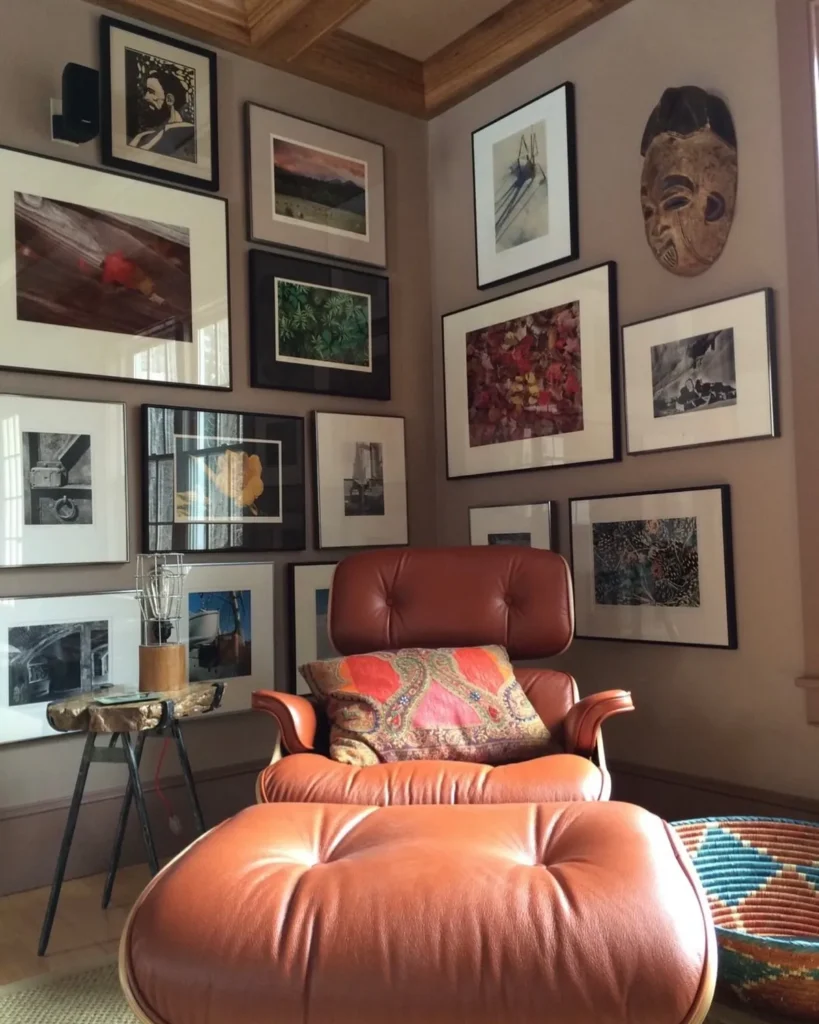
Cognac or tan leather on a chair or ottoman adds warmth and a bit of masculine contrast to an otherwise soft, fabric-heavy room — a classic pairing with walnut wood tones.
22. Woven Cane or Rattan Detailing
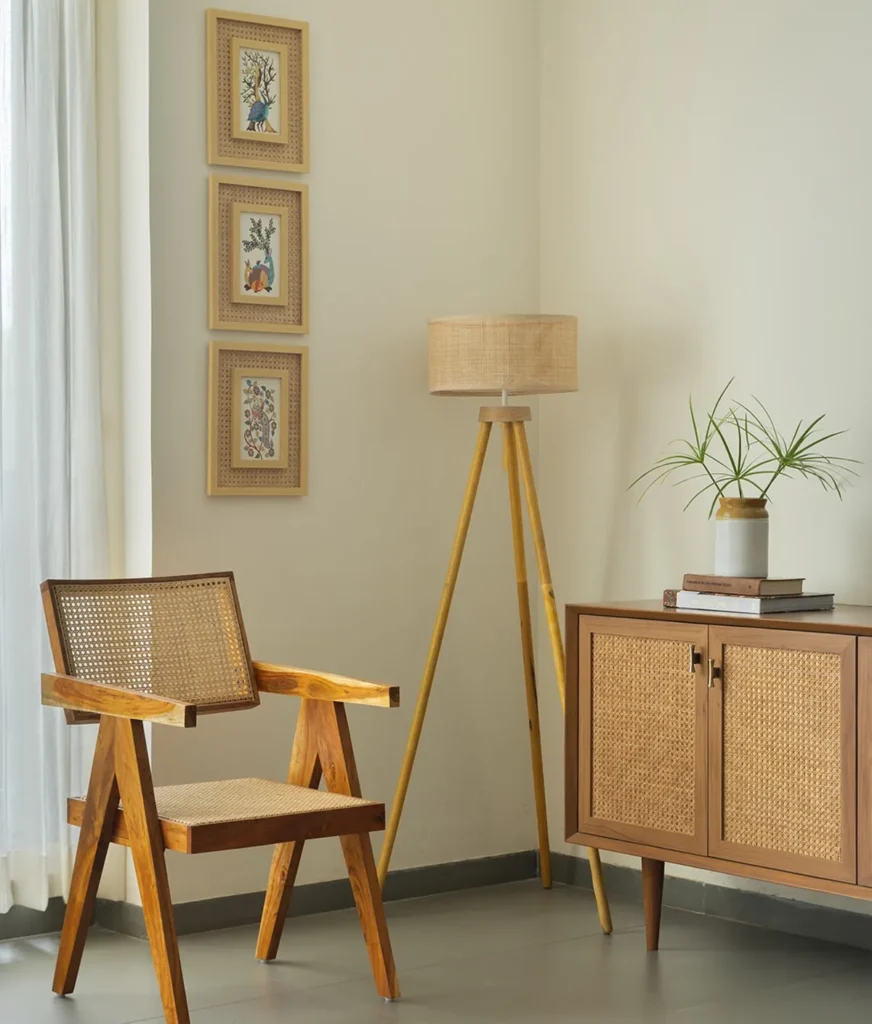
Cane detailing on a cabinet front or a chair back brings in natural texture and lightens up what can otherwise become a heavy, all-wood room if every piece is solid walnut.
Layout & Room Flow
23. Keep Furniture Legs Visible, Not Skirted
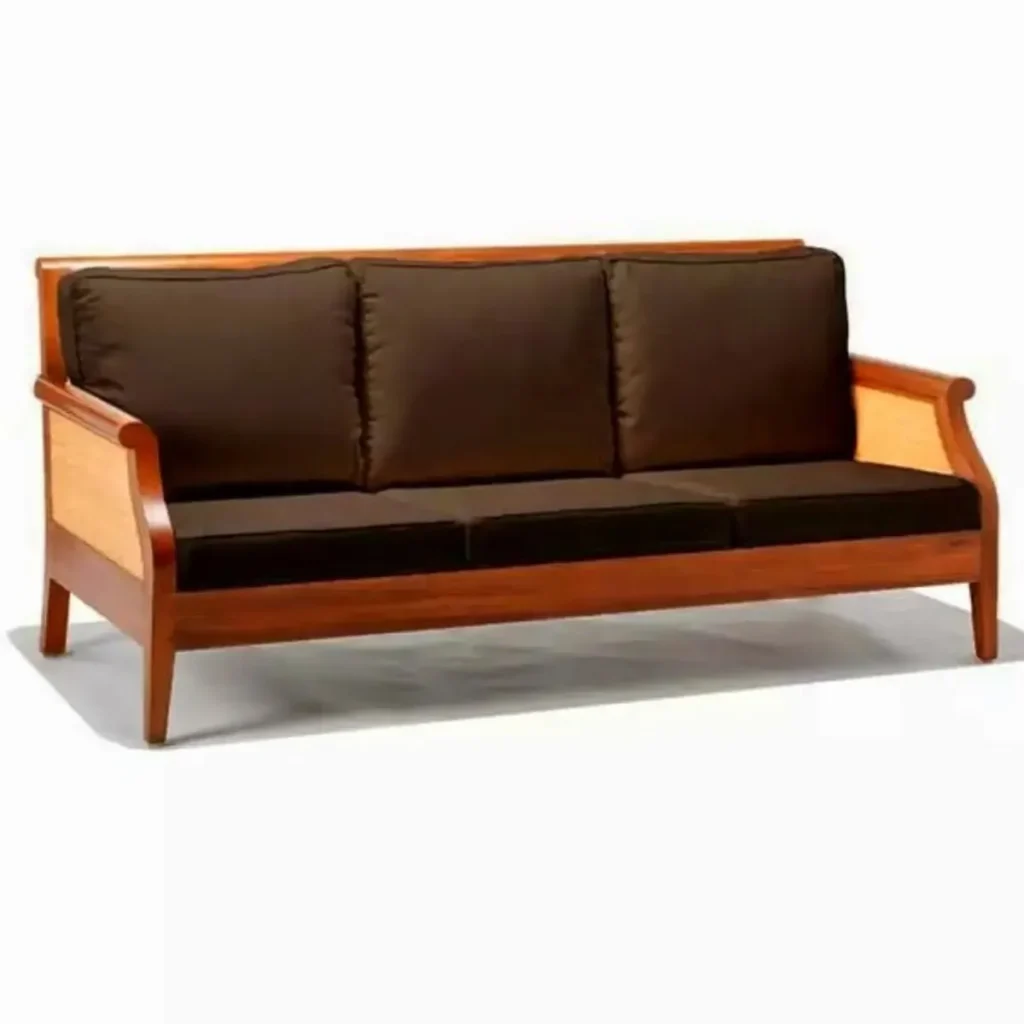
Midcentury furniture is defined partly by its exposed tapered legs — choosing pieces without a floor-length skirt keeps the room feeling lighter and lets more floor space show through, which is a key part of the look.
24. Float Furniture Away from the Walls
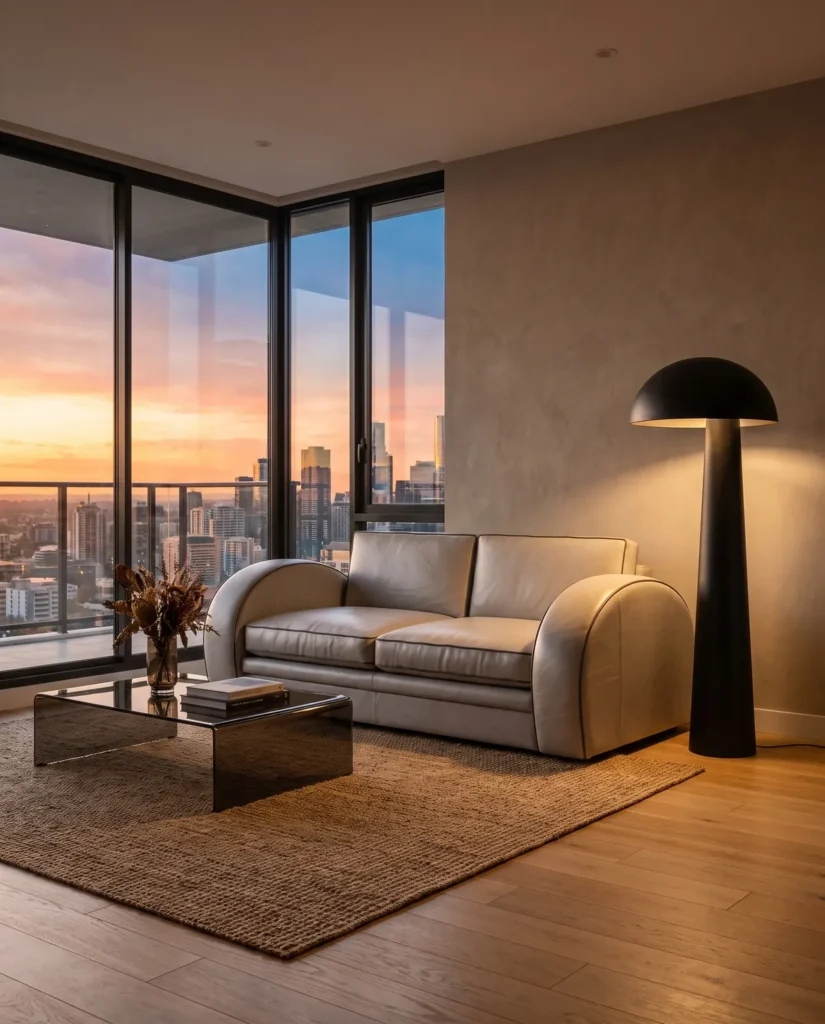
Rather than pushing every piece against the wall, midcentury rooms often float the seating arrangement toward the center, creating a more open, conversational layout with walking space around the perimeter.
25. A Low-Profile Furniture Scale Throughout
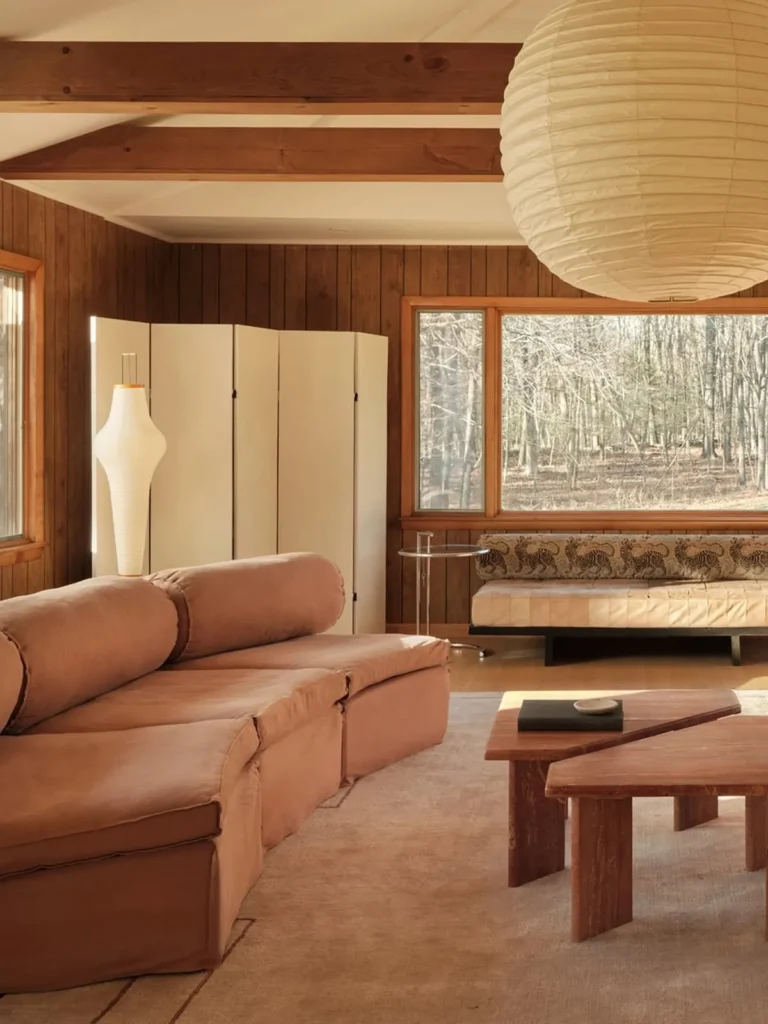
Keep seating and tables lower to the ground rather than tall and bulky — this was a genuine design principle of the era, intended to make rooms feel more open and horizontal.
26. An Open Sightline Between Living and Dining Areas
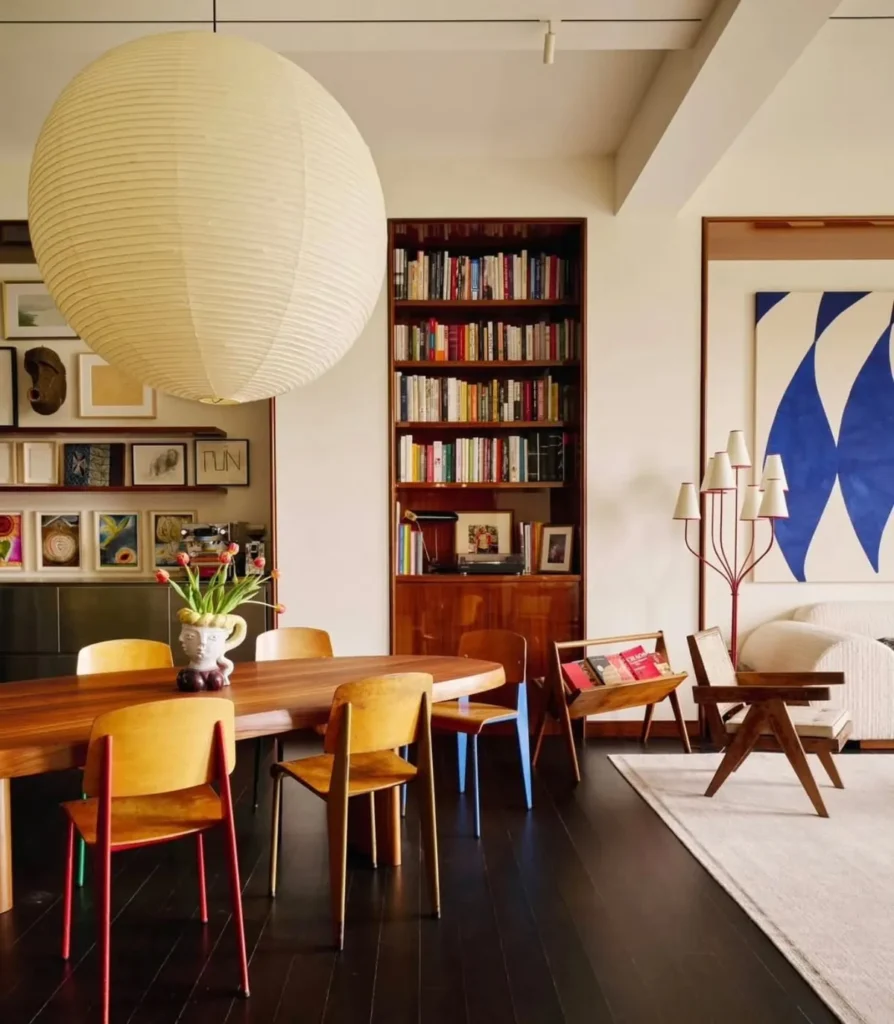
Midcentury homes were often designed with open floor plans in mind — in an existing space, arranging furniture to preserve a clear sightline between adjoining rooms reinforces that original design intent.
Mixing Midcentury with Other Styles
27. Midcentury Furniture with Modern Minimalist Walls
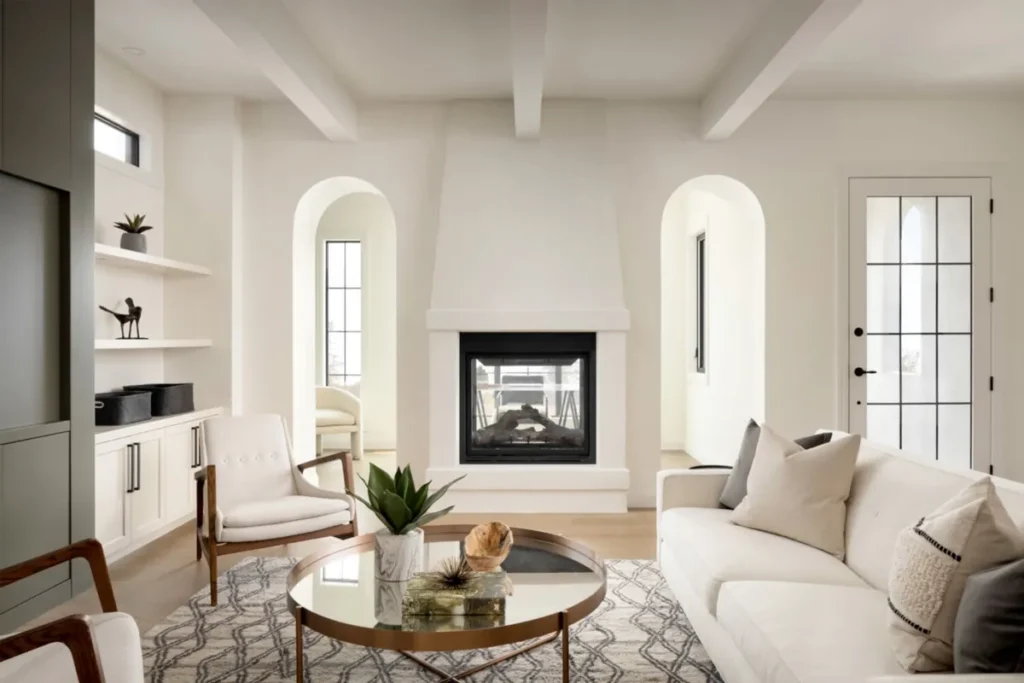
Pairing classic midcentury furniture shapes with very plain, minimalist wall treatments — no heavy trim, simple paint — keeps the overall feel current rather than like a period recreation.
28. Midcentury Shapes with Bohemian Textiles
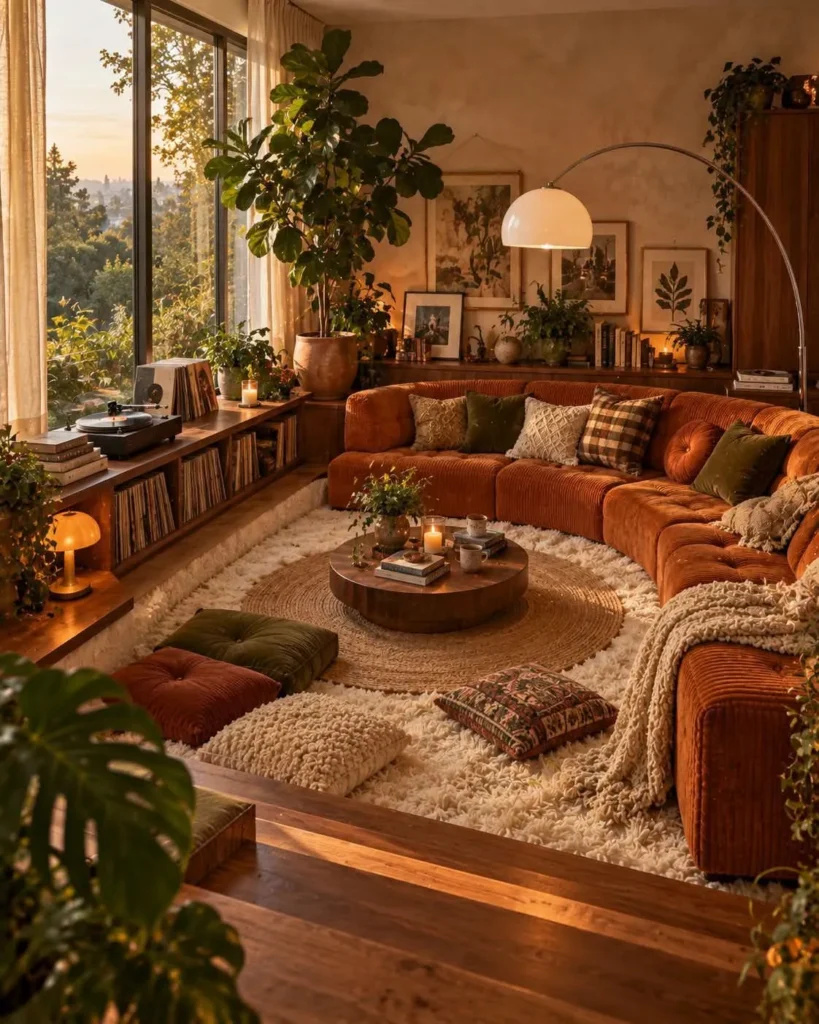
Layering a boho-patterned rug or textile with classic midcentury furniture shapes softens the clean lines and prevents the room from feeling too stark or showroom-perfect.
29. One Statement Vintage Piece Among Mostly New Furniture
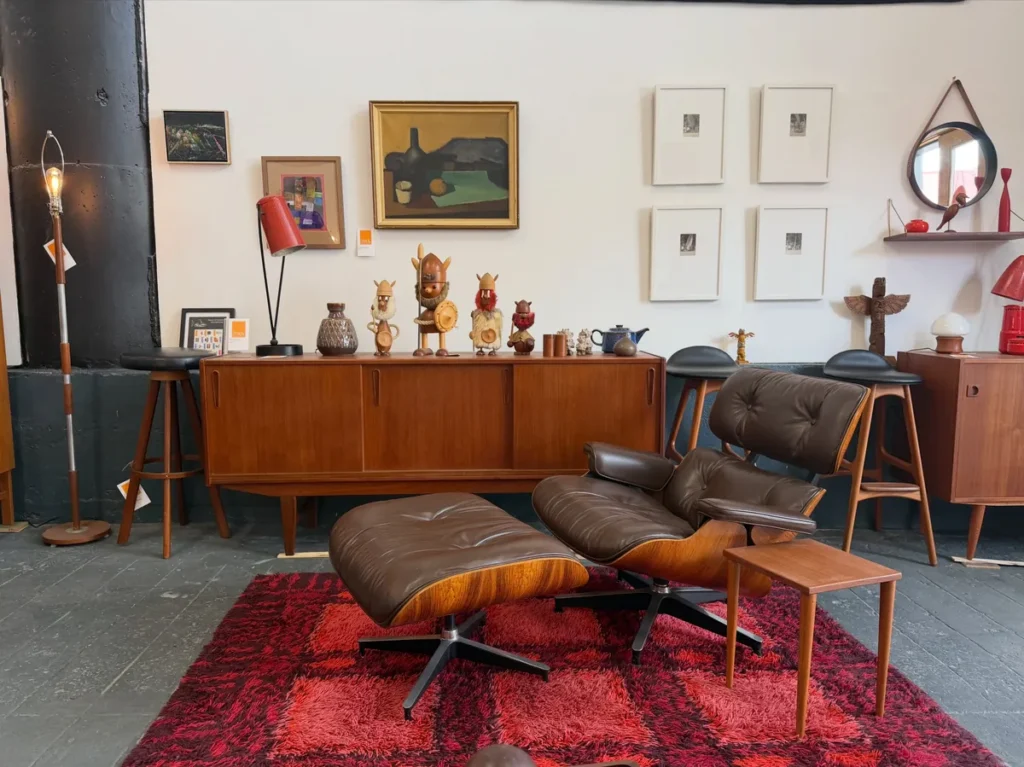
You don’t need an entire room of authentic vintage pieces — a single real vintage find, like an original credenza or chair, mixed with newer furniture that echoes the same shapes gives an authentic feel without the full hunting commitment.
Budget-Friendly Approaches
30. Thrift and Estate Sale Hunting for Original Pieces
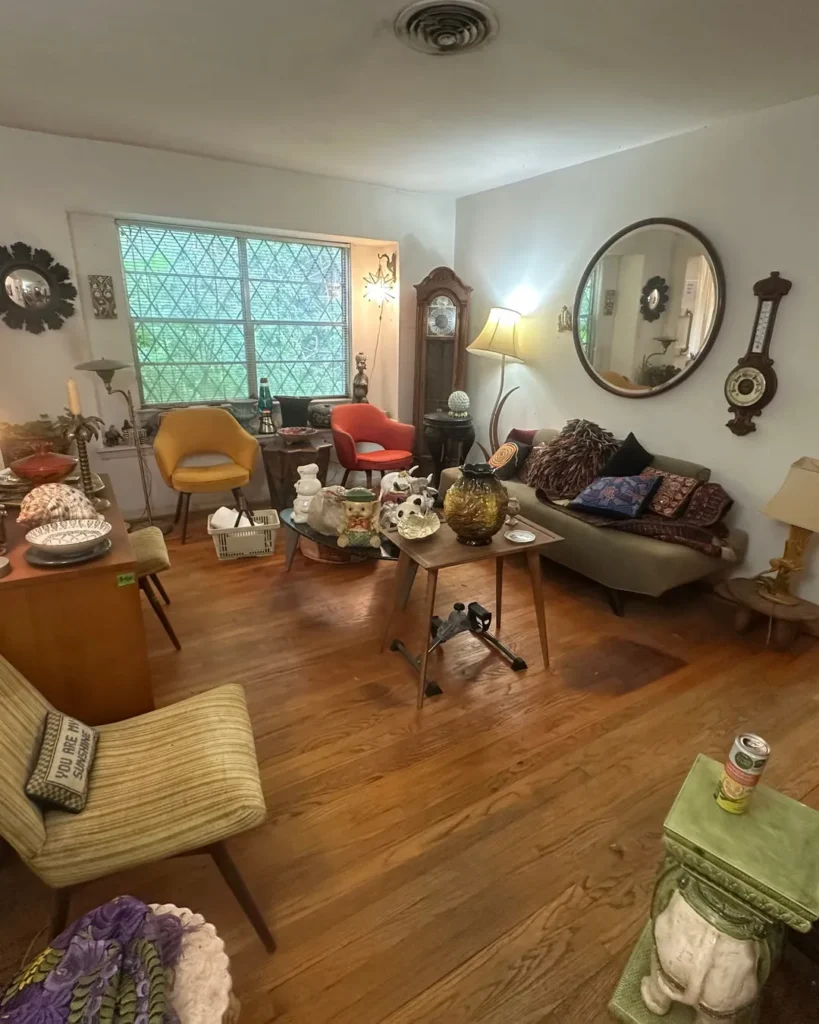
Genuine vintage midcentury furniture shows up regularly at estate sales and thrift stores, often for far less than reproduction pieces — Nora found her credenza this way for a fraction of a new one’s cost, with the trade-off of a weekend refinishing project.
31. Start with Accessories Before Furniture
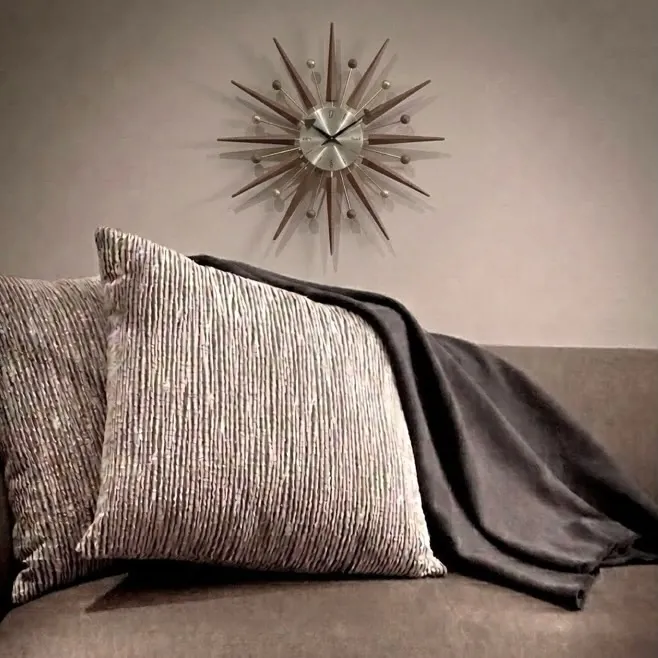
If new furniture isn’t in the budget yet, starburst mirrors, throw pillows, and a geometric rug can shift a room’s feel substantially while you wait to find the right larger pieces secondhand.
32. Refinish Existing Furniture Instead of Replacing It
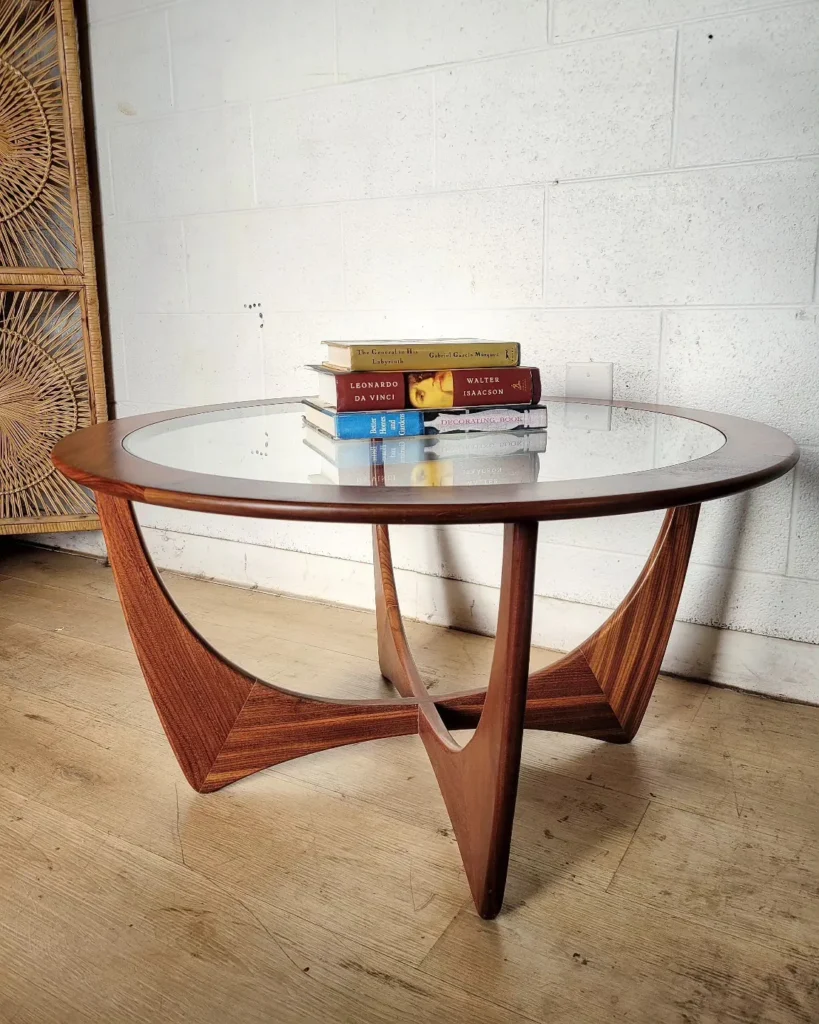
A plain existing coffee table or console can often be given tapered wood legs and a fresh stain rather than replaced outright — a more budget-conscious way to get the silhouette without a full furniture purchase.
Which Approach Fits Your Room?
| Approach | Best For | Budget | Effort |
|---|---|---|---|
| All-New Reproduction Furniture | Fastest full-room transformation | $$$ | Low |
| Thrifted & Vintage Hunting | Authentic character, patient shoppers | $ | High |
| Accessories-First | Testing the style before committing | $ | Low |
| Refinishing Existing Furniture | Budget-conscious, hands-on homeowners | $-$$ | Moderate |
Pro tip: If you’re buying vintage, check the underside and joints of wood furniture before the finish, not after — Nora’s bought two “great deal” pieces secondhand that turned out to have structural damage hidden under a fresh coat of paint, which cost more to fix than buying a solid piece outright would have.
What I’d Actually Do If I Were Starting Over
If I were building a midcentury living room from zero, I’d start with the walnut credenza and the tapered-leg sofa — those two pieces alone set the tone for everything else, and you can build out color, lighting, and texture around them over time rather than trying to buy the whole room at once.
FAQs: Midcentury Modern Living Rooms
What wood is most associated with midcentury modern furniture?
Walnut is the signature wood tone of the era, though teak also shows up frequently, especially in Scandinavian-influenced midcentury pieces.
How do I make a midcentury living room feel current, not dated?
Pairing classic midcentury furniture shapes with simple, minimalist wall treatments or mixing in boho textiles keeps the room from feeling like a period recreation.
What colors are considered authentically midcentury modern?
Burnt orange, mustard yellow, olive green, and teal are all signature tones of the era, typically used as accent colors against a warm neutral base like cream.
Is it worth buying vintage midcentury furniture instead of reproductions?
Vintage pieces are often better made and more affordable than reproductions, but they require more patience to find and should be checked carefully for structural damage before purchase.
What’s the easiest way to start a midcentury modern living room on a budget?
Starting with smaller accessories — a starburst mirror, a geometric rug, throw pillows — lets you build the style gradually before investing in larger furniture pieces.

Hi, I’m Ashley Miller, a wife, a busy mom, and someone who loves to share all the things that make life a little more fun and beautiful.
From easy DIY projects, delicious recipes, and chic hairstyles to nail ideas and home decor tips, I share everything I’ve learned and love.
My goal is to inspire other women to explore their creativity and make their homes even more special.


