I repainted my bedroom sage green two winters ago expecting it to look nice and didn’t expect how much it would actually change how the room felt to fall asleep in — there’s a reason “calming” shows up in basically every article about green rooms, and it turns out it’s not just marketing.
I’ve since gone slightly overboard researching which shades and combinations actually read as restful versus which ones tip into either too dark and cave-like or too bright and energizing instead of soothing.
This list is sorted from the easiest, lowest-commitment changes up to the bigger ones, because not everyone wants to repaint a whole bedroom to try a theme — sometimes the bedding and a few plants genuinely get you 80% of the way there.
A few of these came from my own bedroom’s slow evolution, a couple from my friend Deanna who repainted her whole house in greens over the course of a year, and the rest from an unreasonable amount of time spent on Pinterest with “green bedroom” typed into the search bar more times than I’d like to admit.
1. Start with Sage Green as Your Base Wall Color
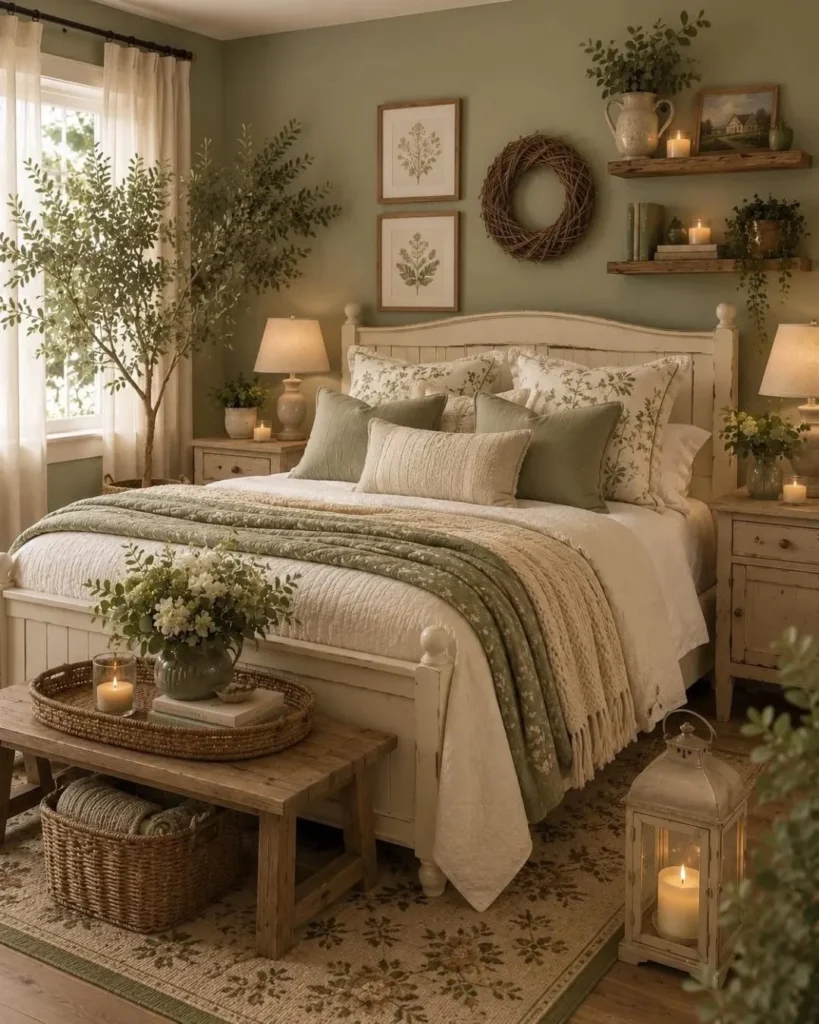
If you only do one thing on this list, this is it. Sage — a muted, grey-toned green — is the single most reliably calming shade across nearly every bedroom lighting condition, which matters more than people think, since a green that looks soothing in a showroom can read completely different under your actual window’s light.
Pro tip: Test the paint on an actual wall, not just a swatch card, and look at it in the morning, midday, and evening before committing — green shifts more dramatically with changing light than almost any other color family.
2. Deep Forest Green on an Accent Wall Only
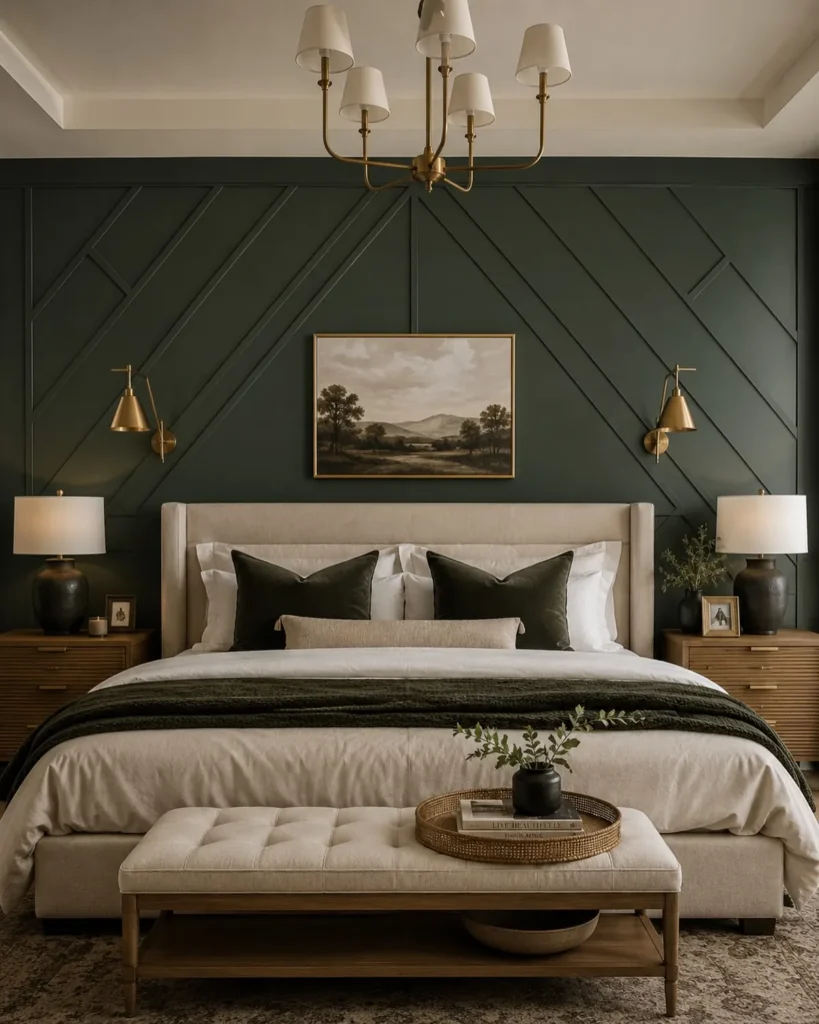
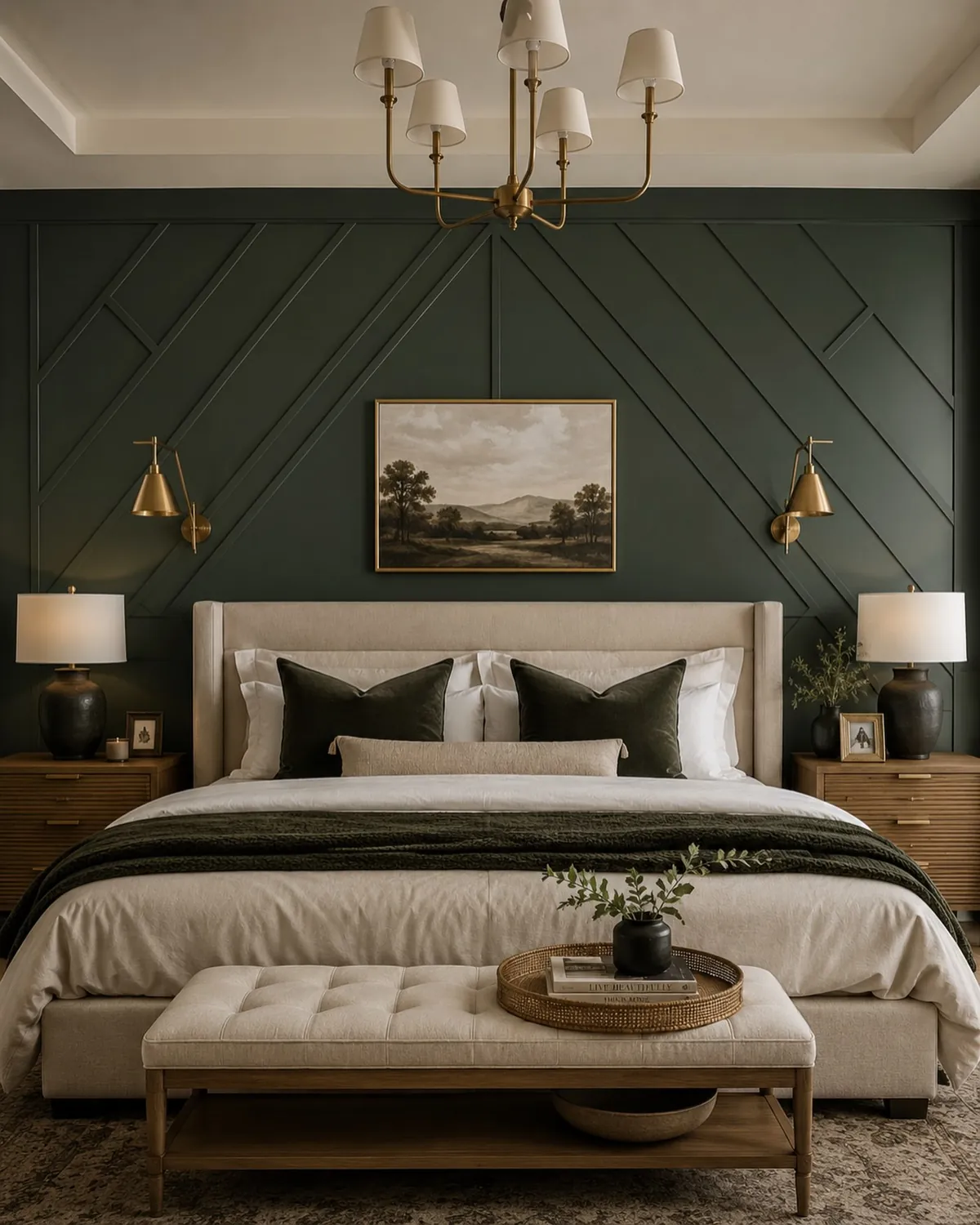
For a bolder, more dramatic take without overwhelming the whole room, a single accent wall (usually the headboard wall) in a deep forest or hunter green, with the remaining walls in white or a soft neutral. This gives you the richness of a dark green without the room feeling closed-in.
| Green Shade | Calming Level | Best Room Size | Natural Light Needed |
|---|---|---|---|
| Sage / muted green | Very high | Any size | Low-medium |
| Forest / hunter green | High (as accent) | Medium-large | Medium-high |
| Olive green | Medium-high | Any size | Medium |
| Mint / pastel green | Medium | Smaller rooms | High |
3. Olive Green Bedding on Otherwise White Walls
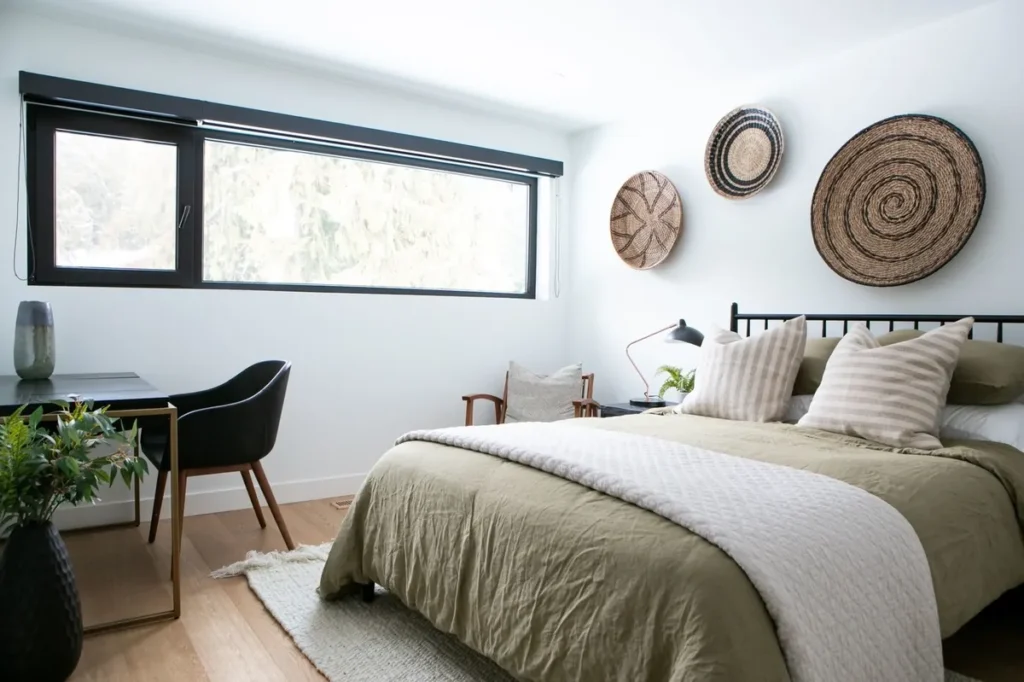
If repainting isn’t on the table, olive green bedding — a duvet cover, or just a throw blanket and a couple of pillows — on white or cream walls gets a surprising amount of the calming green effect without touching the walls at all. This is genuinely the fastest way to test whether you like green in the bedroom before committing further.
4. Layer in Houseplants for Living Green, Not Just Painted Green
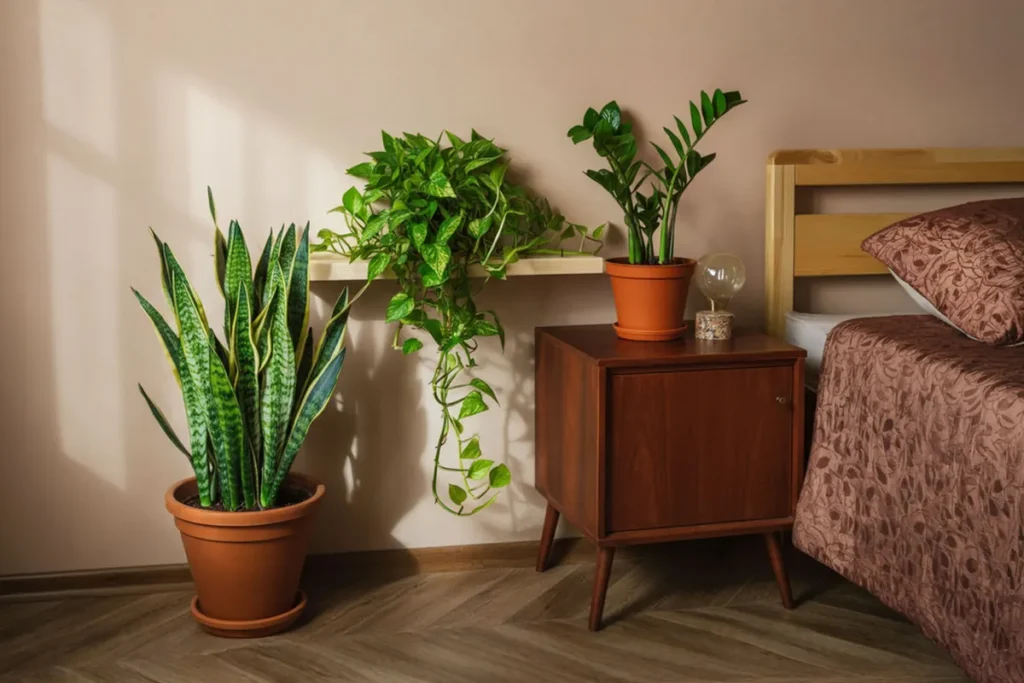
Actual plants — a pothos on the dresser, a snake plant in the corner, something trailing from a shelf — add dimension and a genuinely different texture of green than paint or fabric can. There’s also research suggesting houseplants can modestly improve indoor air quality and a general sense of calm in a room, beyond the visual effect alone.
Pro tip: Choose low-light-tolerant plants like pothos, snake plant, or ZZ plant for a bedroom specifically, since most bedrooms don’t get the bright, direct light that plants in a sunroom or kitchen would — a plant that needs more sun than your room provides will decline and undercut the calming effect you’re going for.
5. Sage Green Linen Curtains
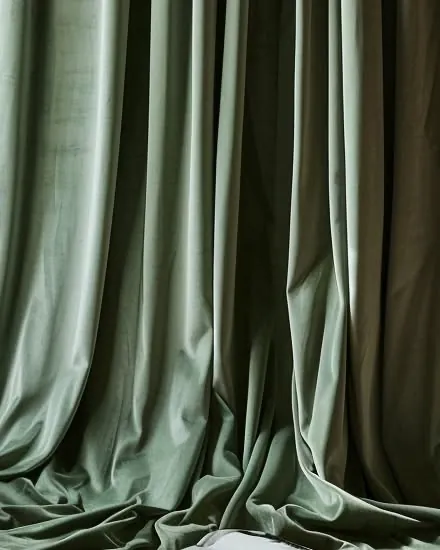
Curtains in a soft sage linen let light filter through with a faint green tint during the day, which adds to the room’s calm feeling even when you’re not looking directly at a green wall or piece of furniture. Linen specifically has a relaxed, slightly rumpled texture that suits the overall mood better than a stiffer fabric would.
6. Dark Green Headboard as a Focal Point
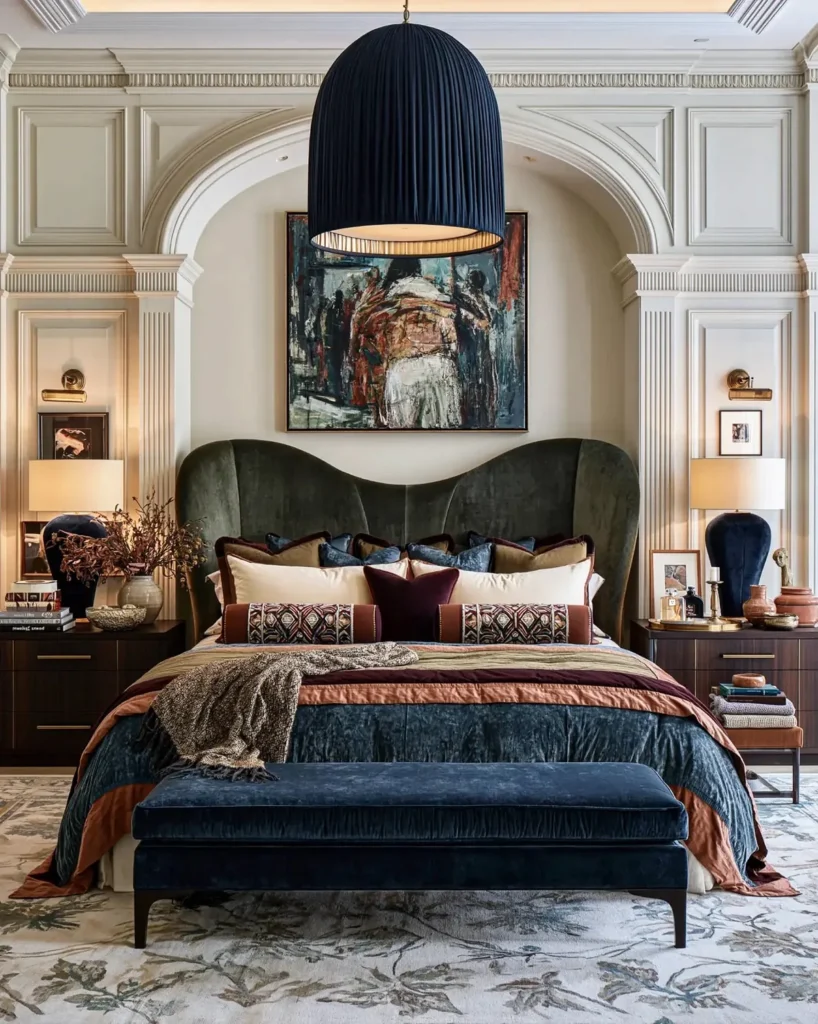
A single upholstered headboard in a deep bottle or forest green, against otherwise neutral walls and bedding, becomes the room’s anchor point without requiring you to commit green to every surface. This is a good middle-ground option between a full accent wall and bedding alone.
7. Green and Terracotta Color Pairing
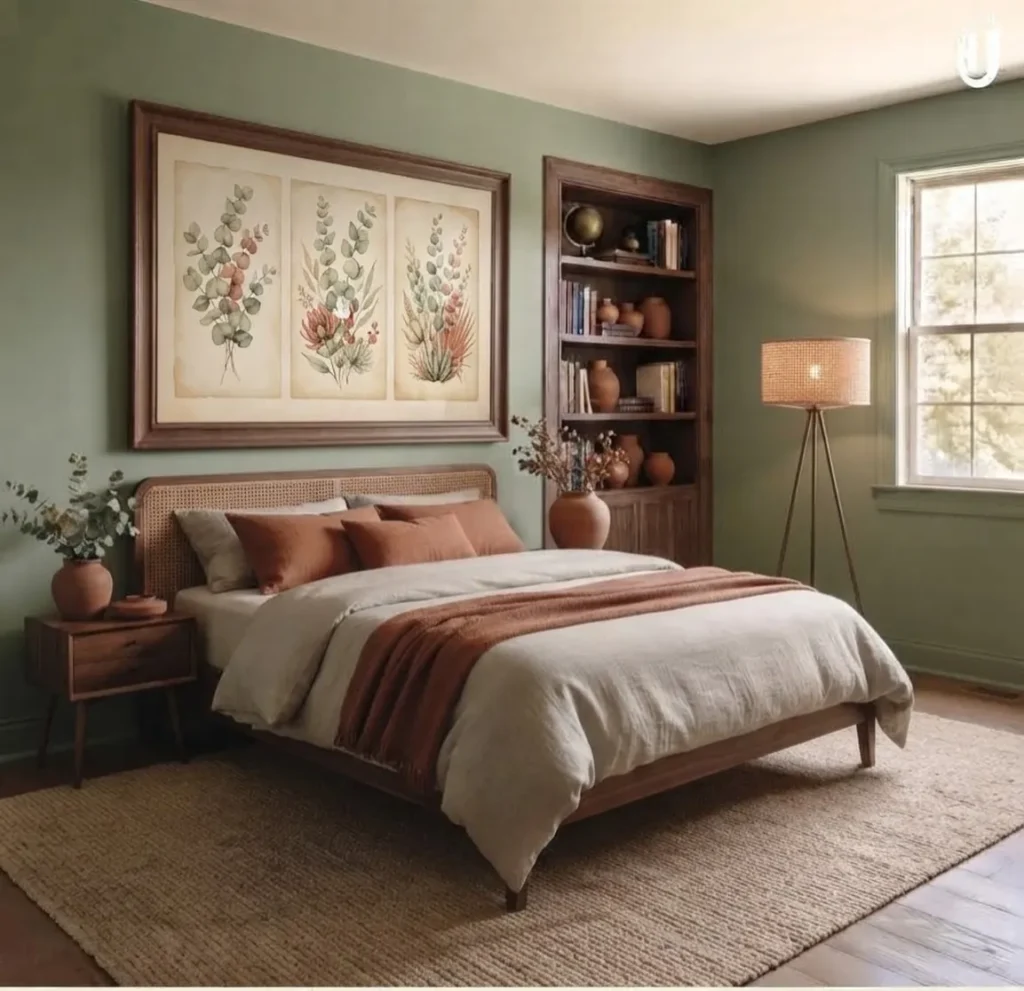
Green pairs beautifully with warm terracotta or rust tones — a terracotta-colored lamp, throw pillow, or rug against sage or olive walls keeps the room from feeling too cool or sterile, which is a common issue when green is the only color present in a space.
| Pairing Color | Mood Created | Easiest Way to Add It |
|---|---|---|
| Terracotta/rust | Warm, grounded | Throw pillows, lamp, rug |
| Cream/off-white | Soft, airy | Bedding, curtains |
| Natural wood tones | Organic, cozy | Furniture, headboard |
| Brass/gold accents | Elevated, warm | Hardware, light fixtures, frames |
8. Natural Wood Furniture Against Green Walls
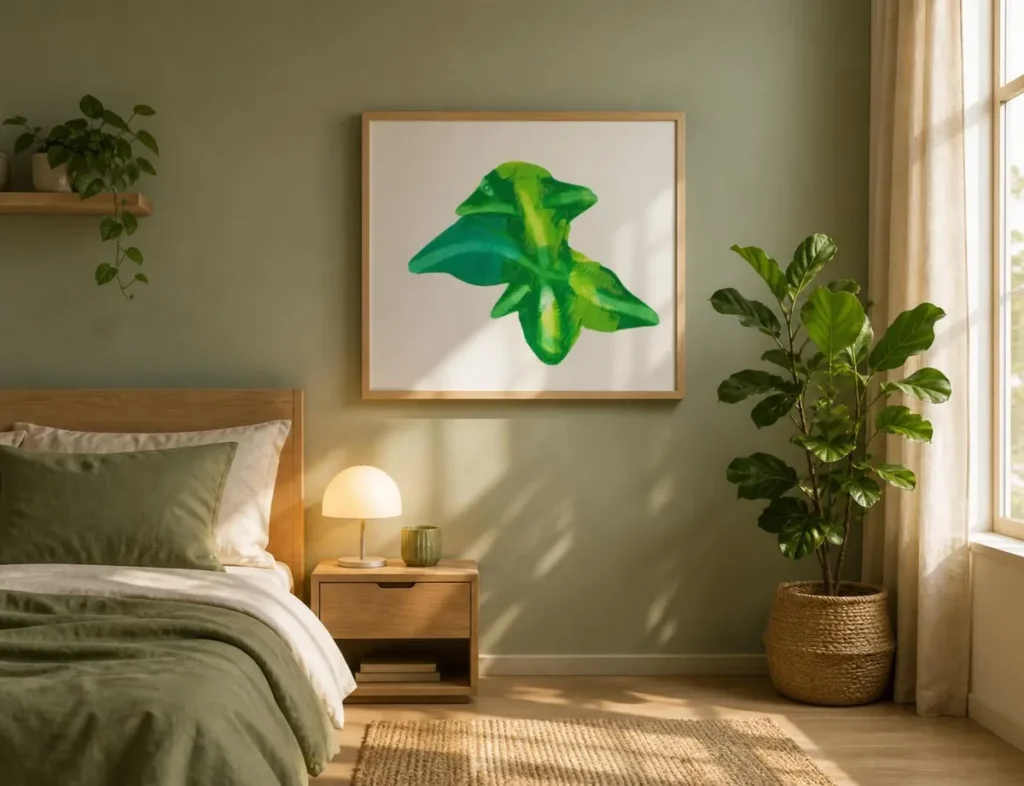
Unfinished or lightly stained wood furniture — a bed frame, nightstands, a dresser — against a green wall creates a genuinely grounding, nature-inspired palette. This pairing is part of why sage and forest green rooms so often photograph as “calming” specifically, since wood and green together echo an actual forest environment more than most other combinations do.
9. Botanical Print Artwork or Wallpaper
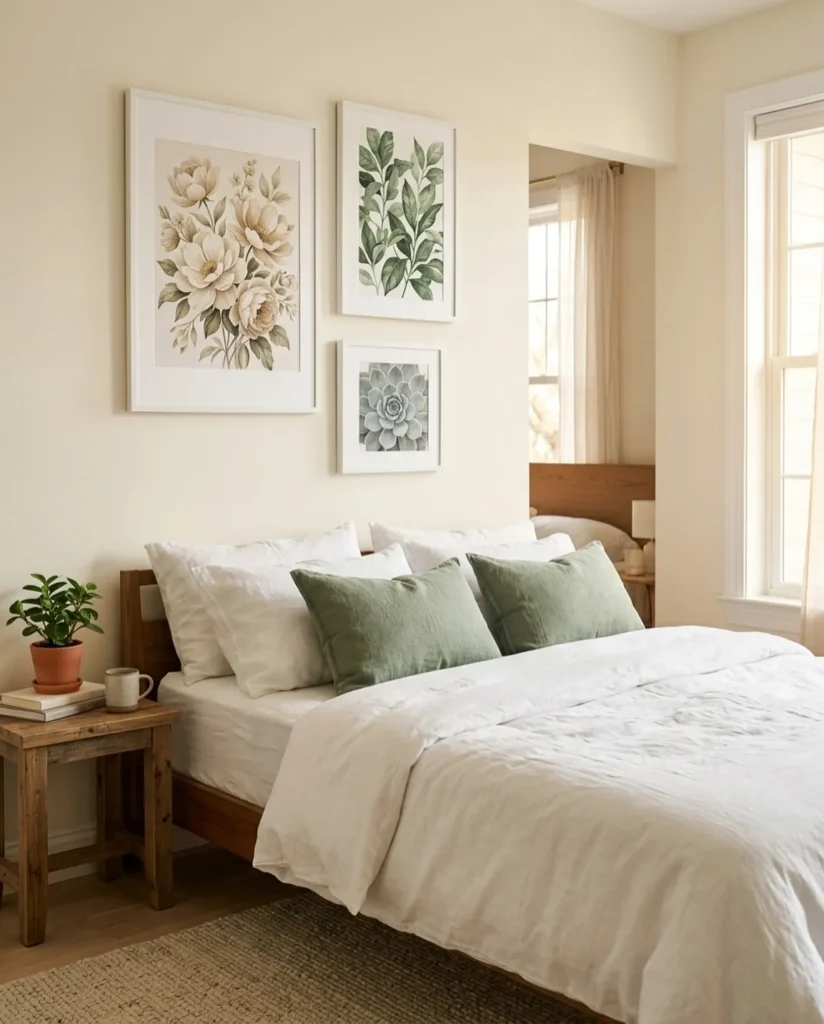
A botanical print — leaves, branches, a single statement floral — either as framed artwork or as a full wallpaper application on one wall, reinforces the green palette with pattern and depth rather than relying on solid color alone.
Pro tip: If committing to full botanical wallpaper feels risky, try it on just the wall behind a headboard or inside a closet door first — these are lower-stakes locations to test a bold pattern before wrapping an entire room in it.
10. Sage Green with White Trim and Ceiling
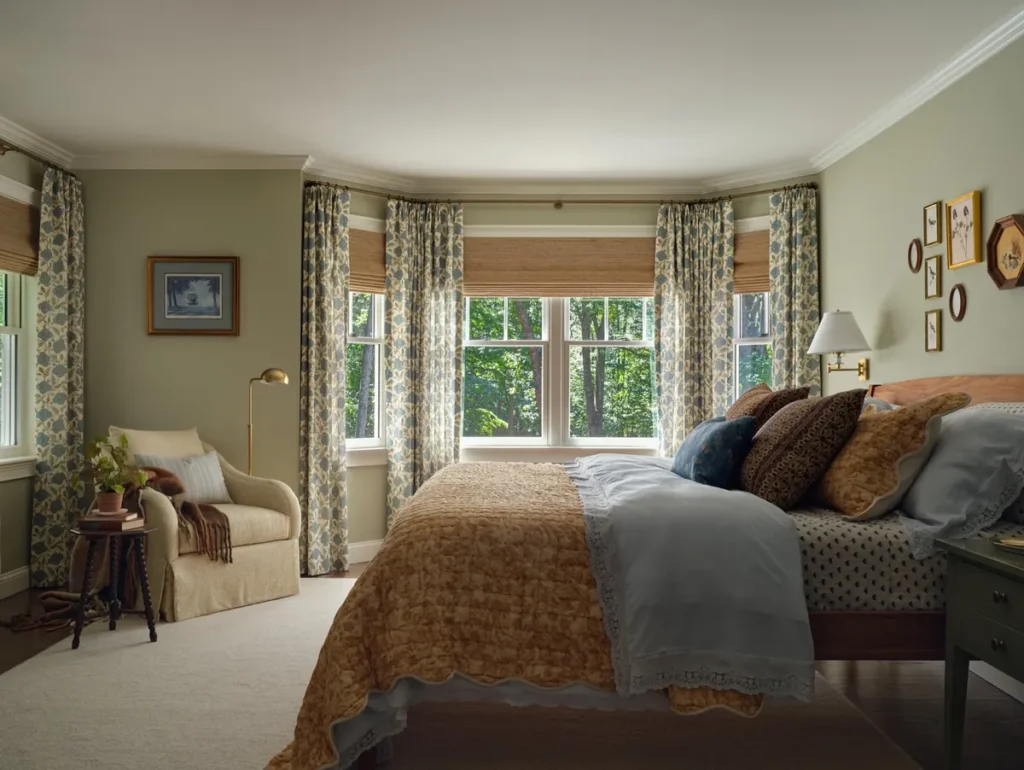
Keeping the trim, window frames, and ceiling crisp white against sage walls prevents the room from feeling like it’s closing in, especially useful in a smaller bedroom. The contrast also makes the green itself look more intentional and considered rather than accidental.
11. Dark Green Nightstands with Brass Hardware
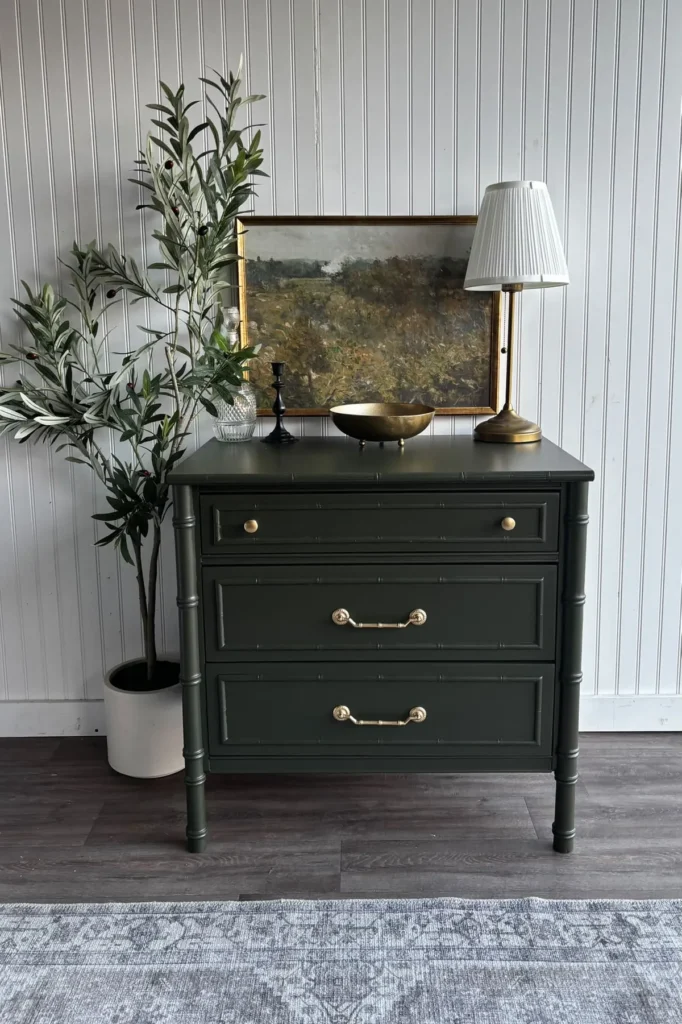
Rather than painting the whole room, painting just a pair of nightstands in a deep green with brass pulls added gives a smaller, lower-commitment dose of the color while still tying the room together, especially flanking a neutral-colored bed.
12. Moss Green Textured Throw and Pillows
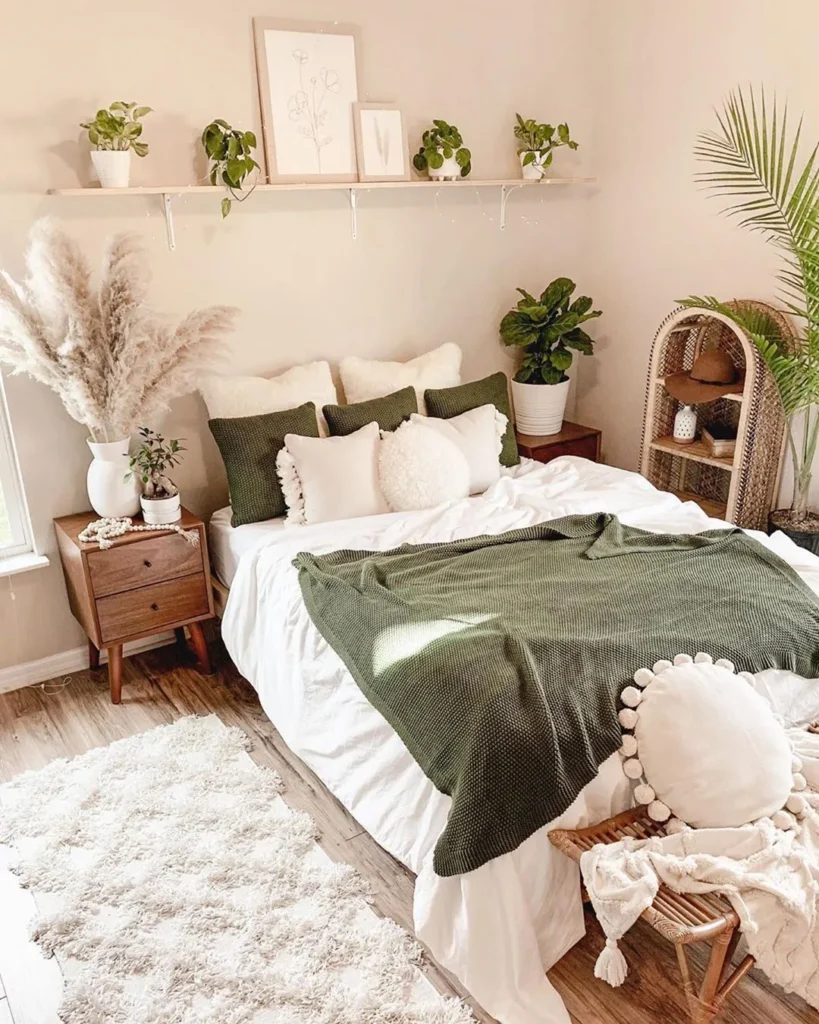
A chunky knit or boucle throw blanket in a moss or deep sage green adds tactile warmth on top of a neutral bed, which matters for the “calming” part of this specific goal — texture does real work alongside color in making a room feel soft and restful rather than just visually coordinated.
13. Green Ceramic or Glass Accessories on a Nightstand
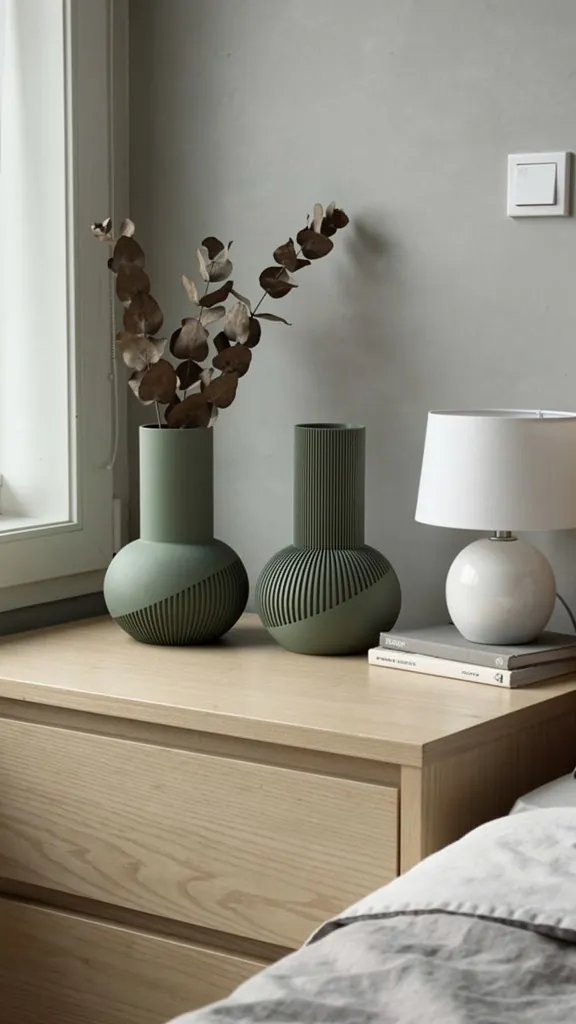
Small details — a green ceramic vase, a glass water carafe with a slight green tint, a small dish for jewelry — layer the color in at a scale that’s easy to change later if your taste shifts, without any real commitment or cost.
14. Sage Green Rug Anchoring the Room
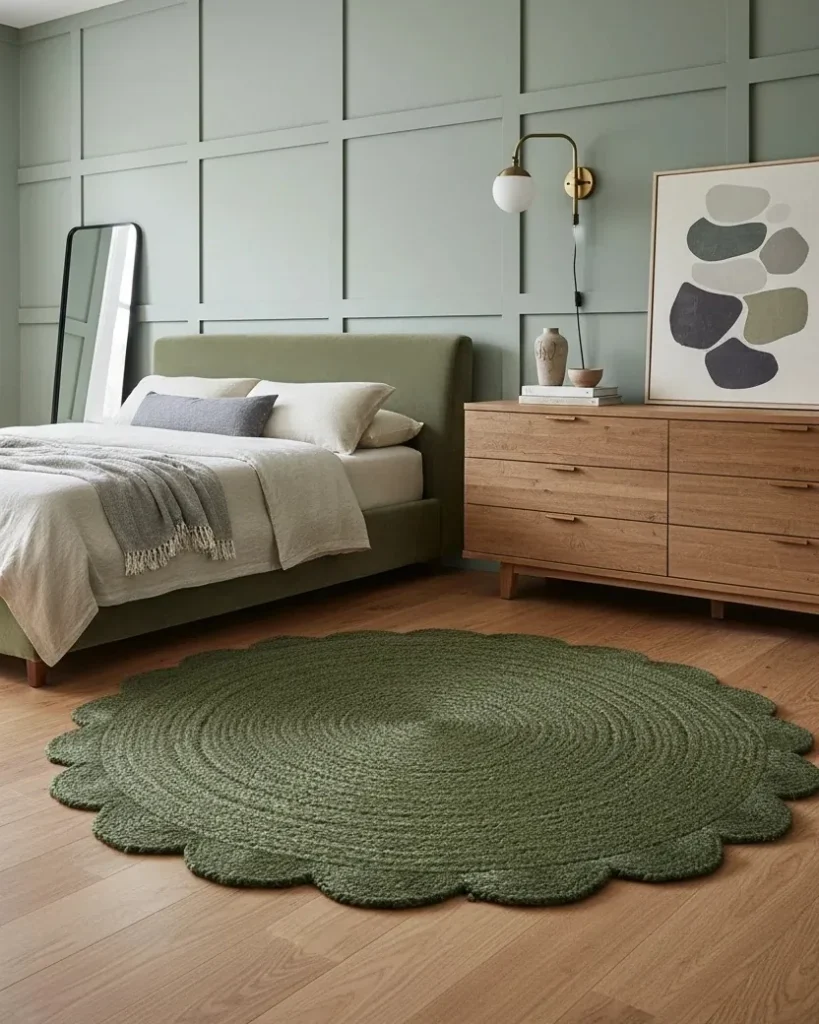
A rug in sage or soft olive, especially a textured or woven one, grounds the room and adds color at floor level, which is an often-overlooked surface in a lot of bedroom color schemes that focus entirely on walls and bedding.
15. Combine Two Greens: Sage Walls, Forest Green Bedding
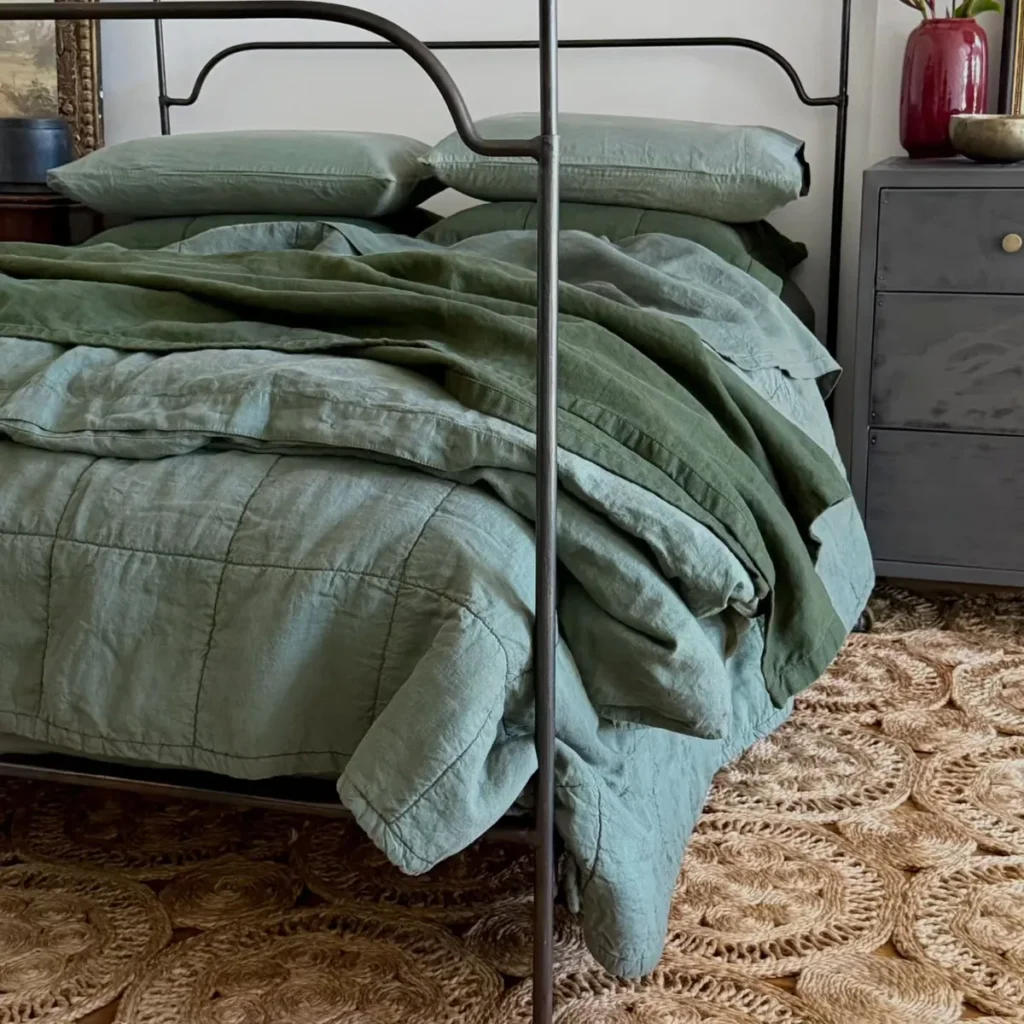
Using two different shades of green rather than just one adds depth without introducing an entirely separate color — sage on the walls, a deeper forest or hunter green in the bedding or a blanket, creates tonal variation that reads as more sophisticated than a single flat shade everywhere.
16. Green Paired with Soft Pink for a Warmer Calm
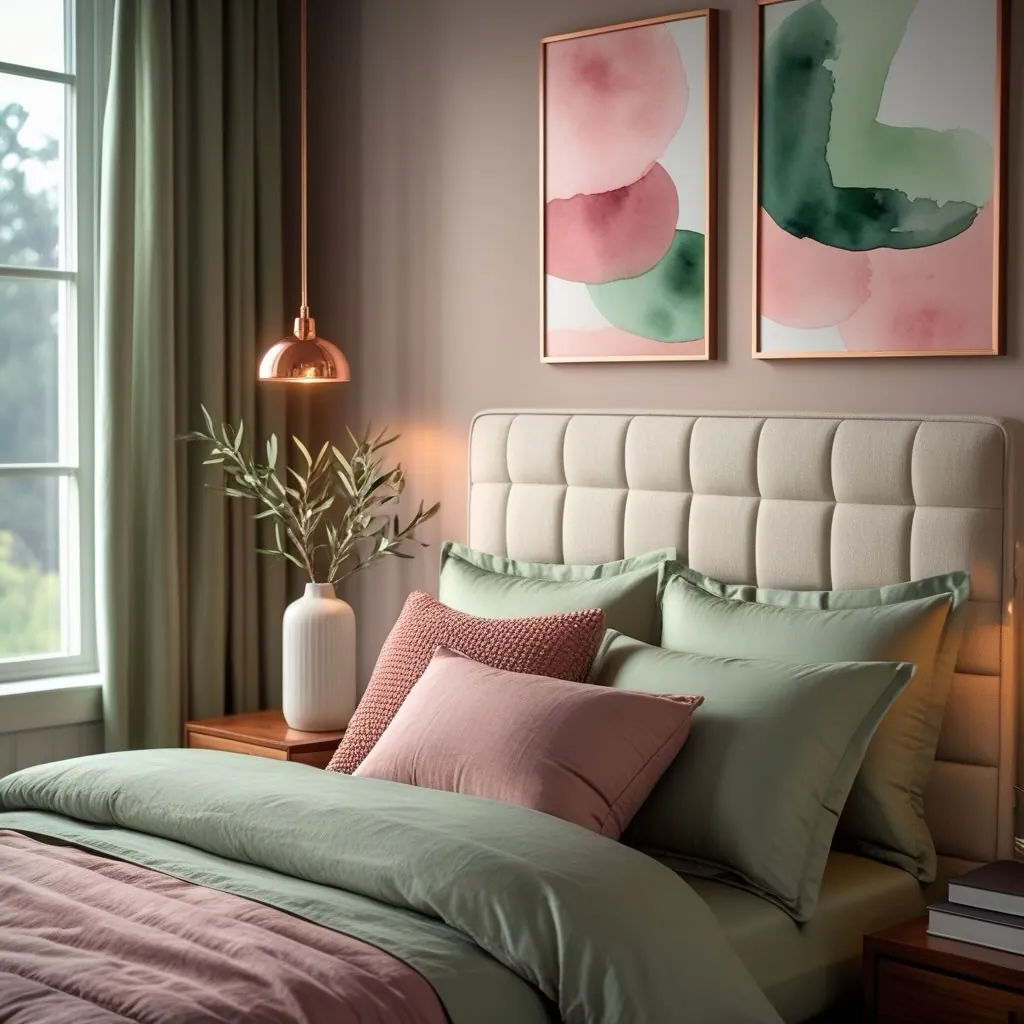
An unexpected but genuinely soothing pairing — sage or olive green with a dusty, muted pink (not bright or bubblegum) in the bedding or a single accent chair. This combination shows up a lot in more romantic or cottagecore-leaning bedroom styling and softens green’s sometimes cooler, more austere edge.
17. Dark Green Built-In Shelving or Reading Nook
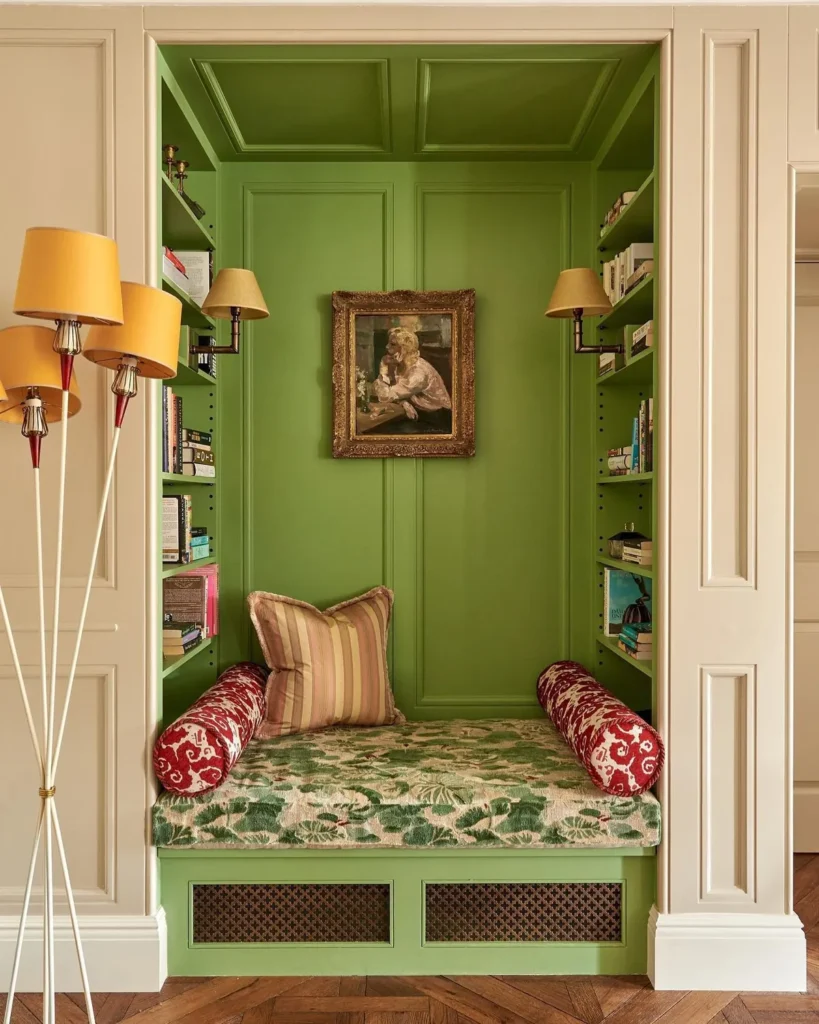
If your bedroom has a window seat, alcove, or built-in shelving, painting just that feature in a deep green creates a cozy, almost enclosed reading-nook feeling distinct from the rest of the room’s palette — good for a bedroom that also needs to double as a small reading or relaxation space.
18. Green Velvet Accent Chair
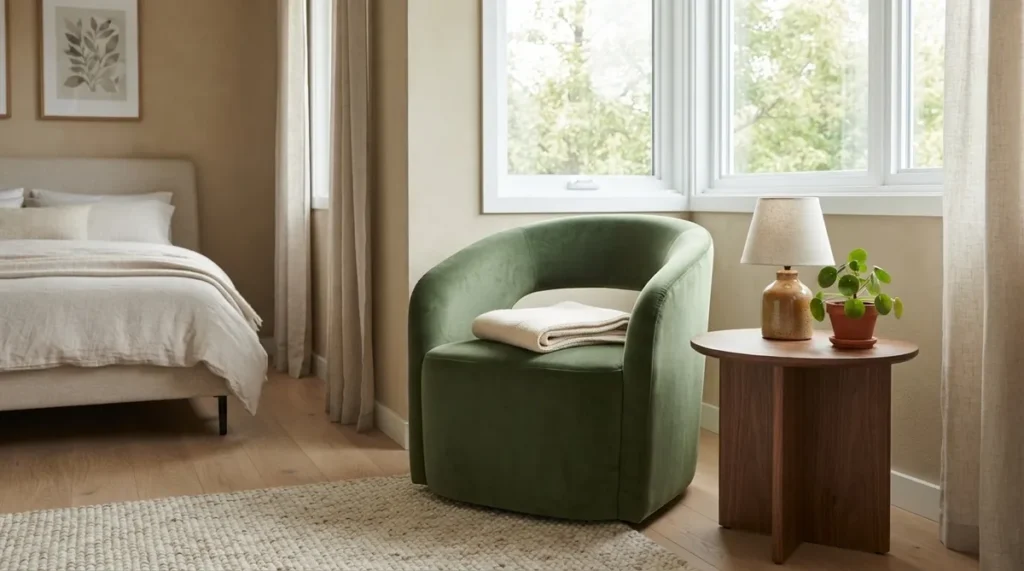
A single velvet accent chair in emerald or forest green in the corner of the bedroom adds texture, a bit of richness, and a functional seat, without requiring any wall color commitment at all. Velvet’s light-catching quality also makes the green feel a little more luxe than a matte fabric would.
19. Layered Green Tones in Bedding (Sheets, Duvet, Throw All Different Shades)
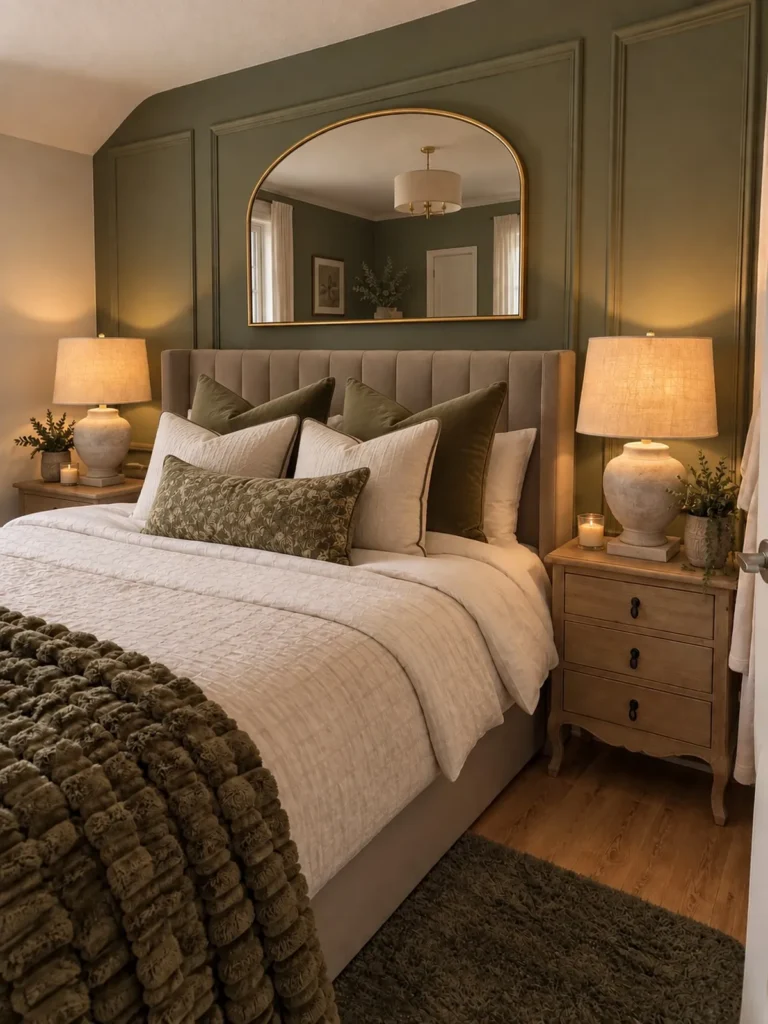
Rather than one green bedding piece, layer two or three different shades — a sage fitted sheet, an olive duvet cover, a darker forest throw folded at the end of the bed. This tonal layering approach works especially well if you’re not ready to commit to green on the walls at all.
20. Matte Black Fixtures Against Green Walls
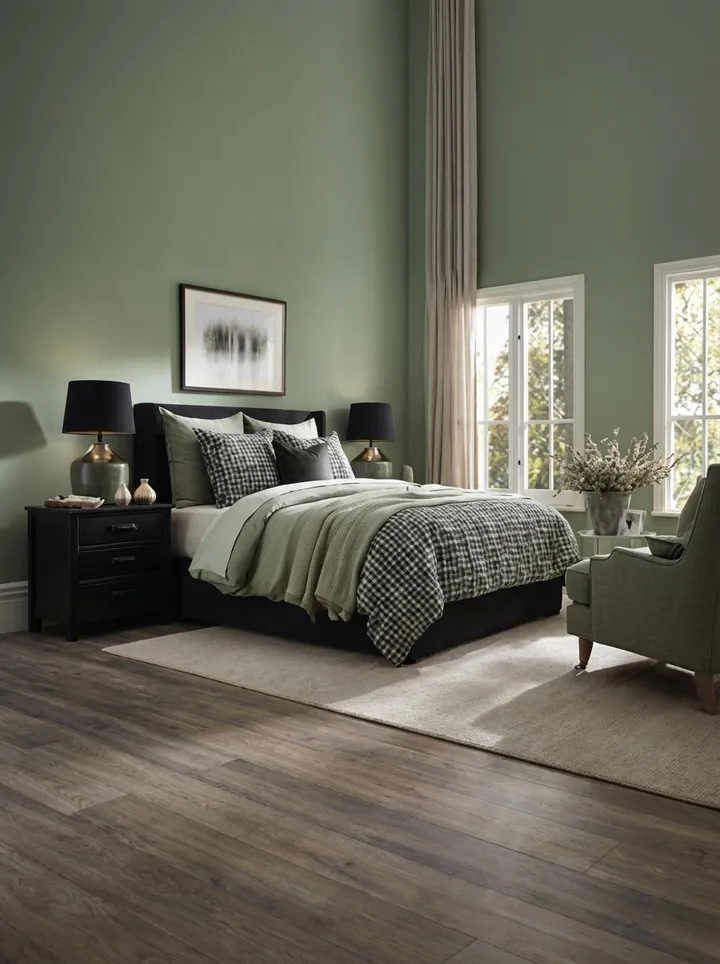
Light fixtures, mirror frames, or curtain rods in matte black against a sage or olive wall add a modern, slightly more grounded edge to what can otherwise feel like a very soft, cottage-leaning palette, useful if your broader home style skews more contemporary.
21. Green Linen Bed Skirt or Bed Frame Wrap
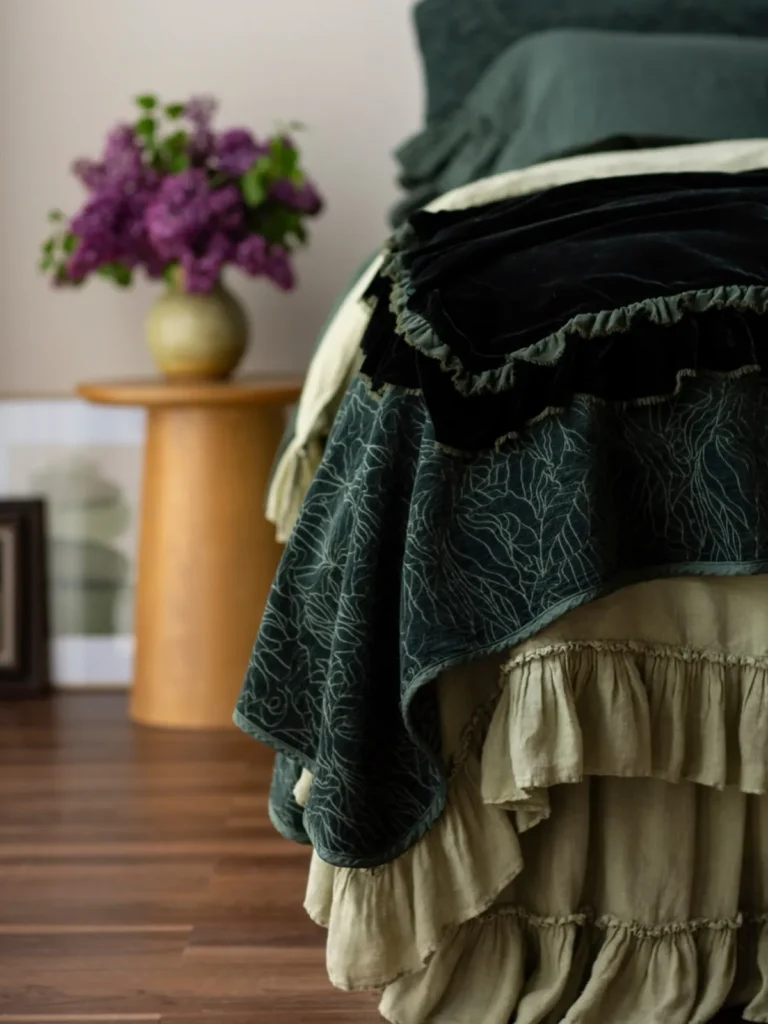
A linen bed skirt in sage adds a soft, slightly rumpled texture at floor level around the bed frame, which works especially well with a platform or low-profile bed where the under-bed space is otherwise visible and visually busy.
22. Dried Eucalyptus or Preserved Greenery as a Low-Maintenance Plant Alternative
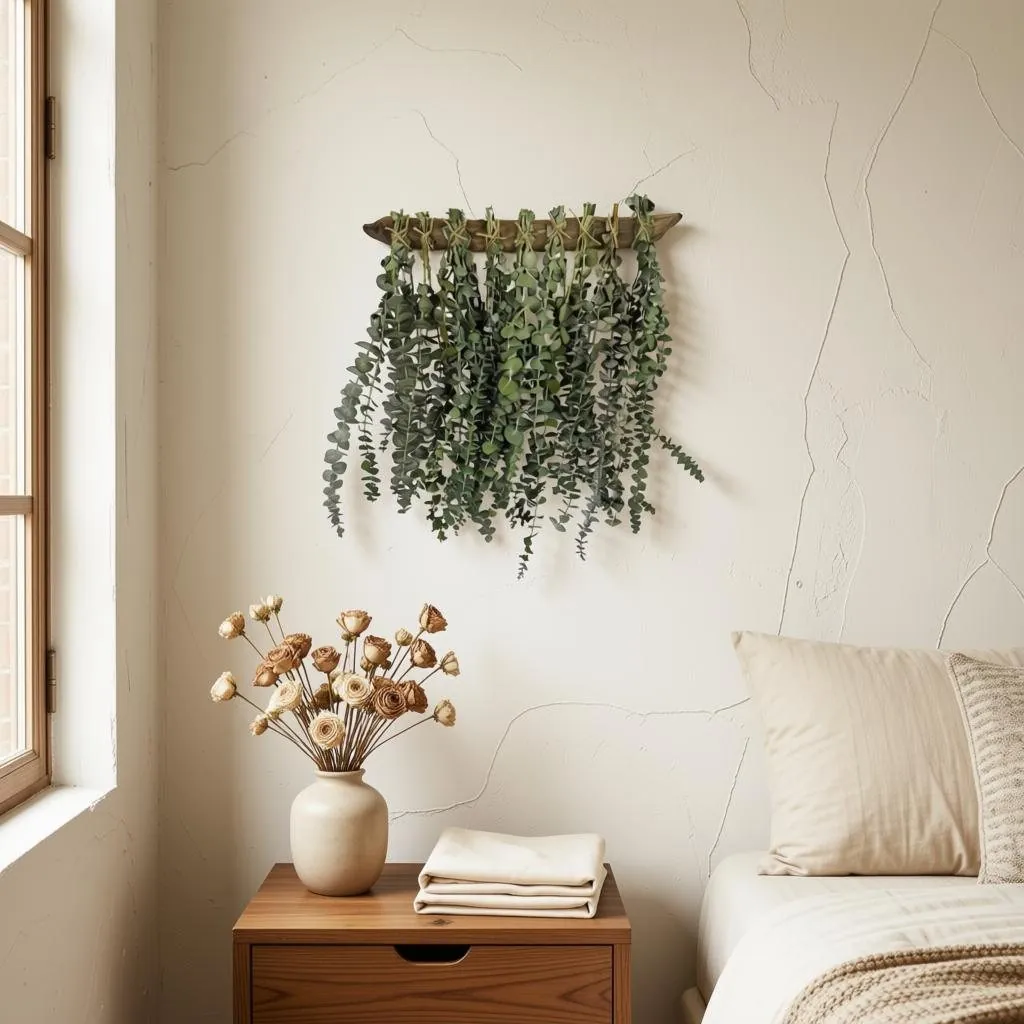
For anyone who struggles to keep actual houseplants alive (no judgment, genuinely), dried or preserved eucalyptus branches in a simple vase give a similar organic, green visual texture without any watering schedule to maintain.
23. Sage Green Paint with a Matte, Not Glossy, Finish
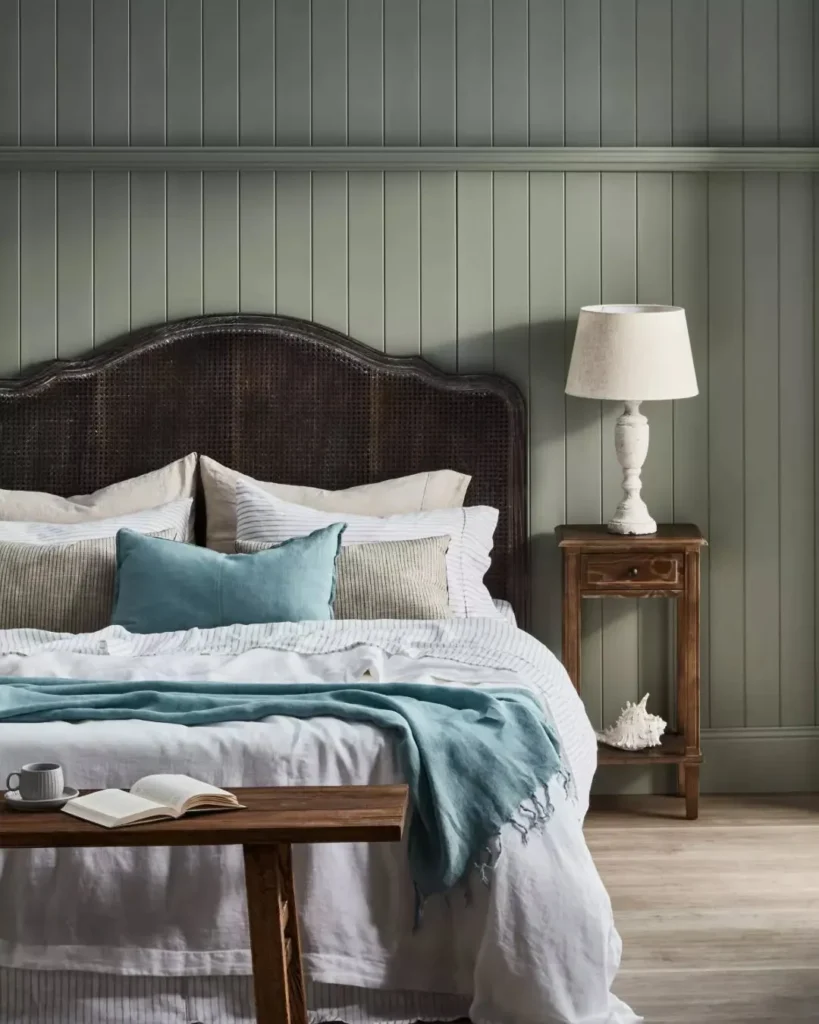
The finish matters as much as the shade itself for a calming effect — a matte or eggshell finish absorbs light softly, while a glossier finish reflects it more sharply, which can undercut the cozy, restful quality a green bedroom is usually going for in the first place.
24. Green and Cream Striped or Textured Wallpaper
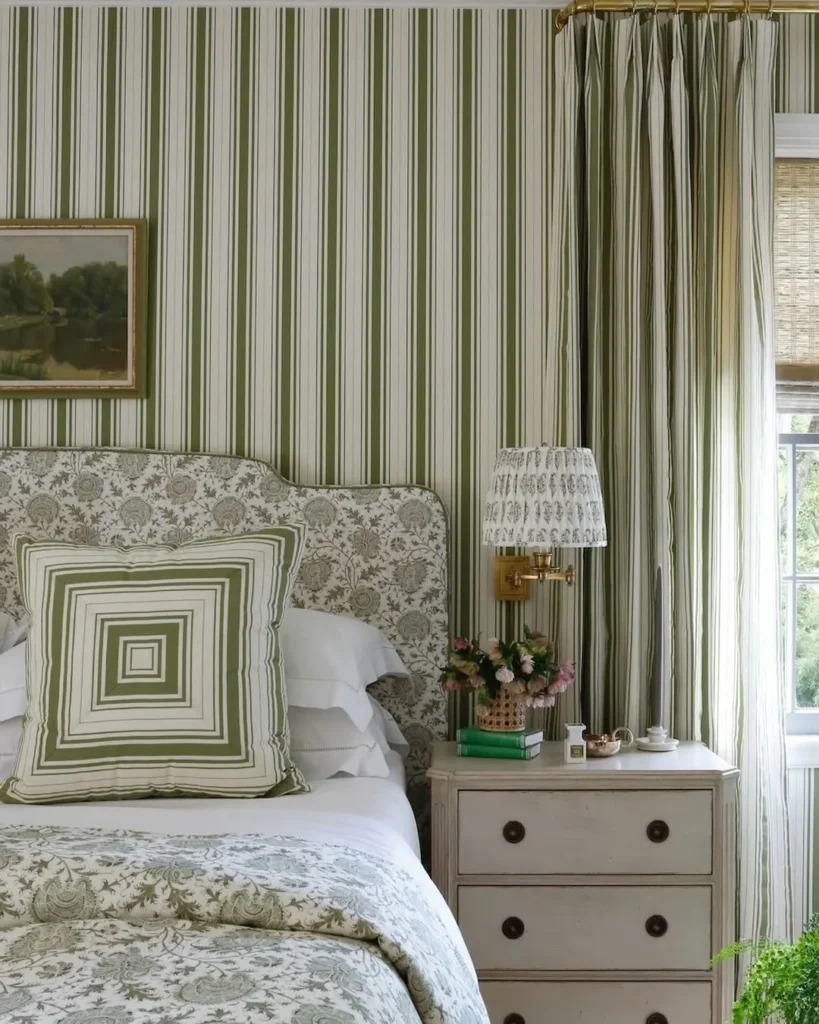
A subtle striped or textured wallpaper in soft sage and cream, rather than a solid block of color, adds visual interest without the intensity of a bold pattern or a fully saturated wall color — a good middle-ground option for anyone nervous about committing to solid green everywhere.
25. Dark Green Door as a Small, Bold Detail
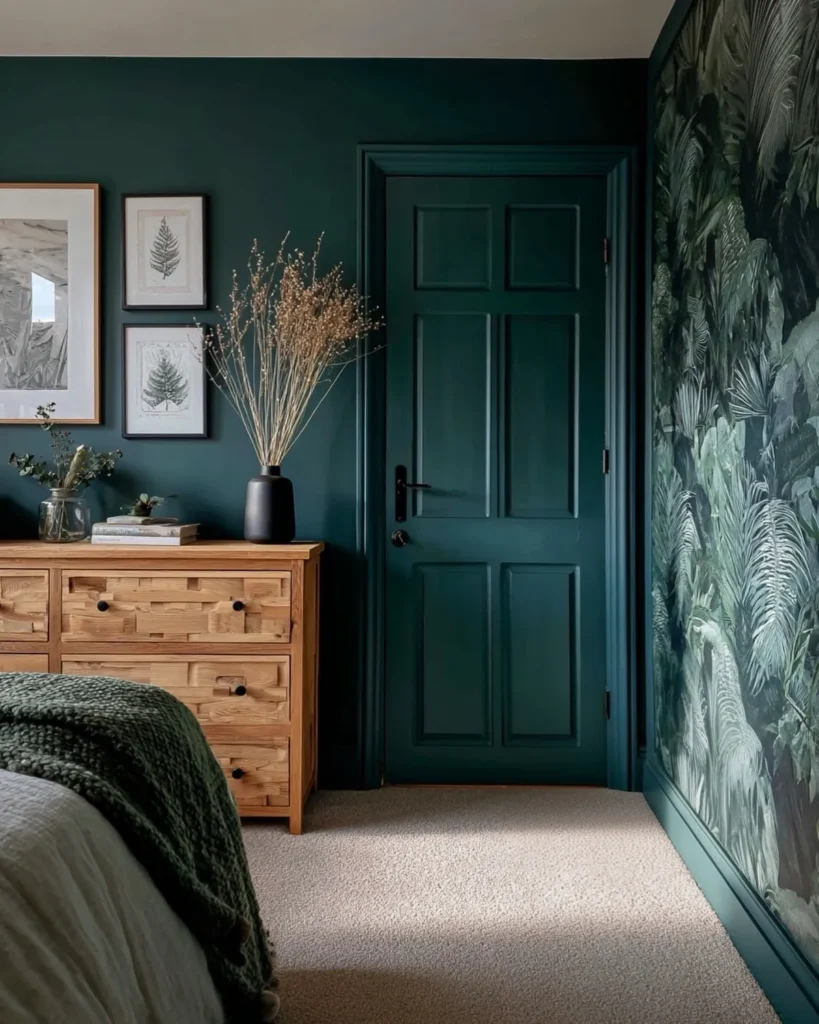
Painting just the bedroom door in a deep green, while keeping the walls neutral, is one of the smallest-scale ways to bring the color in — it reads as a deliberate design choice the moment someone walks through it, out of proportion to how little surface area it actually covers.
26. Green Accent Wall Behind Open Shelving
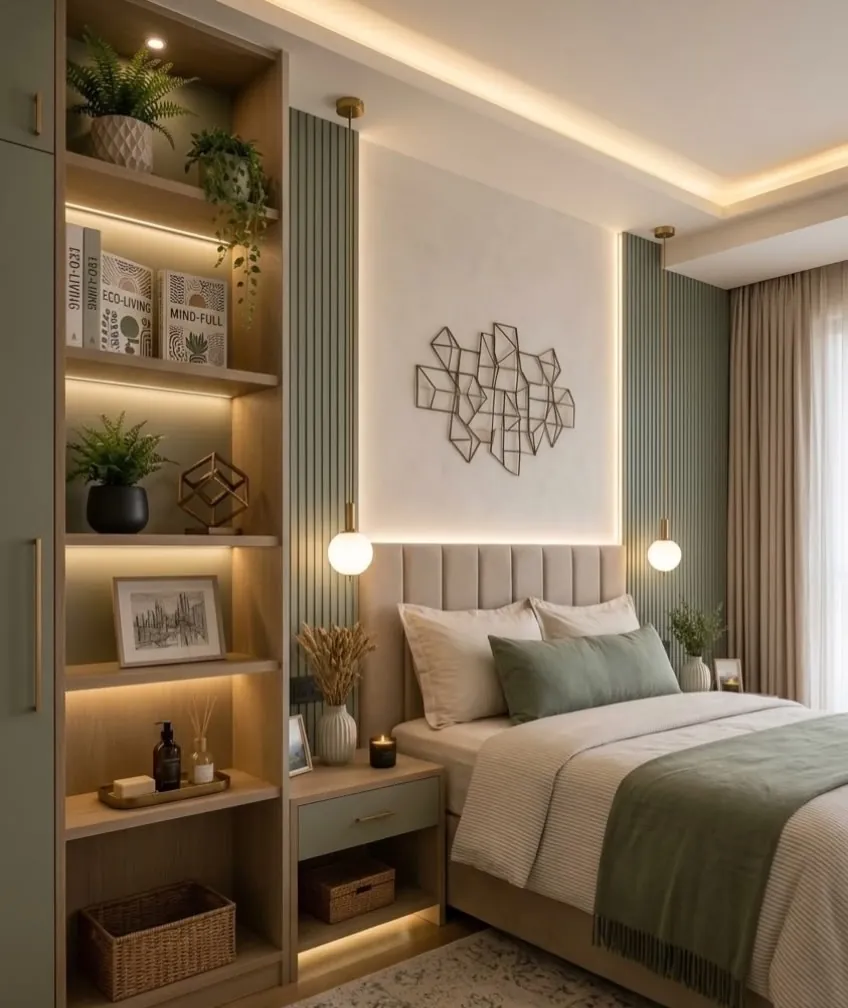
If your bedroom includes open shelving rather than a full closet system, painting the wall behind it in green and keeping the shelf contents neutral (books, a few ceramics, a small plant) creates a framed, gallery-like display moment within the room.
27. The “Didn’t Repaint Anything” Version: Green Bedding, One Plant, One Throw
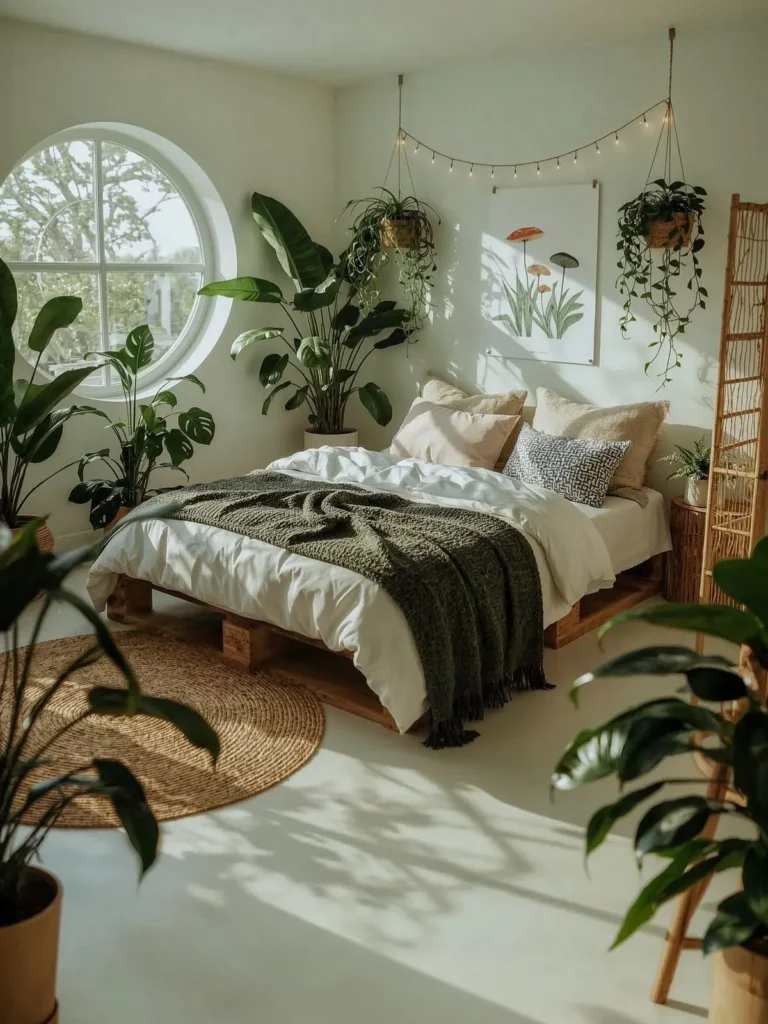
If every other idea on this list still feels like more commitment than you want right now, the honest starting point: a green duvet cover, one easy-care houseplant from #4, and a textured throw blanket in a complementary green from #12. Those three alone get you most of the calming effect this whole list is chasing, with zero paint involved.
What I’d Actually Do First
If I were starting a green bedroom from scratch today, I’d begin with #1 — sage green on the main walls — because nearly every other idea on this list, from the wood furniture pairing to the terracotta accents to the botanical artwork, is really just building on top of that single base decision, and it’s the one choice that shapes how calming the whole room ends up feeling.
Frequently Asked Questions
What shade of green is most calming for a bedroom? Sage and other muted, grey-toned greens are generally considered the most reliably calming across different lighting conditions, since they avoid both the intensity of a bright green and the heaviness of a very dark one.
Is a dark green bedroom too intense, or will it feel calming too? A dark green like forest or hunter can absolutely feel calming, especially as an accent wall or in bedding rather than covering every surface — the key is balancing it with lighter neutrals (white trim, cream bedding, natural wood) so the room doesn’t feel enclosed.
Do I need real plants, or does painted green give the same calming effect? Both contribute, but they work slightly differently — painted or fabric green sets the overall mood of the room, while actual plants add texture, a sense of life, and in many cases a modest air-quality benefit that paint alone doesn’t provide.
What colors pair best with green in a bedroom? Warm neutrals like terracotta, cream, and natural wood tend to balance green especially well, since they keep the room from feeling too cool, while brass or gold accents add a touch of warmth and polish.
Can a green bedroom work in a room with very little natural light? Yes, if you lean toward a muted, grey-toned sage rather than a true, saturated green — true greens can read dull or murky in low light, while sage tends to hold its soft, calming quality even in dimmer rooms.

Hi, I’m Ashley Miller, a wife, a busy mom, and someone who loves to share all the things that make life a little more fun and beautiful.
From easy DIY projects, delicious recipes, and chic hairstyles to nail ideas and home decor tips, I share everything I’ve learned and love.
My goal is to inspire other women to explore their creativity and make their homes even more special.