I killed three consecutive rounds of porch flowers before I figured out the actual problem wasn’t my watering schedule — it was that I kept buying whatever looked prettiest at the garden center without thinking about my porch’s actual sun exposure, pot material, or how much maintenance I was realistically going to do on a Tuesday after work.
These 31 ideas are organized by the thing that actually determines whether your porch pots thrive or become a sad, crispy reminder every time you walk past them: your specific porch conditions — full sun, shade, how much time you have, and whether you’re trying to impress the whole street or just make your own entrance feel a little more like home.
1. Flank the Front Door With Matching Oversized Urns
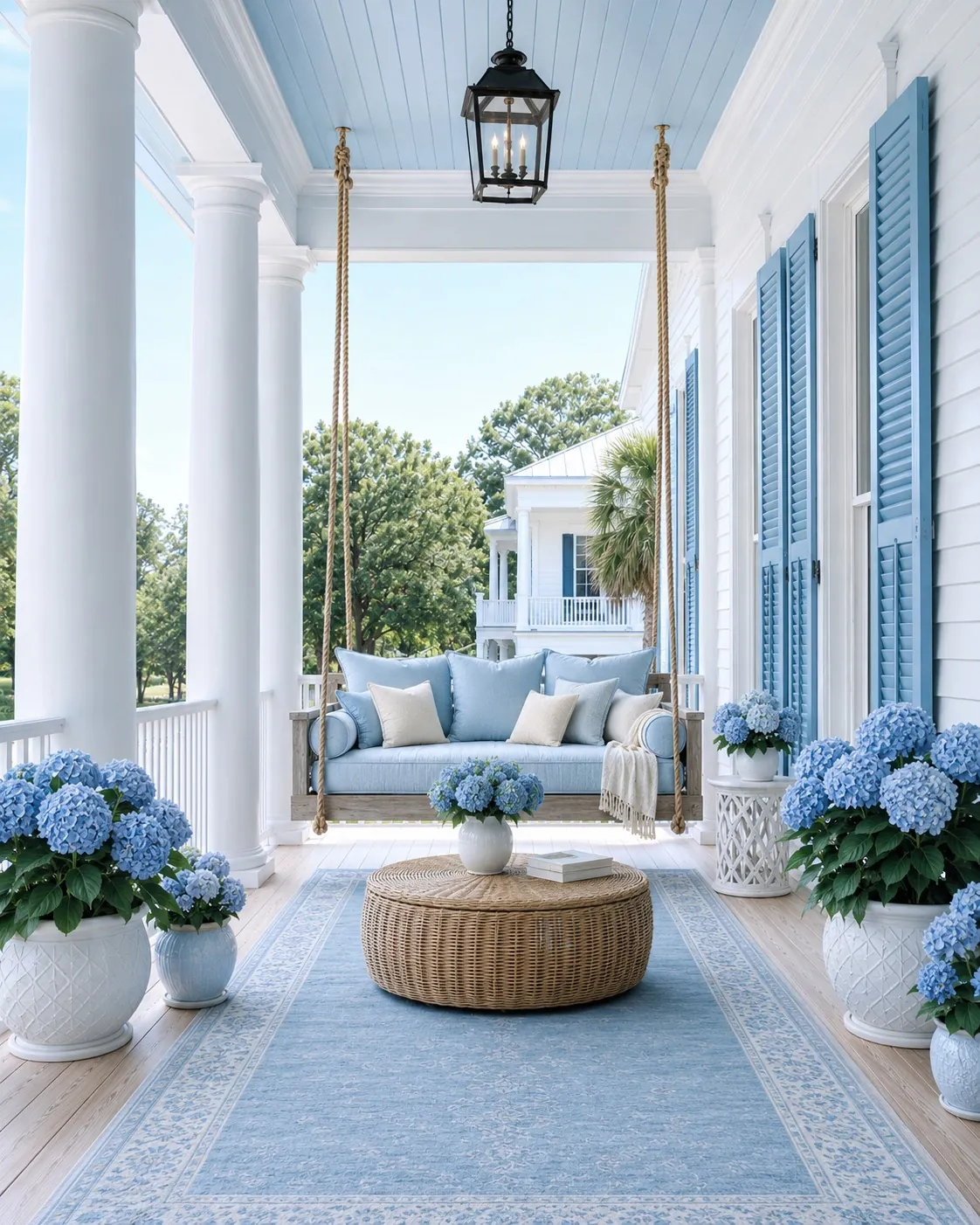
A pair of large, matching urns — one on each side of the door — is the single most reliable formula for an instantly “finished” looking porch, since symmetry reads as intentional even before anything’s planted.
Pro tip: Go bigger than feels necessary — oversized pots (18+ inches) are more proportional to a full-size door than smaller ones, which can look scattered rather than grand.
2. Use Graduated Trio Groupings for a Fuller, Layered Look
Three pots of varying heights clustered together — tall, medium, short — creates depth and fullness that a single large pot can’t, and it’s a classic nursery-display trick that works just as well on a porch.
Pro tip: Odd numbers (three, not two or four) genuinely do look more natural in groupings — it’s not just decorating folklore, it’s a real visual balance principle.
3. Choose Terracotta Pots for a Classic, Breathable Look
Terracotta’s porous material actually helps prevent overwatering issues since the clay wicks away excess moisture, which makes it a genuinely forgiving choice for anyone who tends to water a little too generously.
Pro tip: Terracotta cracks in a hard freeze if left outside over winter — bring unglazed terracotta pots indoors or to a garage once temperatures drop consistently below freezing.
4. Go Monochromatic With a Single Flower Color for a Polished, Curated Look
Planting pots in just one flower color — all white, all coral, all deep purple — reads as more deliberately designed than a mixed rainbow, especially for a smaller porch where a busy mix can look cluttered rather than cheerful.
Pro tip: Vary the flower type within your chosen color (a petunia, a geranium, a verbena all in white) for texture without breaking the cohesive color scheme.
5. Add a Tall Spike Plant for Vertical Interest in Every Pot
Including one tall, upright element — a dracaena spike, ornamental grass, or ornamental millet — in each pot gives your arrangement height and keeps it from reading as a flat mound of flowers.
Pro tip: The classic “thriller, filler, spiller” formula (tall centerpiece, mounding mid-height flowers, trailing edge plants) is a genuinely reliable structure if you’re unsure how to combine plants.
6. Use Galvanized Metal Buckets for a Farmhouse-Style Look
Galvanized metal buckets or tubs bring a rustic, farmhouse-adjacent texture that pairs especially well with wood porch railings or a white clapboard exterior.
Pro tip: Drill drainage holes before planting — most decorative metal buckets aren’t sold with drainage, and standing water will rot roots fast.
7. Hang Trailing Flowers in a Window Box Below the Porch Railing
A window box mounted to the railing itself, filled with trailing varieties like petunias or lobelia, adds a cascading layer of color at railing height that ground-level pots alone can’t achieve.
Pro tip: Choose a self-watering window box insert if your railing is hard to access daily — the reservoir buys you several extra days between waterings.
8. Plant Shade-Tolerant Ferns and Begonias for a North-Facing Porch
If your porch gets little direct sun, skip the sun-loving classics entirely and go with Boston ferns, begonias, and impatiens, which actually perform better in indirect light than they would baking in full sun.
Pro tip: Ferns need more frequent watering than sun-tolerant plants — the lower light doesn’t mean lower water needs, which trips a lot of people up.
9. Choose Drought-Tolerant Succulents for a Low-Maintenance Porch Display
Succulents and sedums in shallow, wide pots are the genuine answer if you travel often or just know yourself well enough to admit daily watering isn’t happening — they thrive on neglect in a way most flowering plants don’t.
Pro tip: Succulents still need real drainage holes and well-draining soil (not standard potting mix) — the “low maintenance” reputation assumes the setup is right, not that any pot will do.
10. Use Woven Basket Planters for Texture Without Extra Plant Maintenance
A woven rattan or seagrass basket planter (with a plastic liner inside for drainage) adds natural texture to your porch display without changing anything about the plant care itself.
Pro tip: Treat the basket with an outdoor sealant if it’ll be exposed to direct rain regularly — untreated natural fiber baskets degrade faster outdoors than you’d expect.
11. Create a Seasonal Rotation Plan So Your Pots Never Look Empty
Planning three seasonal swaps — spring bulbs and pansies, summer annuals, fall mums and ornamental kale — means your porch pots are never sitting bare or past their prime for more than a week or two between transitions.
Pro tip: Keep a simple note on your phone with planting and expected bloom-end dates for each season so you’re not caught off guard when a display starts fading.
12. Add String Lights or Lanterns Hung Near the Pots for Evening Ambiance
Pairing your flower pots with warm string lights or a lantern nearby extends the porch’s appeal into the evening, when the flowers themselves are harder to see but the overall setup still reads as inviting.
Pro tip: Solar-powered lights near pots mean no extension cords running across your porch floor, which is both a styling and a tripping-hazard win.
13. Use a Large Statement Pot as a Single Focal Point Instead of Multiple Small Ones
One genuinely large, well-chosen pot — rather than a cluster of smaller ones — can read as more sophisticated and intentional, especially for a smaller porch where multiple pots start to feel crowded.
Pro tip: A single statement pot needs a fuller, more layered planting inside it to avoid looking sparse — this is not the place to under-plant.
14. Choose Self-Watering Pots for a Porch You Can’t Check Daily
Self-watering pots with a built-in reservoir are genuinely useful if your schedule doesn’t allow for daily porch maintenance — they can extend the time between waterings from one day to several, depending on the plant and weather.
Pro tip: Check the reservoir’s water level weekly even on self-watering pots — “self-watering” buys you time, it doesn’t eliminate the need to refill entirely.
15. Add Herbs to Your Porch Pots for a Functional, Fragrant Display
Mixing in rosemary, lavender, or thyme among your flowering plants adds fragrance that activates every time someone brushes past on the way to the door, plus the bonus of fresh herbs within reach.
Pro tip: Most culinary herbs want more sun and less water than typical flowering annuals — pot them separately rather than mixing them into the same container as thirstier flowers.
16. Use Colorful Ceramic Glazed Pots for a Bold, Personality-Forward Look
A glazed ceramic pot in a bold color — cobalt blue, deep yellow, coral — can do as much visual work as the flowers themselves, especially useful in a shoulder season when blooms are sparse but the pot alone still adds color.
Pro tip: Check that glazed ceramic pots have a drainage hole before buying — some are sold as purely decorative and need one drilled, which is a genuinely tricky job on fired ceramic without cracking it.
17. Line the Porch Steps With Small Matching Pots on Each Step
Placing a small pot on alternating or every step leading up to the porch extends the color and welcome feeling before guests even reach the door — genuinely effective for a porch with a longer staircase approach.
Pro tip: Keep pots on steps small and set well to one side — anything protruding into the walking path is a real tripping hazard, especially at night.
18. Use Faux Flowers for a Consistently Full Look With Zero Maintenance
High-quality UV-resistant faux flowers are a legitimate choice if you want a consistently full, never-wilting display and genuinely don’t have the time or interest in live plant care.
Pro tip: Specifically look for “outdoor-rated” or “UV-resistant” faux flowers — indoor silk flowers fade and degrade fast in direct sun and rain.
19. Add a Vintage or Antique Pot for Character and a Collected-Over-Time Feel
A weathered vintage pot — whether an actual antique find or a new pot with an aged finish — brings a sense of history and character that a brand-new matching pair can’t replicate.
Pro tip: Check vintage metal containers for rust that’s progressed to actual holes, not just surface patina — structural rust will eventually fail and spill soil.
20. Use a Wheelbarrow or Vintage Wagon as an Oversized Statement Planter
A repurposed wheelbarrow or wagon, filled with a full, overflowing arrangement, makes a genuinely charming and unexpected statement piece for a farmhouse or cottage-style porch.
Pro tip: Line the wheelbarrow or wagon with landscape fabric before adding soil — it helps with drainage and prevents soil from washing out through any gaps in the original structure.
21. Create Height Variation With a Plant Stand or Tiered Shelf
A tiered plant stand lets you display several pots at different heights in a single footprint, which is especially useful for a narrow porch that can’t accommodate several large pots spread across the floor.
Pro tip: Choose a stand rated for outdoor use specifically — indoor plant stands often aren’t built to handle rain and temperature swings without rusting or warping.
22. Use Hanging Baskets Alongside Ground Pots for a Fuller, Layered Porch
Adding hanging baskets at porch-ceiling height, in addition to ground-level pots, fills the vertical space of the porch and creates a more immersive, garden-like feel rather than color only at knee height.
Pro tip: Check your porch ceiling can support the weight of a fully watered hanging basket (often 20+ pounds) before hanging — not every porch ceiling hook is rated for that.
23. Choose Native Plants for a Low-Water, Pollinator-Friendly Porch Display
Native flowering plants, specific to your region, generally need less supplemental water once established and support local pollinators in a way that non-native ornamental varieties often don’t.
Pro tip: Check with a local extension office or native plant nursery for species specific to your exact region — “native” varies significantly even within the same state.
24. Add a Doormat and Pot Pairing in Coordinating Colors or Patterns
Choosing a doormat that echoes a color or pattern element from your flower pots ties the whole entrance together as one cohesive, considered look rather than two separate decorating decisions.
Pro tip: A doormat with some texture (coir, not just flat rubber) handles muddy shoes from a garden-heavy porch better and shows less visible wear over time.
25. Use Lightweight Resin or Fiberglass Pots for Easy Seasonal Rearranging
Resin and fiberglass pots mimic the look of stone or ceramic at a fraction of the weight, which genuinely matters if you like to rearrange or seasonally rotate your porch layout rather than committing to one fixed setup.
Pro tip: Weight down lightweight resin pots with a layer of rocks or gravel at the bottom — they can tip over in wind far more easily than a comparable heavy ceramic or concrete pot.
26. Add a Climbing Vine on a Trellis Beside the Pots for Vertical Greenery
A trellis with a climbing vine — clematis, morning glory, or a climbing rose — positioned near your pot grouping adds vertical greenery that frames the porch entrance from above, not just at floor level.
Pro tip: Check the vine’s growth habit before planting near a railing or column — some varieties grow aggressively and need regular pruning to avoid overtaking the whole structure.
27. Use a Matching Set of Window Boxes and Ground Pots for a Cohesive Full-Porch Look
Coordinating the material and color of your window boxes with your ground-level pots creates a unified look across the whole porch rather than each element feeling like a separate decorating decision.
Pro tip: Repeat at least one specific flower variety between the window boxes and ground pots — it’s a subtle detail that reinforces the sense that everything was planned together.
28. Choose Concrete Pots for a Modern, Minimalist Porch Aesthetic
Concrete planters in clean geometric shapes suit a more modern home exterior better than ornate ceramic or classic terracotta, and the material’s weight makes them genuinely stable in wind.
Pro tip: Concrete pots are porous and can stain over time from fertilizer runoff — a concrete sealant applied before planting helps prevent visible staining down the sides.
29. Add Ornamental Grasses for Movement and Texture Without Flowers
Ornamental grasses like fountain grass or feather reed grass add movement in the breeze and textural interest that a static flower arrangement doesn’t have, and many varieties hold their look well into fall and winter.
Pro tip: Choose a clumping variety specifically, not a spreading one, for pot use — spreading grasses can become root-bound and difficult to manage in a contained pot.
30. Use a Color-Blocked Arrangement With Two Contrasting Flower Colors Per Pot
Pairing two contrasting colors within the same pot — purple and yellow, or orange and blue — creates visual pop that a monochromatic arrangement doesn’t, good for a porch you want to feel more vibrant and energetic.
Pro tip: Choose true complementary colors from the color wheel (directly opposite each other) for the strongest contrast effect, rather than colors that are just “different” but close in tone.
31. Add a Small Water Feature or Fountain Near Your Pot Grouping
A small tabletop or freestanding fountain positioned near your flower pots adds sound and movement to the porch, creating a more immersive, calming entrance experience beyond just visual decoration.
Pro tip: Check the fountain’s pump needs a nearby outlet or has a reliable solar option — running an extension cord across a porch floor daily gets old fast.
Flower Pot Comparison by Porch Condition
| Porch Condition | Best Pick From This List | Why It Works |
|---|---|---|
| Full sun, low maintenance desired | Succulents (#9) or native plants (#23) | Thrive with minimal watering once established |
| Shaded, north-facing porch | Ferns and begonias (#8) | Actually perform better in indirect light than sun-lovers would |
| Small or narrow porch | Single statement pot (#13) or tiered plant stand (#21) | Maximizes visual impact without crowding the space |
| Travel frequently / away often | Self-watering pots (#14) or faux flowers (#18) | Extends time between care or removes the need entirely |
| Farmhouse or cottage style home | Galvanized buckets (#6) or wheelbarrow planter (#20) | Matches rustic exterior materials and aesthetic |
What I’d Personally Do First If I Were Starting Over
If I were redoing my porch from scratch, I’d start with matching oversized urns flanking the door (#1) because that one move does more for “instantly finished” than anything else on this list, then build the actual planting using the thriller-filler-spiller formula (#5) so it looks full without guesswork. Everything else — the lighting, the seasonal rotation, the little extras — is genuinely optional polish once that core structure is right.
FAQs
How do I know how much sun my porch actually gets?
Check it at a few different times of day for a week — morning, midday, and late afternoon — since a porch can get surprisingly different light depending on the time, even if it “feels” shady at a glance.
What’s the biggest reason porch flowers die that people don’t expect?
Pots without adequate drainage holes, more often than under- or overwatering itself — standing water at the bottom of a pot rots roots even if you’re watering on a perfectly reasonable schedule.
Do I need to repot my flowers from their nursery containers, or can I leave them in the plastic pots inside a decorative outer pot?
You can absolutely leave them in the nursery pot and “double pot” inside a decorative container — it makes seasonal swaps much easier and is a completely legitimate shortcut, not a lesser option.
How often should I actually be watering porch pots in summer?
Most flowering annuals in a pot need water daily in hot summer weather, since pots dry out much faster than in-ground beds — stick a finger an inch into the soil, and if it’s dry, water.

Hi, I’m Ashley Miller, a wife, a busy mom, and someone who loves to share all the things that make life a little more fun and beautiful.
From easy DIY projects, delicious recipes, and chic hairstyles to nail ideas and home decor tips, I share everything I’ve learned and love.
My goal is to inspire other women to explore their creativity and make their homes even more special.